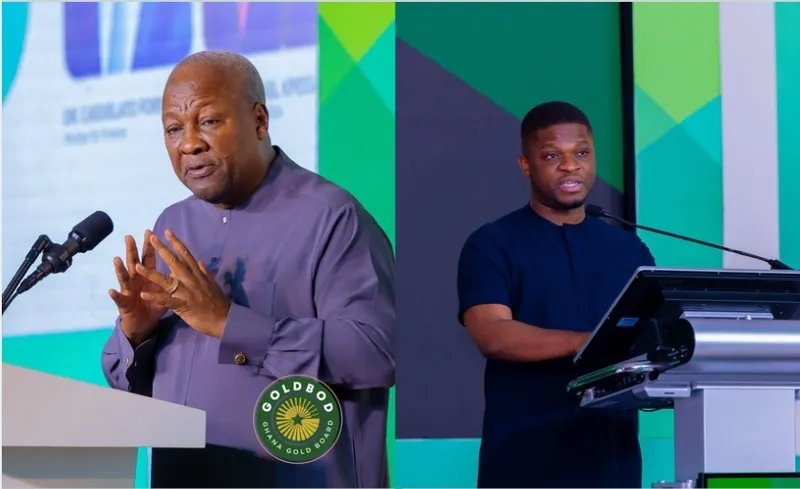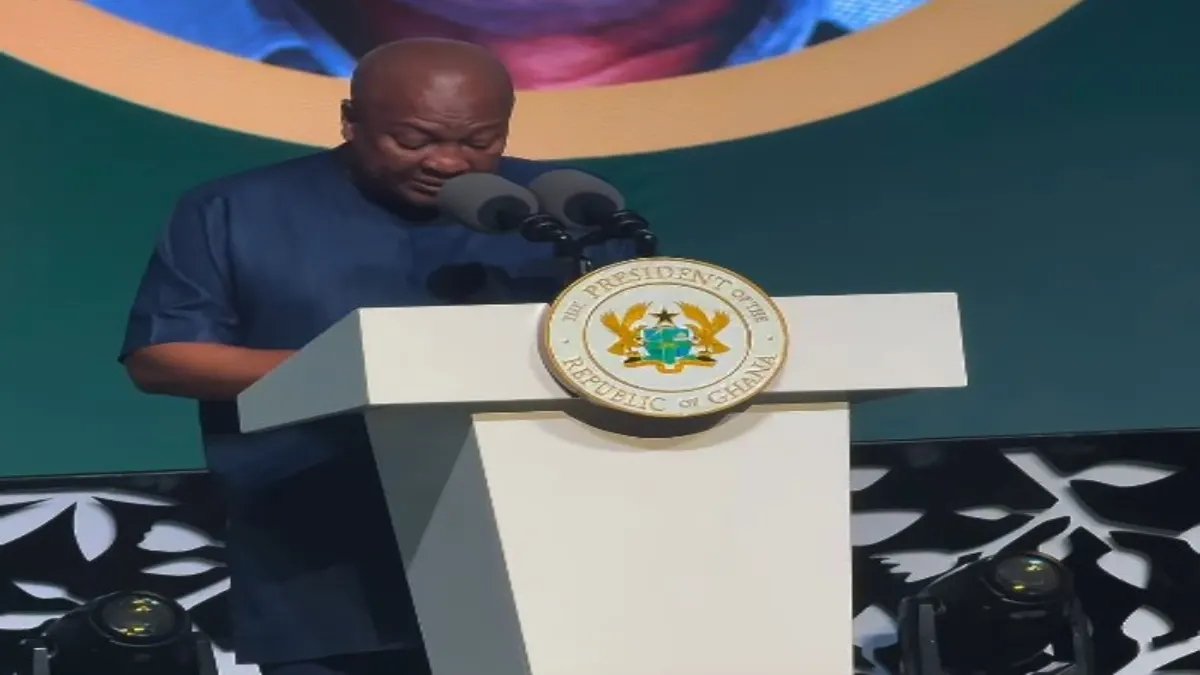
President John Dramani Mahama says a new Ghana Gold Board (GoldBod) policy could expand local gold testing and refining, allowing Ghana to retain a larger share of the wealth generated by its mineral resources.
He made the remarks at the 2026 Mining in Motion Forum, organised by the African Minerals Policy Centre, where discussions focused on developing Ghana’s mining industry and increasing the economic returns from its natural resources.
The policy is intended to encourage greater domestic involvement in testing and refining, which are important parts of the gold value chain. These processes help establish the quality of gold, prepare it for sale and influence its commercial value.
Building capacity in both areas could increase economic activity within Ghana, create skilled jobs, support associated industries and reduce reliance on facilities outside the country for key gold-processing services.
The proposal forms part of wider efforts to add more value locally instead of exporting mineral resources mainly in their raw form. It is aimed at supporting a more integrated gold industry within Ghana.
GoldBod already has a central role in the country’s gold-trading system, particularly through the formalisation and regulation of artisanal and small-scale mining. Greater domestic testing and refining capacity would support that work by improving transparency, quality assurance and the development of a stronger local value chain.
Mr Mahama said Ghana needed to benefit from more than the immediate income earned through gold exports. Developing the technical skills, infrastructure and industrial capacity required for testing and refining would help the country secure longer-term gains from its mineral wealth.
Details of how the policy will be introduced, including its requirements, timetable and measures for expanding testing and refining capacity, have not been provided.
GoldBod exports generate US$10.8bn in 2025
The President also praised GoldBod for its contribution to artisanal and small-scale mining (ASM) gold exports, pointing to a sharp rise in export volumes and foreign exchange earnings in 2025.
Speaking at the Mining in Motion Conference at the Movenpick Ambassador Hotel on Monday, October 19, 2026, he compared the sector’s performance in 2024 with its results in 2025, the year GoldBod began operating in April.
“I wish to commend the GoldBod for the successes that it has chalked. In 2024, from the artisanal and small-small mining sector, Ghana exported 64 tonnes of gold,” President Mahama said.
Exports reached 104 tonnes in 2025, an increase of 40 tonnes. That total covered the period from April to December, after GoldBod had been established.
Mr Mahama said the formalisation and regulation of small-scale gold exports had also increased foreign exchange earnings. He said GoldBod brought US$10.8bn into Ghana in 2025, compared with US$4.66bn in 2024.
“I’m happy to note that the GoldBod in 2025 alone, with the regulation of export of small-scale gold, brought into this country 10.8 billion dollars, which is an almost 100% increase over the 4.66 billion USD that came into the country in 2024,” he said.
Established under the Ghana Gold Board Act, 2025 (Act 1140), GoldBod is responsible for regulating and developing Ghana’s gold-trading industry, formalising ASM gold transactions and helping generate foreign exchange for the country.