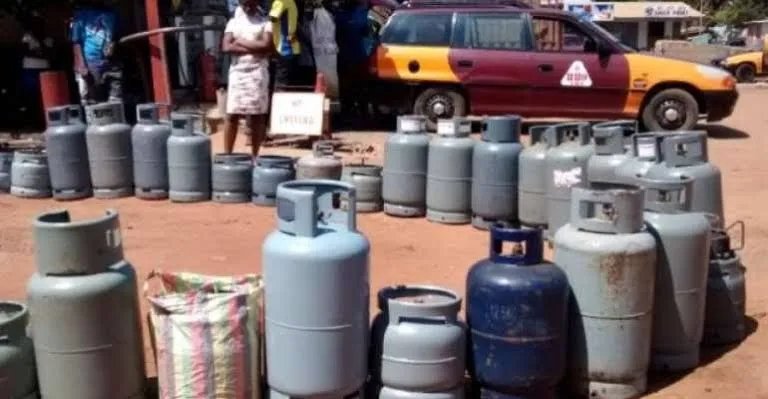
SEMPA Africa has urged the Ghanaian government to provide targeted relief for liquefied petroleum gas (LPG) users after the projected average pump price rose by 18.5 per cent for the second half of October.
The organisation warned that the increase would place further pressure on household budgets and could hinder Ghana’s clean cooking ambitions, particularly because diesel users have received government support to limit fuel costs.
In a policy paper dated October 18, the Sustainable Energy and Mines Projects Advocacy (SEMPA) said the average LPG price for the 16 to 31 October pricing window stood at GH¢20.60 per kilogramme.
That would increase the cost of a standard 15-kilogramme refill by an estimated GH¢48, from about GH¢261 to GH¢309, according to SEMPA’s calculations.
The organisation said the rise in LPG prices came while petrol and diesel prices were moving in the opposite direction. Diesel consumers have benefited from measures including the suspension of the GH¢1-per-litre D-Levy and a freeze on refinery prices charged to bulk distributors.
SEMPA said LPG users had not been offered equivalent protection, despite cooking gas being an essential household fuel with consequences for public health and environmental sustainability.
It attributed much of the increase to a rise in the National Petroleum Authority’s (NPA) minimum price floor, which climbed by about 25 per cent from GH¢11.10 to GH¢13.87 per kilogramme.
The organisation calculated that the higher price floor accounted for about 86 per cent of the projected GH¢3.22-per-kilogramme increase in the average pump price.
International LPG prices rose by 7.77 per cent during the same period. However, SEMPA said the increase in the price floor could not be fully accounted for by the published international prices and exchange-rate movements.
It called on the NPA and the Chamber of Oil Marketing Companies (COMAC) to publish a full breakdown of LPG prices during each pricing window. The information should include import costs, freight, exchange rates, levies and marketing margins.
SEMPA said the current price pressure appeared to be linked to international prices and currency movements rather than a physical shortage of LPG. It therefore recommended increased transparency and temporary, targeted assistance.
Its proposals include a partial suspension of levies or margins, a targeted lifeline allocation for registered low-income households, and an assessment of LPG support alongside any extension of diesel relief. It also called for an LPG price-stabilisation mechanism to be included in the 2027 Budget.
The policy paper warned that more expensive cooking gas could drive households back to charcoal and firewood, increasing exposure to household air pollution and putting further pressure on forests.
Ghana has set a target of 50 per cent household LPG use by 2030. But SEMPA cited Centre for Environmental Management and Sustainable Energy figures showing that household LPG use had fallen from about 37 per cent to 28 per cent.
It also said rising prices could weaken the NPA’s Cylinder Recirculation Model, which aims to improve safety and reduce the cost of accessing LPG.
SEMPA called for monthly publication of LPG import and stock-cover data, a funded timetable for implementing the Cylinder Recirculation Model, and a review of import duties and VAT on cylinders, regulators and efficient cookstoves.
Any government support, it said, should be directed towards households most vulnerable to rising cooking fuel costs, have a clearly defined end date and include a published fiscal cost.