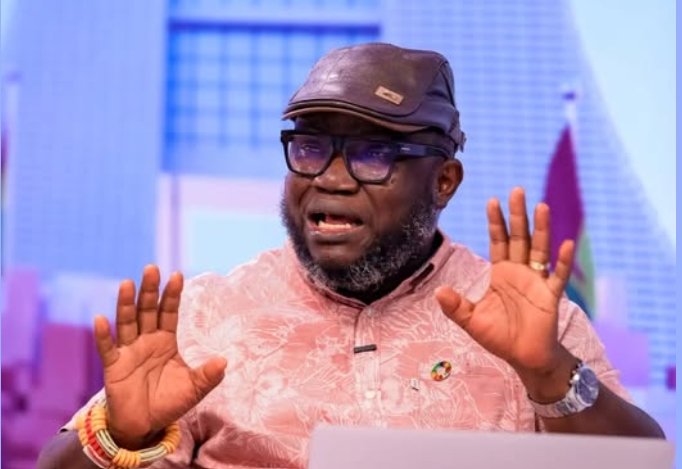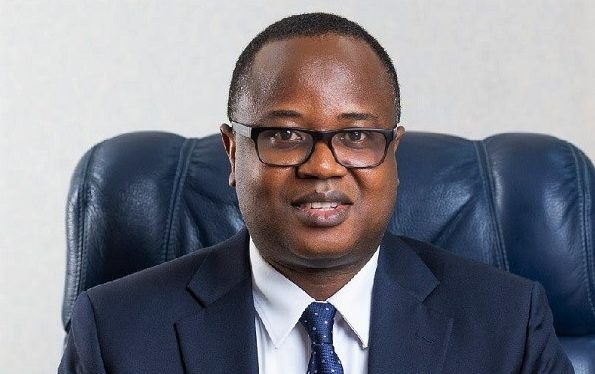
Ghana’s 2022 debt crisis was not a sudden accident but the predictable result of years of mounting fiscal, macro-financial and public-sector balance-sheet weaknesses, according to former First Deputy Governor of the Bank of Ghana, Dr. Maxwell Opoku-Afari.
He said the warning signs had been visible in conventional economic indicators, including persistent budget deficits, rising interest payments as a share of government revenue, weak foreign-exchange reserves and pressure on the cedi.
Stress was also building in key sectors including energy, cocoa and finance. However, Dr. Opoku-Afari said the problems were not tackled quickly or deeply enough.
External shocks and tighter global financial conditions accelerated Ghana’s crisis, he said, but the main causes were domestic. These included weak revenue mobilisation, spending increases linked to the political cycle, particularly around elections, rising interest costs and repeated borrowing to fund recurrent expenditure.
Strong headline economic growth, driven largely by commodities and extractive industries, helped to conceal deeper weaknesses. Dr. Opoku-Afari said growth was accompanied by low productivity, limited economic diversification and “jobs-lite” outcomes.
At the same time, contingent liabilities and arrears accumulated through State-Owned Enterprises (SOEs), special-purpose vehicles, quasi-fiscal operations and interventions in the financial sector.
In a paper titled “How not to miss a crisis: Lessons from Ghana”, published by the Finance for Development Lab, where he is a Non-Resident Fellow, Dr. Opoku-Afari said Ghana’s increased reliance on domestic borrowing also heightened financial risks.
The shift was often presented as part of a move towards de-dollarisation and the development of domestic capital markets. However, he said high domestic interest rates reduced the availability of credit to private businesses and strengthened the link between the government and the banking sector.
Significant non-resident investment in cedi-denominated instruments also made the distinction between domestic and external risks less clear. Capital-flow movements and exchange-rate shocks could therefore be transmitted directly into Ghana’s domestic financial market.
When investor confidence weakened and access to markets closed, the adjustment became sudden and expensive. Ghana was forced into debt restructuring, with the consequences spreading to banks, pension funds, businesses and households.
Institutional weaknesses
Dr. Opoku-Afari said the crisis also revealed shortcomings in Ghana’s domestic institutions and in the way the country was monitored externally.
“Fiscal rules existed but were weakly enforced; debt reporting improved but did not consistently capture arrears, guarantees, SOE risks, and other balance-sheet exposures; and oversight mechanisms (Parliament, accountability institutions, and civil society) lacked the authority, information, or incentives to impose timely discipline. International surveillance repeatedly assessed Ghana as high risk, but tools and programme design did not sufficiently internalise rollover and liquidity risks, domestic-debt/banking feedback loops, and full public-sector balance-sheet vulnerabilitiesfavouring optimistic baselines and delaying corrective action,” he said.
He said the experience provided an important warning for developing and frontier economies more broadly.
“Debt crises often begin when years of accumulated vulnerabilities finally become impossible to refinance. Strong growth, manageable headline debt ratios and continued market access can coexist with deteriorating debt quality, hidden fiscal exposures and mounting liquidity risks.
“Preventing the next crisis therefore requires looking beyond the debt stock to the balance sheet, beyond solvency to liquidity, beyond external debt to domestic financial linkages, and beyond fiscal rules to their enforcement. Ghana’s experience shows that the warning signs can be visible long before the crisis. The policy challenge is to ensure that they trigger action while adjustment remains a choice,” he said.