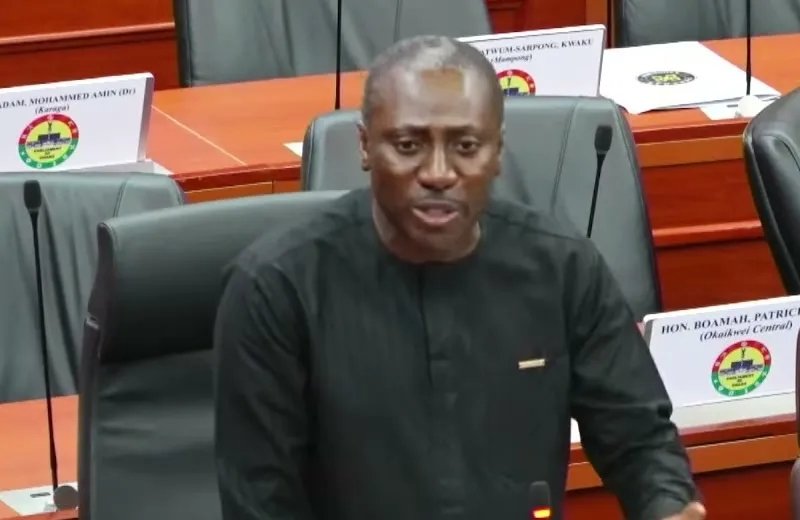
Minority Leader Alexander Afenyo-Markin has asked Ghana’s health minister to explain why some hospitals have reverted to paper folders following problems with the electronic health records system.
Raising the issue as a matter of urgent public importance in Parliament on Tuesday, he said the newly deployed system was reportedly not functioning properly. With the minister present, Mr Afenyo-Markin requested a detailed account of steps being taken to restore the service.
He said health workers had repeatedly complained that they were struggling to access patients’ records, adding that the problem had continued for some time.
“When it comes to the health of our people, we hold a view that data must be reliable, especially when it comes to the history of such patients,” he said.
Mr Afenyo-Markin also said health professionals had objected to the new vendor’s shutdown of the data system. The Minority, he added, was uncertain whether the service had been completely restored.
“Resorting to the folder system, which is very manual in nature, all of a sudden by some hospitals is of great concern,” he told MPs.
He did not identify the system by name during the parliamentary proceedings. However, the issue he described concerned hospital patient records and not the separate DHIMS2 platform, which is used to collect and report public health data.
Minister outlines systems
Responding to the concerns, Health Minister Mr Akandoh drew a distinction between the two platforms. He said the Ghana Health Information Management System (GHIMS) manages hospital records, while DHIMS is used for public health matters.
“I have directed that the GHIMS must be synchronised with DHIMS to have one common system,” he said.
Mr Akandoh said the previous software had belonged to an external vendor and was not owned by Ghana.
“The software was not the property of Ghana and at the moment we have a software that is for Ghana,” he said.
He added that a middleware layer had been introduced to protect the country’s data in the event that a vendor withdrew from the arrangement.
According to the minister, disrupted data had been reconstructed and retrieved, while the current system had been operating for about a year.
He accused the former provider of holding the country to ransom and said security agencies were continuing to investigate the matter.
The separate reporting platform went offline on 29 October after its host shut down its servers over an unpaid bill of US$64,510. The outage forced health officials to rely on paper reporting before the service was restored early in November, after the ministry settled the bill.