The Gender Ministry has begun consultations in Accra on a national framework to protect female head porters, known as Kayayei, and coordinate support for the thousands of girls and young women involved in the work.
Gender Minister Dr Agnes Naa Momo Lartey announced the initiative at Tuesday’s First National Stakeholders Consultative Meeting, organised jointly by the Vice-President’s Office and the United Nations Population Fund (UNFPA).
The proposed National Kayayei Management Framework is intended to define the responsibilities of government agencies, establish accountability standards, reduce unsafe migration, protect girls from abuse and support their reintegration.
Dr Lartey said previous initiatives by government institutions, non-governmental organisations and donors had not been sufficiently coordinated. Those measures included short-stay shelters, vocational training and awareness campaigns.
Ghana must “move beyond short-term and reactive interventions”, she said, and develop a unified response led by the Gender Ministry.
The consultations follow a meeting in August between Vice-President Professor Jane Naana Opoku-Agyemang and the Kayayei Association. At that meeting, the Vice-President said head porterage needed to be addressed as part of the wider issues of migration and inequality.
Scale of the challenge
Reports from the meeting estimate that between 60,000 and 100,000 girls and young women work as head porters in Accra, Kumasi, Tamale and Takoradi. More than 80 per cent are from northern Ghana, and some are children aged 10.
Dr Lartey said migration for work was common, but warned that the circumstances forcing many Kayayei to move raised serious concerns. The Gender Ministry has also been expanding grants under its Livelihood Empowerment Against Poverty programme to reach up to 450,000 households.
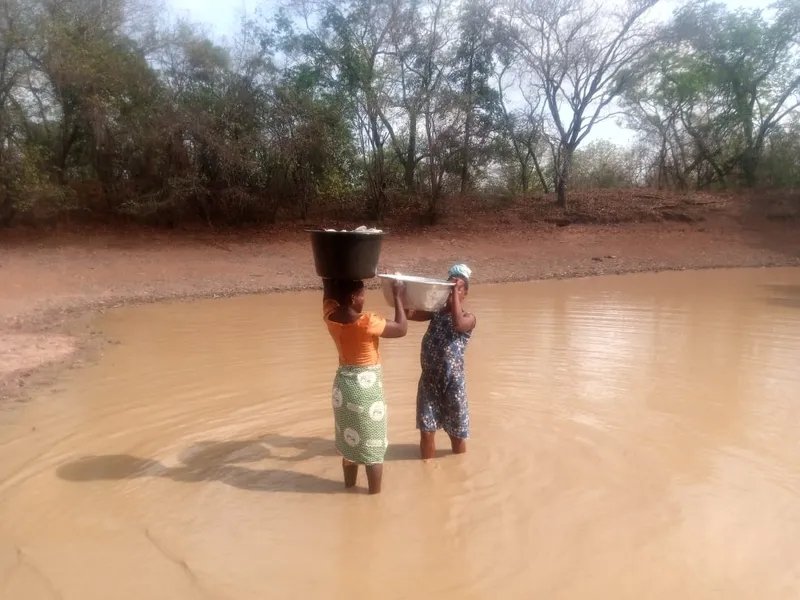
UNFPA Country Representative Dr Wilfred Ochan said head porterage was driven by structural inequality, rural deprivation, limited access to education and gender norms, rather than simply by the search for jobs in urban areas.
He said climate change and losses in farming were placing additional pressure on rural households. Girls travelling south subsequently faced health risks and gender-based violence, challenges which UNFPA Ghana skills and business programmes have sought to address.
Under the UNFPA-backed Kayayei Assistance Project (KASPRO), former porters in Accra have received training in tiling and painting, alongside start-up capital to help them establish livelihoods.
Representing the Vice-President’s Office, Social Policy Advisor Dr Miriam Rahinatu Iddrisu said the framework should remain led by the state, be based on evidence and reflect the experiences of the porters themselves.
That approach followed appeals from young porters in Accra who wanted to return to school, she said.
Abuse can be reported through the Gender Ministry’s toll-free helplines: 0800-800-800, 0800-900-900 and 0800-111-222.