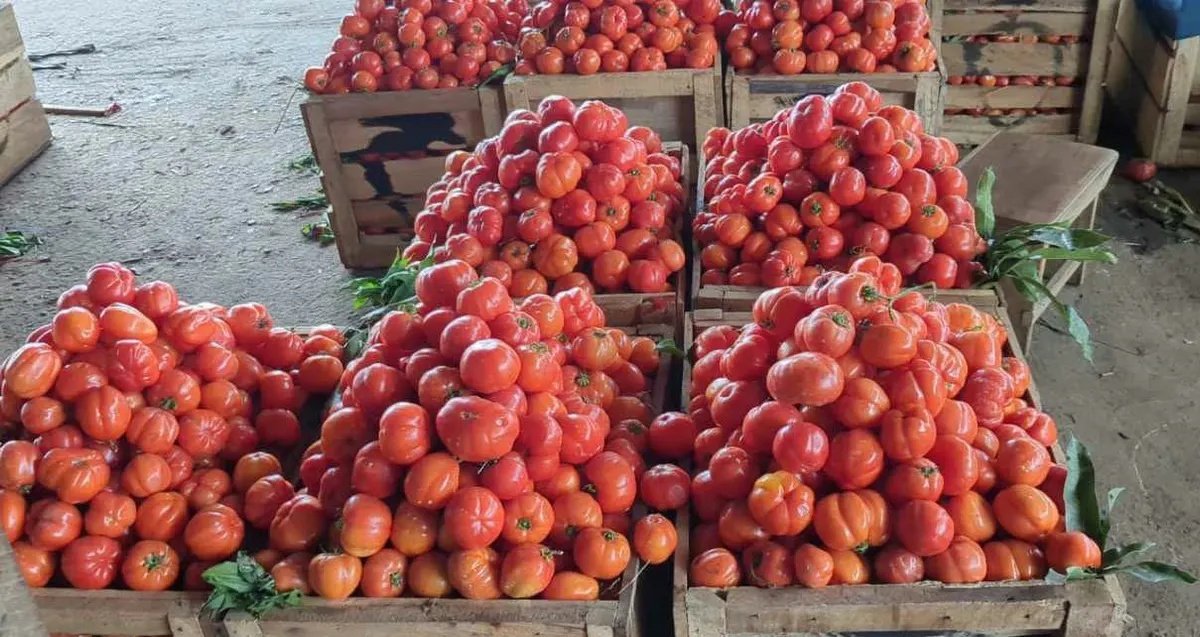
Tomato traders across Ghana’s Ashanti Region say they are suffering significant financial losses because demand has continued to fall despite a sharp reduction in prices.
The traders, who operate in markets across the region, report that large quantities of tomatoes remain unsold, leaving the highly perishable produce at risk of spoiling. They say the lower prices have not brought the increase in customers they expected.
The situation is creating difficulties for traders trying to recover their investments, while prolonged storage and weak sales are increasing the likelihood of waste.
Speaking to journalists, the traders said consumers remained reluctant to buy tomatoes even though they were now available at relatively lower prices. They added that, instead of encouraging greater purchases and consumption as expected, the price reduction had been accompanied by continued low patronage.
The traders warned that the financial pressure would intensify if demand did not improve. Tomatoes cannot be kept for long without suitable preservation facilities, making it difficult for sellers to hold excess stock while waiting for market conditions to change.
They have appealed to consumers to take advantage of the reduced prices by buying more tomatoes, saying this would help limit unnecessary wastage.
Call for processing factories
Nana Abena Serwaa, the Ashanti Regional Queen Mother of the Tomato Traders Association, has urged the government, through the Ministry of Food and Agriculture, to introduce urgent and practical measures to support tomato farmers and traders.
Her main request is for tomato processing factories to be established across the country. She said such facilities would create a reliable way to preserve surplus produce, particularly during periods of bumper harvest.
Nana Serwaa said the shortage of adequate processing and preservation infrastructure continued to expose farmers and traders to substantial post-harvest losses whenever supply exceeded demand.
Processing factories, she explained, would offer an alternative market for tomatoes that could not be sold fresh. That would reduce wastage and help protect the investments made by farmers and traders.
She also believes the facilities could help regulate the volume of fresh tomatoes reaching the market, reduce sudden price fluctuations and ensure the commodity remained available to consumers throughout the year.
The Queen Mother stressed that government action was needed to protect the livelihoods of the thousands of people involved in tomato production, transport, wholesale and retail trading.
Her appeal has renewed calls for greater investment in agro-processing as part of efforts to strengthen Ghana’s agricultural value chain.
Tomatoes are an important ingredient in Ghanaian households and are widely used in the preparation of local dishes. However, their short shelf life leaves the trade particularly exposed to changes in demand and supply when storage, refrigeration and processing facilities are limited.
Post-harvest losses have consistently been identified by industry players as one of the major problems facing Ghana’s agricultural sector. They say processing could provide a longer-term solution by turning surplus fresh tomatoes into tomato paste, puree and other products for domestic use and export.
By Benjamin Aidoo