President John Dramani Mahama has urged African governments, investors and industry leaders to view healthcare as a high-growth economic sector rather than a social cost, saying it could create jobs, expand manufacturing and strengthen economic stability for 1.4 billion people.
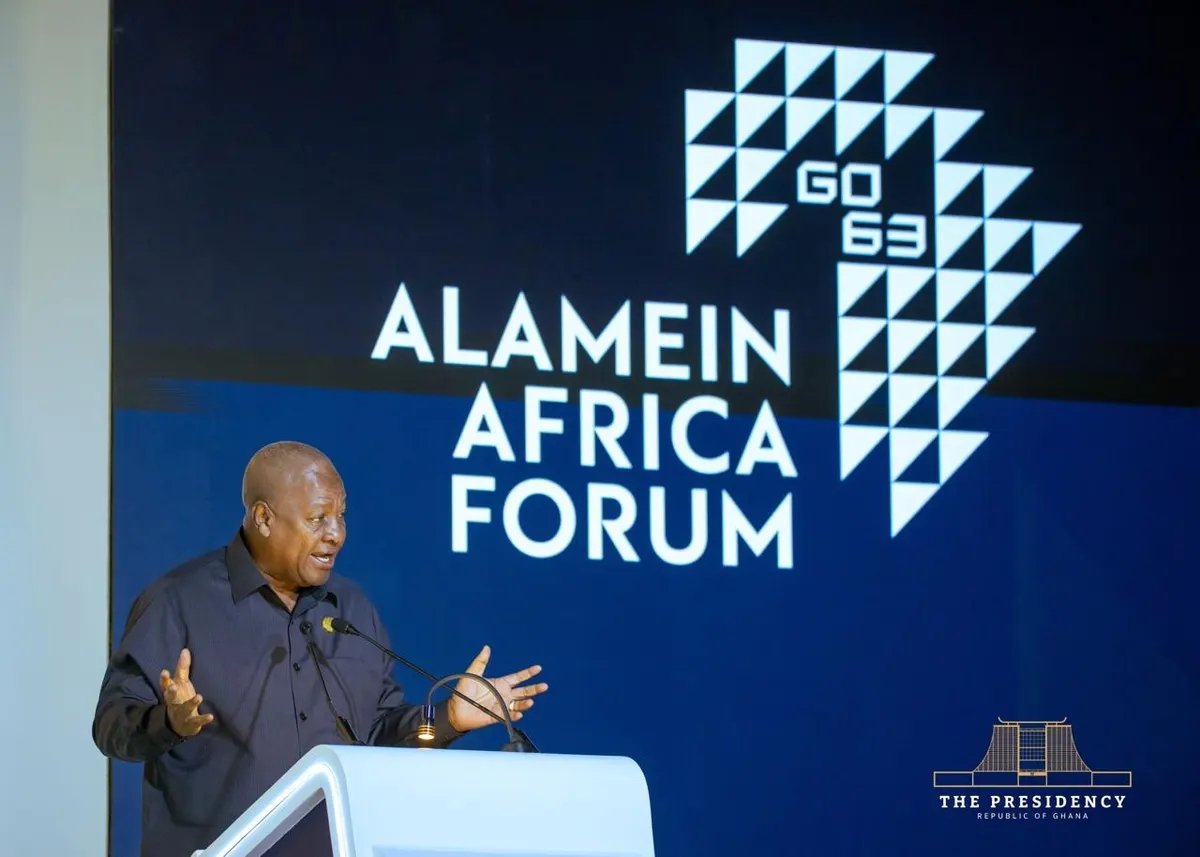
Speaking at the Health Plenary of the Alamein Africa Forum, where he delivered a keynote address on “Investing in Health: Manufacturing and Regional Value Chain”, Mahama thanked Egypt’s President Abdel Fattah el-Sisi. He said El Alamein, the site of a battle 84 years ago, now represented transformation.
“For decades, African Finance Ministers and global investors have treated health as a line-item cost, funded only when there is money left in the budget,” Mahama said. “Health is not a charitable cause; it is an investable, high-growth economic sector.”
He said the Copenhagen Consensus estimated that every dollar invested in basic emergency maternal and newborn care generated $87 in economic and social returns. The Lancet Commission, he added, had found that declining mortality rates contributed almost a quarter of income growth in developing economies in the early 2000s.
Building an African health industry
Mahama said Africa imports more than 70% of its pharmaceuticals and nearly 99% of its vaccines, costing tens of billions in foreign exchange each year. He also warned that OECD projections indicated health aid would fall by 29 to 46 percent compared with 2024.
He identified four reasons for developing local production: Africa’s population is expected to reach 2.5 billion by 2050, creating growing demand for medicines and biologics; domestic manufacturing would reduce imports and protect economies from supply disruptions; the African Continental Free Trade Area would give producers access to a unified market of 1.4 billion consumers; and pooled procurement could lower prices.
Mahama cited the Africa CDC’s first pooled tender for maternal and child health products, which reduced prices by 30% to 90% and allowed African manufacturers to win 50% of the product lines.
He said stronger domestic industries would improve health security, create employment in research, clinical trials, engineering and biotechnology, and reduce costs by cutting logistics and intermediary margins. Africa lacks 6 million health workers, he said, yet 943,000 trained healthcare professionals and science graduates were unemployed in 2024.
Egypt’s campaign against Hepatitis C, which reduced prevalence from 10% to under 0.5%, was presented as an example. Rather than relying on imported $84-per-course treatments, Egypt used technology transfers, developed production through companies including Pharco and treated 4 million citizens locally. It became the first country recognised by WHO as being on the path to elimination.
Mahama also highlighted the African Medical Centre of Excellence in Abuja, developed by Afreximbank and King’s College Hospital, as a response to the $6 billion Nigeria loses each year through outbound medical tourism.
In Ghana, the government’s Accra Reset includes expanding the National Health Insurance Scheme, introducing Free Primary Health Care, establishing the Ghana Medical Trust Fund and strengthening the FDA and National Vaccine Institute to move the country from health-product consumer to producer.
New regulatory platform
Mahama launched HINGE, the Health Investment and National Gateway Enabler, developed with the African Medicines Agency, Institut Pasteur and AfroChampions. The digital platform is intended to combine regulation, clinical validation and commercialisation in one process.
He called for private capital, industrial developers, commercial banks and sovereign funds to support the transition, including through BUMBY, or Business United for Mothers, Babies, and Youth.
He asked financiers what de-risking and blended-finance tools governments should provide, regulators how quickly the African Medicines Agency could enable one approval across all 54 AU member states, and industrialists what partnerships were needed to progress from packaging and fill-and-finish operations to full Active Pharmaceutical Ingredient synthesis in Africa.
“Let us stop treating health as a line-item expense,” Mahama concluded. “Let us build factories, integrate supply chains, fund innovators, and secure our citizens’ future.”