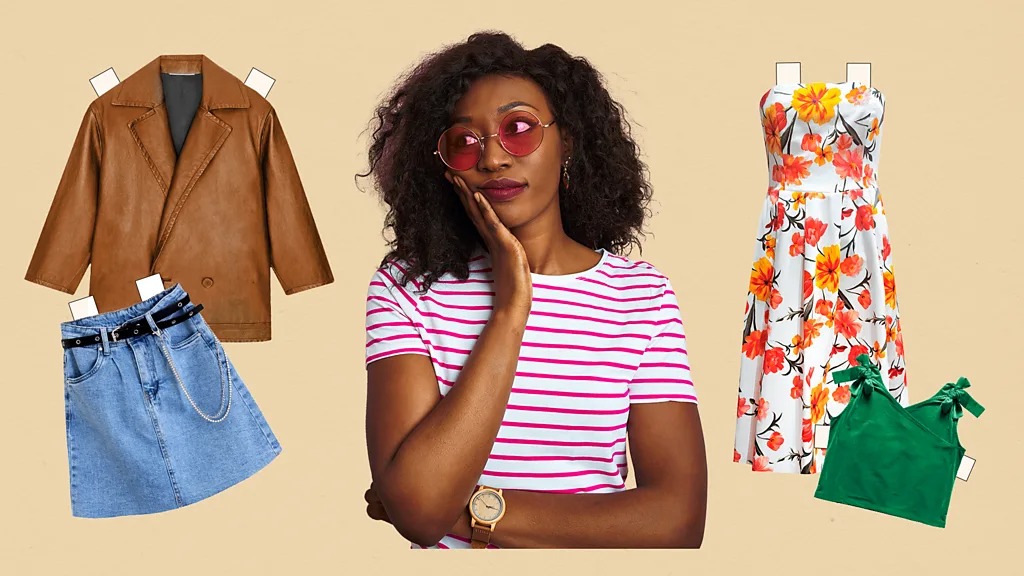
Why do we dress like someone else when we go on holiday? From multipurpose utility garments to Instagrammable maxi dresses and floppy hats, one thing is for sure – we don’t dress this way at home.
An American friend recently asked me what to wear on her first flight to Europe. “I want to be comfy but chic,” she said. She’d come to the wrong person. As a travel journalist, I’m either on assignment, sun cream-smeared in hiking boots and hauling a rucksack like a tortoise shell; or travelling light with a five-piece capsule wardrobe in beige neutrals to leave space for edible souvenirs.
Meanwhile, many of my fellow travellers parade past in floral gowns, breezy summer whites or cosy pyjama-like layers. Sometimes I glimpse my own reflection and feel a pang of FOMO. Should I have worn a floral dress to photograph ruins? I don’t even own one. Or perhaps instead of clunky hiking boots, I would be more comfortable in a pair of Birkenstocks, with thick white socks hiked up to my knees.
As disparate and sometimes dramatic as travel get-ups can be, one thing is for sure: we don’t dress this way back home.
 Getty Images
The dawn of holiday wear
So why do we dress so differently when we’re on holiday – almost as if we’re someone else?
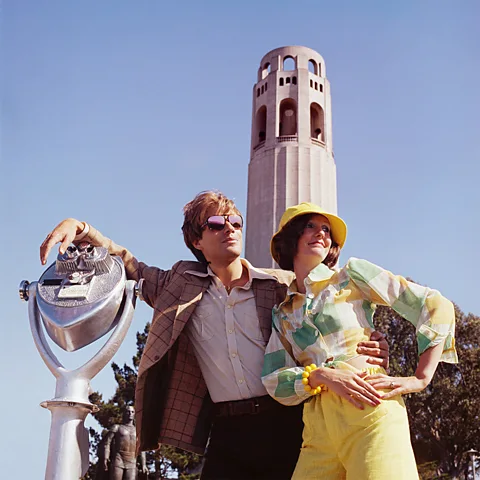
Marta Franceschini, head of communications and editorials at the European Fashion Heritage Association, says that the holiday wardrobe emerged alongside leisure travel in the 19th Century. “Prior to this, clothing for travel was primarily utilitarian, associated with migration, pilgrimage or military and trade expeditions,” she explained. According to Franceschini, the growth of the middle class and the expansion of railways in Europe in the mid-1800s meant that seaside resorts became fashionable destinations, prompting the development of travel wardrobes that fused elegance with comfort. Warm weather necessitated lighter, breathable fabrics such as linen and silk, and by the interwar period, designers like Coco Chanel were championing relaxed styles such as casual knitwear, wide-leg trousers and swimwear.
“The post-World War Two economic boom, coupled with the advent of commercial aviation, democratised travel further,” Franceschini added. “From the 1950s to the ’70s, leisurewear evolved into a distinct genre: Capri pants, resort prints, kaftans and cruise collections became staples.”
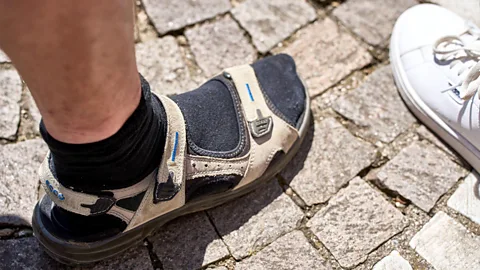
Franceschini also notes that the need to dress for unfamiliar temperatures “[permits] a certain relaxation of social dress codes”.
That explains sandals with socks.
 Alamy
AlamyBackpacks and backlash
And yet, it is a universally acknowledged truth that no one wants to look like a tourist.
Lifestyle publications teem with articles steering travellers away from the reviled traditional tourist kit – T-shirt, backpack and hat – proposing, instead, luggage-conscious capsule wardrobes inspired by the destination itself. When Vanessa Friedman, chief fashion critic at the New York Times, receives reader questions about how not to look like a tourist on holiday, she taps locals for their input to make her recommendations. “I think people dress to belong,” she told the BBC. “So, when you’re travelling, you don’t want to stand out.”
But if the term “tourist” conveys a sense of escape from the everyday, what’s so terrible about looking like one?
“There are some interesting negative connotations about being a tourist,” said Dr Charlotte Russell, founder of The Travel Psychologist. “Ideas around being seen as naïve, not being experienced or well-travelled, perhaps clumsy with regard to cultural differences and potentially falling prey to unfair pricing. None of us want to be any of these things, so it’s unsurprising that people want to differentiate themselves from these stereotypes.”
Franceschini believes that this wariness likely emerged in the late 20th Century, “as global travel became more accessible and distinctions between the traveller and the tourist became increasingly codified”.
Anyone booking travel back then – the dawn of internet travel planning and the expat blog boom – would have witnessed that ever-growing chasm between the two. The smug verdict: tourists, who visit a place for mere days, are less culturally savvy than travellers, who may be privileged enough to spend months or even years overseas.
Dr Andrew Stevenson, author of the book The Psychology of Travel, believes this dichotomy reveals something deeper: how we want to be seen.
“Do you want to present yourself as somebody who’s trying to blend in, like an anthropologist?” asked Stevenson. “Or do you want to erect a barrier between yourself and the host location, because maybe you’ve got safety concerns, or you want to travel in a bubble with your travel party? I think clothes are a symbol of how much belongingness we want to have with the place we’re visiting.”
Do my day-to-night layers and rugged footwear merely reflect that I’m segueing from 10km hikes to interviewing government officials? Or that I want to signal my identity as a travel journalist?
 Fabio Lovino/ HBO
‘Monica Vitti is dead’
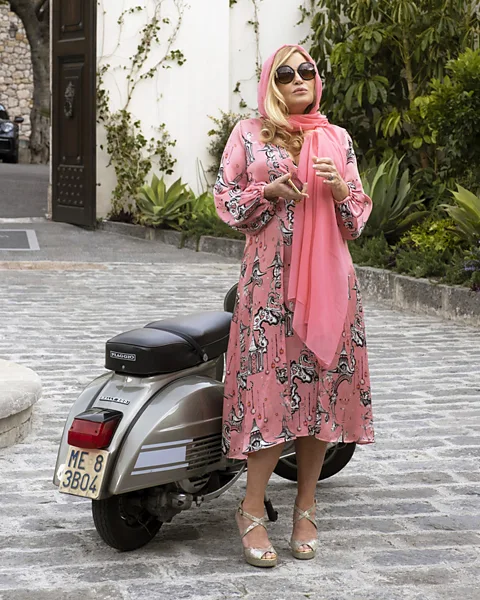
Picture it: Sicily, The White Lotus Season Two. Jennifer Coolidge as the daffy, doomed Tanya McQuoid has rented a Vespa and is ecstatic in her flowy pink dress, pink headscarf and giant sunglasses.
“Guess who I am?” she asks the hotel manager, Valentina. “Watch, watch.” Tanya takes a drag from her cigarette, exhaling smoke in a sultry stream.
Valentina, a bona fide Italian woman in a no-nonsense double-breasted blue pantsuit, is nonplussed. She hazards a guess: “Peppa Pig.”
Tanya beams: “I’m Monica Vitti!”
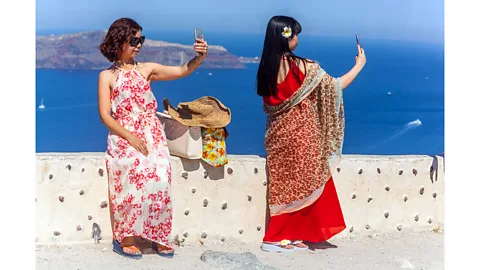
Rarely has a scene of television so perfectly encapsulated the yawning gulf between what people wear and what overseas visitors believe they wear. I’ve been based in Southern Italy for 15 years; if you see someone swanning around in a flowy dress and hat, they are 100% a tourist.
Franceschini calls it a kind of “sartorial mimicry”, observing that “clothing choices are often influenced by an imagined or real desire to either assimilate with the local culture or to symbolically participate in it”. Like Bermuda shorts or Hawaiian shirts, she says, these outfits are clichéd, but they are also signs of cultural aspiration and symbolic belonging.
However, she cautions that they can also veer into cultural appropriation, where items are worn “without an understanding of their cultural context or significance”.
Tanya’s “Dolce Vita” look, Franceschini added, is a contemporary iteration of long-romanticised visions of Mediterranean leisure, femininity and glamour. “Rooted in cinematic depictions from Federico Fellini’s La Dolce Vita to more recent iterations like the season of The White Lotus set in Italy, this mode of dress draws heavily on idealised representations of Italy as a sensual, timeless and emotionally unburdened destination… These choices are often less about actual cultural integration and more about performing a version of Italy that aligns with global stereotypes – sun-drenched, stylish and hedonistic.”
In other words, imagine an overseas visitor visiting London dressed as Twiggy, or the US dressed as Marilyn Monroe.
 Alamy
AlamyThe Instagram effect
It’s hardly news that social media presents a highly curated view of everyday life. But, that knowledge doesn’t stop us from consuming holiday content, where influencers and celebrities pose thirstily in front of beautiful places while wearing beautiful things.
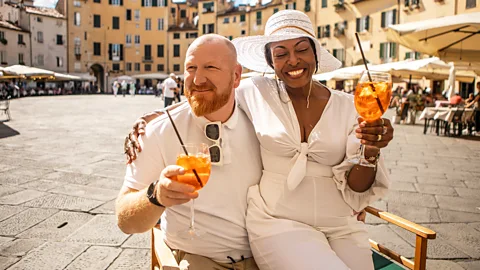
Russell believes that these aspirational travel posts have a significant impact how people dress when they travel. “We see a lot of images of people looking dressed up from everywhere to the Colosseum to natural places and even at the top of mountains,” she said. “This certainly was not the case 15 years ago, and I definitely think there has been a shift.”
“I remember when people used to take photographs of places and things,” echoed Stevenson. “But now people take photographs of themselves, and the places and things are in the background.”
It brings to mind a quote from the legendary late American actress Betty White: “Facebook just sounds like a drag; in my day, seeing pictures of people’s vacations was considered punishment.”
 Getty Images
Time to celebrate
Of course, it’s exciting to go somewhere new, and how we dress on holiday is a reflection of that joy.
“Holiday dress often functions as a performative break from the conventions of daily life,” said Franceschini. “On holiday, people permit themselves to wear clothing that might be deemed inappropriate, excessive or impractical in their everyday environments. Holiday wear can thus be read as a sartorial manifestation of the freedom, or at least escapism, and sensory indulgence associated with travel.”
Russell agrees: “For many of us, we are working on laptops all day or may have uniforms at work, and we dress for function and comfort. So, a holiday is an opportunity to explore a different part of ourselves. A part that is perhaps more carefree, joyful and relaxed.”
Whether that self wears hiking boots or pink chiffon, the same truth applies.
“If you want to wear a beautiful dress or bright shirt, and it feels right to you, then this is totally okay,” said Russell. “Life is too short for worrying about judgements from others.”
And so is your holiday.
Source: BBC