Honeyworld has started using a container-based loading system to move bulk shea nut exports from warehouses directly into vessels at the Port of Tema.
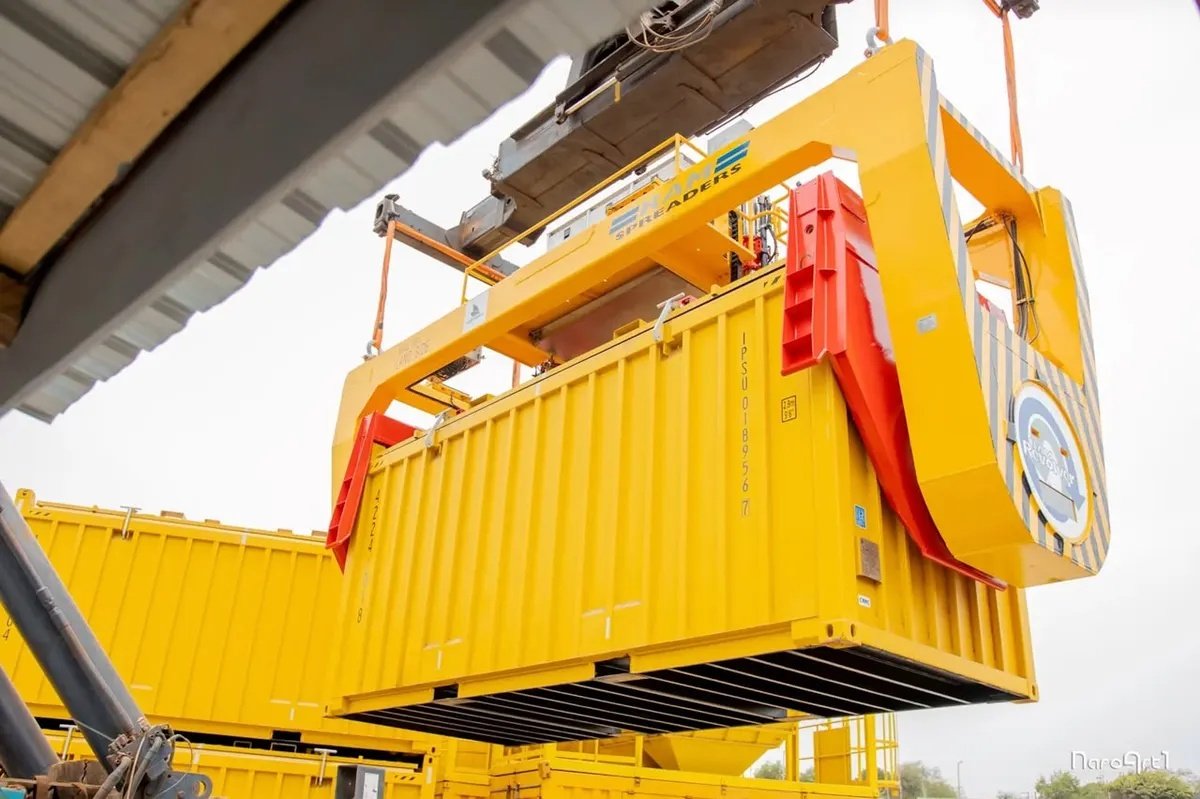
The logistics company is operating the service in partnership with the Ghana Ports and Harbours Authority (GPHA), using the RAM Revolver Containerized Bulk Handling (CBH) System. The process is designed to keep the cargo off the quay apron before it is loaded on to a ship.
The system allows what Honeyworld and GPHA describe as “shed-to-ship” or “pit-to-ship” handling. Shea nuts are loaded at their storage location and transported directly to the vessel’s hatch, rather than being discharged on to the quayside first.
Under the previous method, shea nuts arriving at Tema were emptied on to the quay apron before being transferred into a ship using grabs. That additional handling increased the possibility of spillage into the sea.
How the container system operates
Specialised 20-foot Revolver Containers are taken to the exporter’s warehouse, where the shea nuts are loaded and the containers sealed. They are then transported to the quayside for lifting.
A RAM Revolver unit fitted to a crane grips each container and raises it above the vessel. The unit opens the container’s lid and rotates it through 360 degrees, allowing the shea nuts to fall into the ship’s hatch.
Once empty, the container is returned to the warehouse and made available for reuse. The cargo therefore remains enclosed throughout the journey to the ship and is not tipped out on the quay apron before loading.
GPHA had been examining more efficient and environmentally responsible ways of handling bulk cargo at the port. It brought in private-sector operators to investigate alternatives to conventional bulk handling, leading to the arrangement with Honeyworld.
The Director of Port, Tema, Mr Tabon Zuma, said the introduction of the system represented a move away from the traditional approach.
“Today, we have succeeded in changing the traditional form into the modern way of handling shea nuts,” he said.
Mr Zuma also said the dirty cargo charge applied to conventional bulk handling was not required under the new arrangement because the shea nuts were transferred straight into the vessel.
He added that the use of sealed containers made it more difficult for cargo to be diverted during the process.
Honeyworld said the export operation is supported by its warehousing and road freight services. Its equipment fleet includes reach stackers, payloaders, forklifts and a conveyor belt with weighing capability.