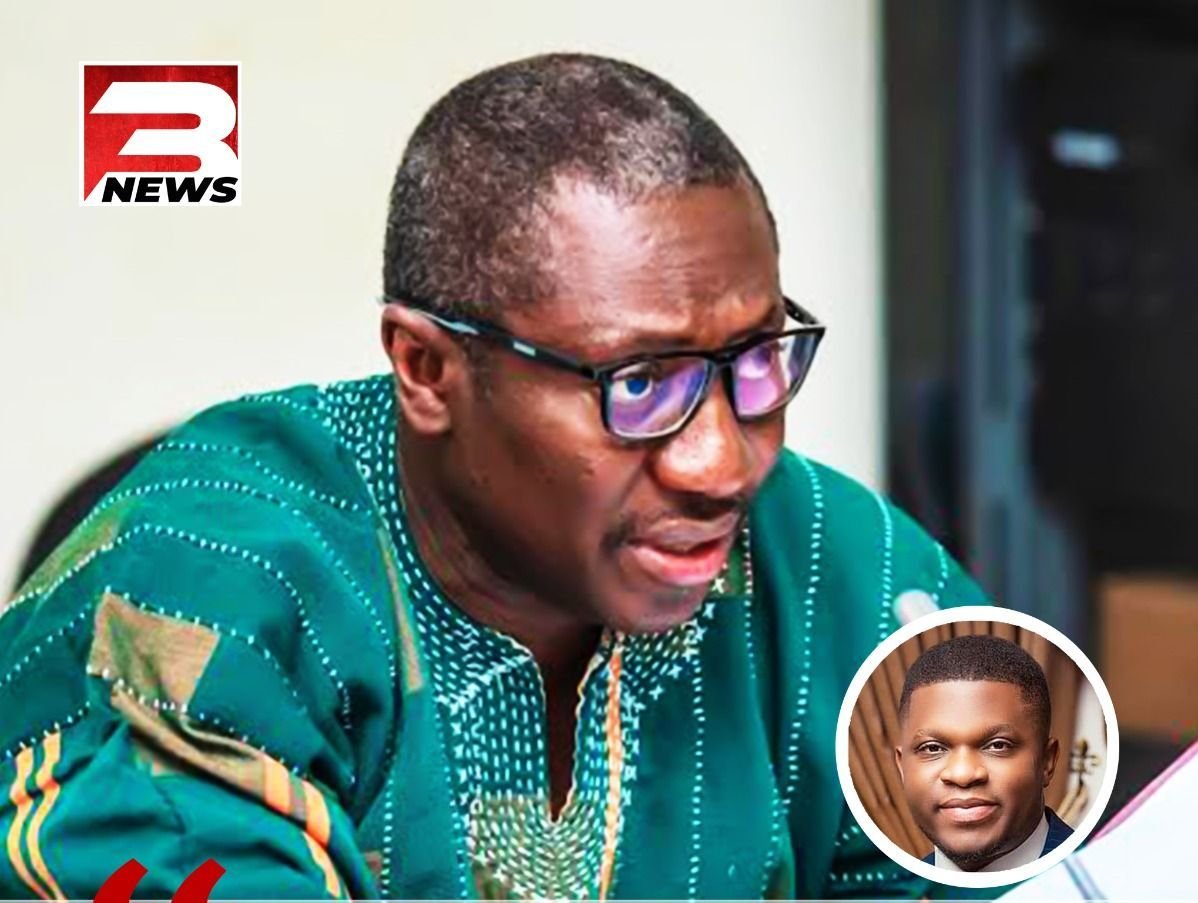
Ghana’s Minority Leader, Alexander Afenyo-Markin, has accused GoldBod chief executive officer Sammy Gyamfi of failing to provide the financial details requested over reported losses linked to the Domestic Gold Purchase Programme (DGPP).
Afenyo-Markin said Mr Gyamfi’s response at the Government Accountability Series on 19 August included inappropriate language and did not adequately address claims that a state institution had suffered a loss of US$1.7bn, equivalent to 22bn Ghana cedis, during 2025.
“The Chief Executive’s reference to a brothel, does not belong in a statement issued by a Public Officer accounting for public funds. Ghanaians asked for figures. They were given insults. The figures are still outstanding,” he wrote in a statement posted on Facebook on 19 August.
The dispute follows a parliamentary Minority press conference held on Tuesday, 18 August 2026, which focused on the financial and operational performance of the Ghana Gold Board and alleged losses under the DGPP.
The government responded through GoldBod at the Government Accountability Series the following day. Afenyo-Markin said the Minority had reviewed the full response and believed it confirmed several of the concerns raised rather than disproving them.
“The GoldBod’s statement this morning confirms more than it rebuts. First, the loss is admitted. The Chief Executive does not dispute the IMF’s finding that there is a loss of US$1.7 billion (22 billion Ghana cedis) under the Domestic Gold Purchase Programme in 2025,” he said.
According to the Minority Leader, Mr Gyamfi had challenged responsibility for the loss but had not disputed its existence.
“He disputes only who should be blamed. This is public money, whichever State balance sheet it sits on,” Afenyo-Markin said.
He also questioned the financial figures given for GoldBod’s fees and operating performance. The chief executive said GoldBod had accounted for about GHS133bn in advances during 2025, while receiving an assay fee of 0.258% and a service fee of 0.5%.
Afenyo-Markin calculated that those charges would have generated approximately GHS1bn in fees from the programme. He contrasted that figure with the GHS907m operational surplus reported by GoldBod.
“The plain implication of his own numbers is that the operational surplus he is celebrating is smaller than the fee income he collected from a programme that lost the state 22 billion Ghana Cedis,” he said.
The Minority Leader argued that GoldBod’s reported surplus could not be considered meaningful once the agency fees were removed, and said that point had not been addressed in the government’s response.
He further accused GoldBod of taking credit for the programme’s wider economic benefits while rejecting responsibility for its costs. The organisation’s statement linked the expansion of the DGPP to a 41% appreciation of the cedi, an increase in reserves from US$8.9bn to US$13bn and a decline in inflation.
“An institution that claims authorship of the benefits cannot describe itself as a passive agent when the costs are counted,” Afenyo-Markin said.
The Minority also raised concerns about changes to the programme’s financing arrangements. Afenyo-Markin said that, according to GoldBod’s own account, responsibility for GANRAP implementation costs moved from the Bank of Ghana to the Ministry of Finance in July 2026. From August 2026, GoldBod began seeking finance independently.
He described the changes as evidence that the funding model remained unsettled, noting that three arrangements had been used within six months.
The 22bn Ghana cedis loss cited in the IMF Sixth Country Report, numbered 26/213 and issued in August 2026, must be accounted for, Afenyo-Markin said.
He concluded by repeating his criticism of Mr Gyamfi’s language and insisting that the financial figures requested by Ghanaians had still not been provided.