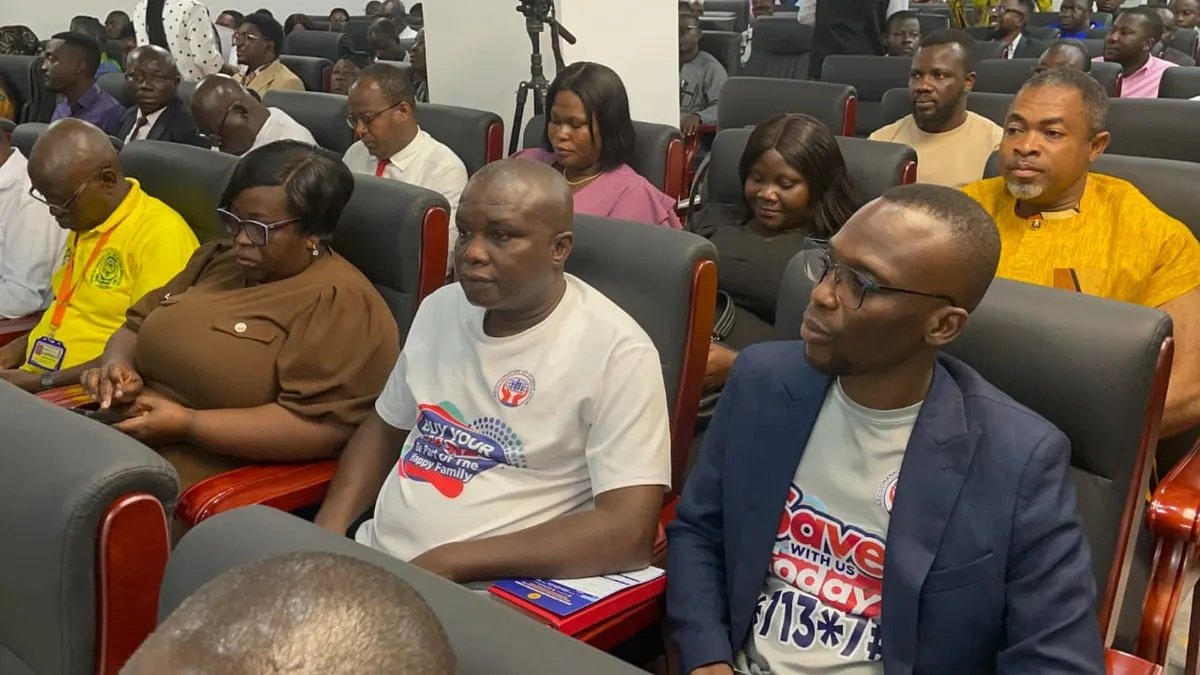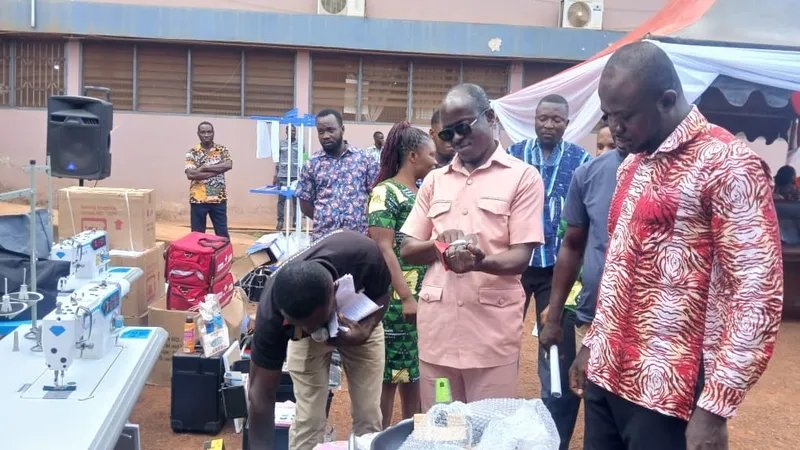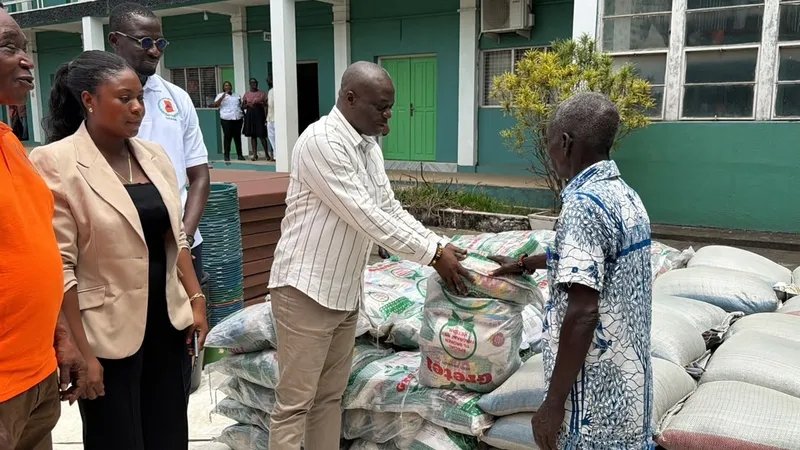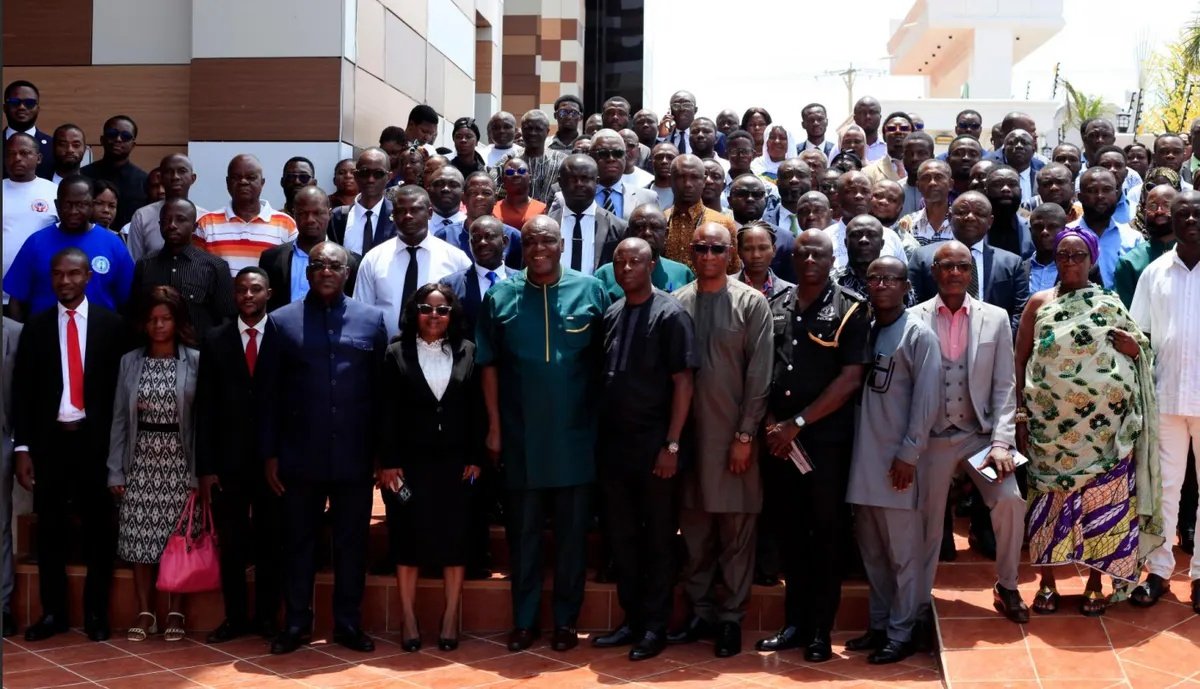
The Bank of Ghana (BoG) has taken its nationwide financial education campaign to Techiman, bringing together 150 stakeholders from across the Bono East Region to discuss confidence in the financial system and the regulator’s role.
The Regional Stakeholder Engagement Forum was held on Monday, 12 October 2026, under the theme Strengthening Stakeholder Relations Through Dialogue and Engagement. It is part of the Bank’s 16-regional outreach programme, which aims to explain the central bank’s mandate, improve public understanding of financial matters and establish direct channels for feedback.
Traditional and religious leaders, market queens, trader associations, small and medium-sized enterprises, rural and community banks, microfinance institutions, security agencies and media practitioners attended the forum.
The BoG delegation was led by Mr Bernard Otabil, Director of Communications. He was joined by Mr Victor Akakpo, Head of Regional Branch Coordinating Office, and Mr Abdulai Lawal Abubakar, Regional Director, Sunyani, who has oversight responsibility for the Bono East Region.
Experts from the Banking Supervision Department (BSD), Other Financial Institutions Supervision Department (OFISD), Financial Stability Department (FSD) and Currency Management Department (CMD) delivered technical presentations.
‘The Cedi is trust’
Mr Otabil said public confidence was essential to the effectiveness of monetary policy and that central banking could not operate successfully without engagement with communities.
“The Cedi is not just paper. It is trust. It is a social contract between the Bank of Ghana and every Ghanaian. We can formulate the best monetary policy, but if the trader in the Techiman market, arguably one of the largest open markets in West Africa, does not understand or trust it, we have failed. That is why we are here, not to lecture, but to listen, to dialogue, and to partner for financial stability,” he said.
He added that the Bank had adopted a more people-centred approach, allowing public concerns to inform its response to issues including unlicensed financial schemes, currency abuse and misinformation.
Participants received guidance on the Bank of Ghana’s responsibilities for price stability, financial stability and currency management. They were also briefed on the reasons for reforms in the microfinance sector and their implications for the industry.
Other sessions focused on responsible borrowing, consumer rights, loan disclosure requirements and the risks of over-indebtedness. A practical currency education exercise, titled “FEEL, LOOK, TILT”, demonstrated how to identify genuine Ghana Cedi banknotes, detect counterfeits and handle notes correctly.
The forum also examined the causes and consequences of issuing dud cheques, including the financial and legal implications and ways to prevent the practice.
Stakeholders raise concerns
During an open session, participants welcomed the decision to hold the engagement in Techiman. They asked about access to affordable credit for SMEs and farmers, high lending rates despite falling inflation, unregulated lenders and “black market” forex operators.
They also called for continued public education about the security features of the new Heritage Series Banknotes.
Bank officials responded to the issues raised and said the concerns would be referred to Management for policy consideration. Mr Otabil reaffirmed the Bank’s intention to continue dialogue across all 16 regions to support financial inclusion, financial literacy and resilience.
He urged the public to report suspected unlicensed financial institutions, counterfeit currency and financial fraud to the Bank or law enforcement agencies. The meeting ended with a call for continued cooperation between the Bank of Ghana and regional stakeholders to protect the value of the Cedi and Ghana’s financial stability.