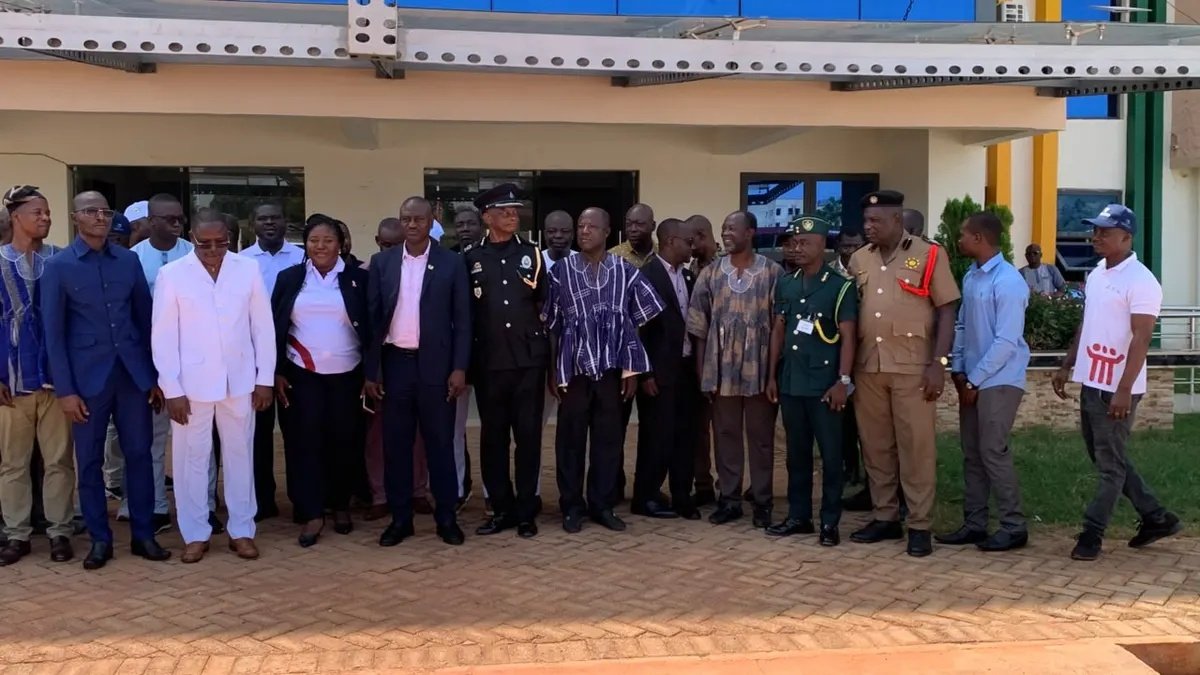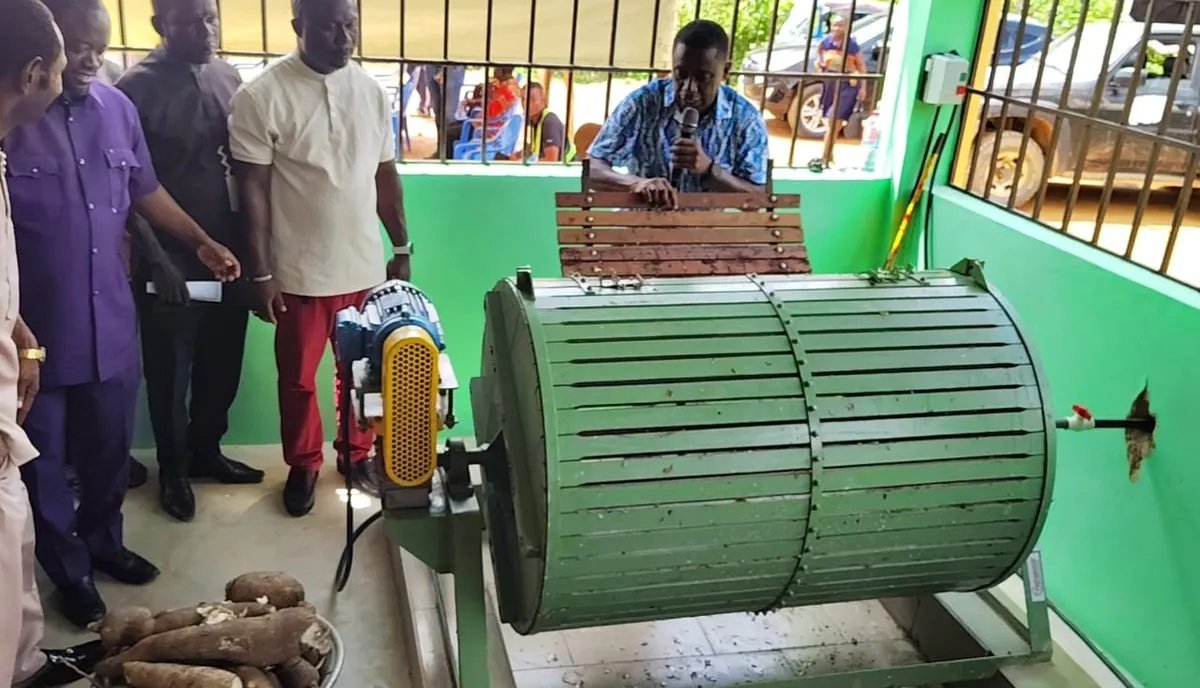
A cassava processing facility has been commissioned at Apemanim in Ghana’s Ahanta West Municipality, with the aim of reducing post-harvest losses and increasing farmers’ incomes.
The plant will process fresh cassava into dough and gari, creating a reliable market for farmers who often struggle to sell their produce during periods of bumper harvests.
The project was funded by the United Nations Capital Development Fund (UNCDF) and the Norwegian Government, alongside counterpart funding from the Ahanta West Municipal Assembly. The assembly received GH¢621,943.03 through the LoCAL-ACE facility for the project.
In an address read on his behalf, the Minister for Local Government, Chieftaincy and Religious Affairs, Mahama Ayariga, said the facility would support farmers in responding to climate change while contributing to the strength of the local economy.
“I therefore urge the Ahanta West Municipal Assembly to prioritize the effective operation and maintenance of the facility. This must include making adequate budgetary allocation for maintenance, assigning clear management responsibilities, undertaking regular inspections, and ensuring that any operational challenges are addressed promptly,” he said.
Mr Ayariga also called on residents in the beneficiary communities to accept responsibility for protecting the facility and ensuring it remains in good condition.
“I also call on the beneficiary communities to take ownership of the facilities. Use them responsibly and support the assembly in safeguarding the investment against neglect, misuse and deterioration.”
The Municipal Chief Executive, Ebenezer Kofi Aidoo, said a business model was being prepared to guide the plant’s management, promote community ownership and protect the interests of local residents.
“We believe that it helps our farmers. They are not going to struggle again when they plant the cassava, and when there is a bumper harvest, we get to hear they are not getting buyers. This factory is here to buy them,” he added.
The facility was welcomed by local farmers, who said it addressed a long-standing difficulty in finding buyers for their cassava and had been introduced at an important time.
The project is expected to provide farmers with an outlet for their produce while helping the municipality make effective use of the cassava harvested in the area.
By Abraham Mensah