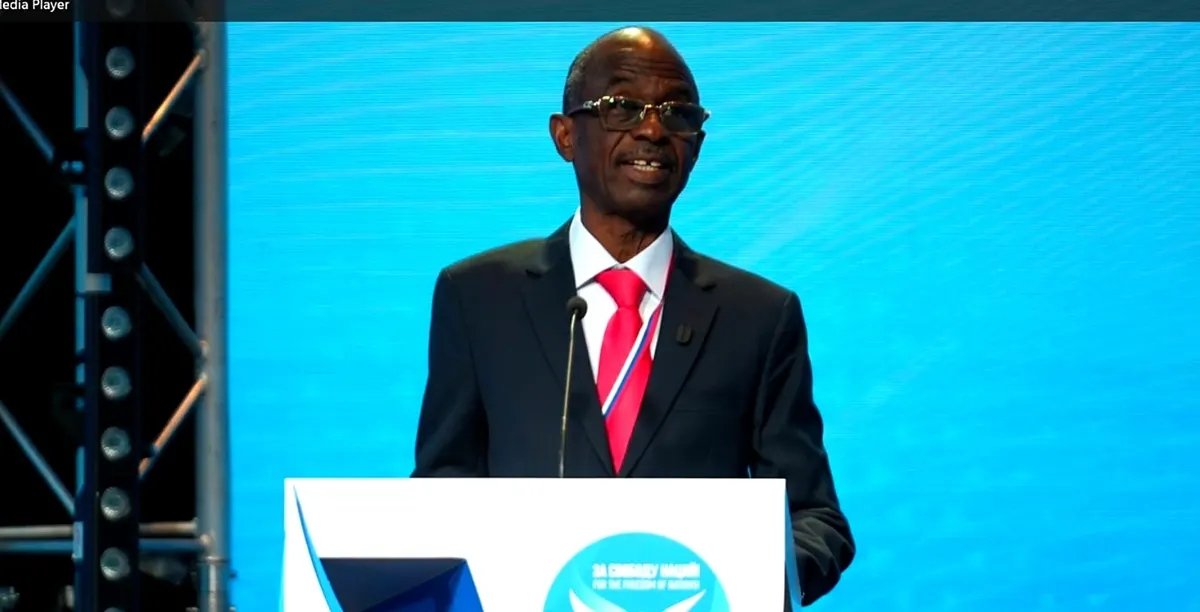
Agricultural Development Bank PLC (ADB) managing director Edward Ato Sarpong says Ghana’s banking sector will be central to delivering the country’s new economic agenda.
He described banks as strategic partners that can mobilise capital, finance productive industries, support businesses and help accelerate sustainable economic growth.
The economic transformation programme, recently outlined by the Ministry of Finance, aims to reshape Ghana’s economy through investment in eight priority areas. Approximately US$10 billion has been earmarked to promote industrialisation, create jobs and expand the country’s productive capacity.
Mr Ato Sarpong said close co-operation between the government, financial institutions, investors, businesses and development partners would be essential to implementing the programme successfully.
He added that banks should focus on investments capable of generating sustainable employment, increasing exports, encouraging local value addition and improving Ghana’s economic resilience.
Eight sectors identified for investment
The Finance Minister’s proposed New Economy agenda covers economic stability, agriculture, energy, minerals, tourism, textiles, medicines and technology.
Agriculture has been allocated US$3 billion, with US$2.2 billion designated for energy and US$1.5 billion for minerals. Tourism, textiles and medicines are each expected to receive US$1 billion, while technology has been allocated US$300 million.
The proposed distribution reflects the scale of funding required to turn the programme into investment, productive businesses and long-term employment, Mr Ato Sarpong said.
He believes the agenda could allow banks to strengthen financial intermediation, increase domestic savings, support investment flows and create financing products suited to companies in the priority sectors.
“Banks will be essential in supporting trade finance, working capital, infrastructure-related investments, payment systems, and financial advisory services required to strengthen the competitiveness of businesses,” he said.
Agriculture at centre of programme
Agriculture’s position as the largest recipient of proposed funding presents an opportunity to modernise the sector, raise productivity and improve value chains, according to the ADB managing director.
“As a Bank with a longstanding record of supporting agriculture and agribusiness, ADB is strategically positioned to contribute to the sector’s transformation through expert financing solutions,” he said.
Mr Ato Sarpong said the focus on agriculture was consistent with ADB’s wider objective of supporting businesses, empowering communities and contributing to economic development.
“As a universal Bank, our role in the emerging economic framework is to deepen lending, facilitate strategic partnerships, strengthen financial inclusion, support industrialisation, and connect production to processing, distribution, and export markets,” he added.
He acknowledged that commercial banks would not be able to finance the entire programme alone, making the mobilisation of sustainable domestic and international funding a critical requirement.
ADB’s ability to contribute is underpinned by what the bank described as a strong turnaround from 2025. Its unaudited financial statements show profit before tax of GH¢478.5 million in September 2026, compared with GH¢447.5 million in September 2025.
Total assets rose from GH¢16.22 billion to GH¢20.28 billion, while customer deposits increased from GH¢12.85 billion to GH¢15.36 billion.
ADB’s Capital Adequacy Ratio also climbed to 27.41 per cent, up from 0.49 per cent in September 2025.
The performance gives the bank a stronger base to pursue its strategic objectives while maintaining prudent lending, risk management and improvements in asset quality.