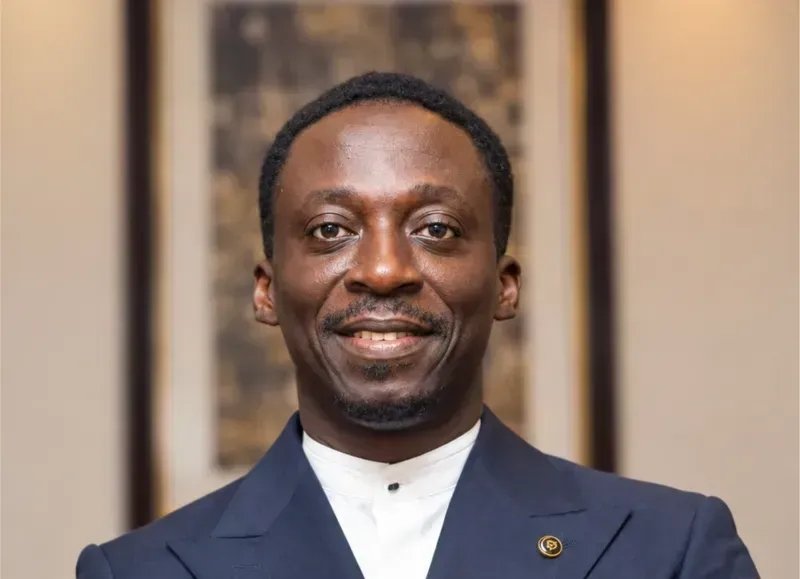
Legal practitioner and policy analyst Austin Kwabena Brako-Powers has called on the governing National Democratic Congress (NDC) to lead efforts to tackle vote-buying in internal party elections, rather than simply joining public criticism of the practice.
He said the NDC should pursue legislative reforms to close what he described as a gap in Ghana’s electoral laws, which currently do not specifically regulate vote-buying during internal political party contests.
Speaking on TV3’s Big Issues on Tuesday, November 18, 2026, Mr Brako-Powers said political parties had a responsibility to address the problem within their own structures.
“Leadership is about identifying real problems and fixing them. You see legal gaps; you fill them. The NDC should stop complaining like every Ghanaian about vote-buying when it has the power to do the right thing,” he said.
He pointed to the New Patriotic Party’s response to political vigilantism as an example of how political parties could support legal action to deal with problems affecting their operations and the wider political system.
Mr Brako-Powers recalled that, after facing concerns over political vigilantism, the NPP supported the passage of the Vigilantism and Related Offences Act, 2019 (Act 999), which was introduced to address the menace.
He said the NDC should show similar political will by initiating measures aimed at stopping vote-buying in party primaries and other internal elections.
Call for changes to electoral laws
Mr Brako-Powers argued that the Representation of the People Law, 1992 (PNDCL 284), does not cover internal political party elections. He said this created a legal gap that required Parliament to address.
He proposed amending the law so that bribery, the exchange of money and the use of other inducements to secure votes in party primaries and internal elections would be expressly covered.
He also called for changes to the Political Parties Act, 2000 (Act 574), which provides the legal framework for regulating political parties in Ghana. In his view, the Act should be amended to criminalise vote-buying during internal party elections.
Mr Brako-Powers said public condemnation alone would not solve the problem. He maintained that the law needed to define the prohibited conduct clearly and establish appropriate consequences for those who breached it.
He further urged political parties to take responsibility for enforcing discipline among their members. Anyone found engaging in vote-buying, he said, should be disqualified from participating in internal electoral contests.
Such sanctions, he argued, would make clear to party members and candidates that financial inducements could not be used to secure political positions.
Mr Brako-Powers said an effective response would require both legislative action and firm commitment from political parties. He added that the NDC had an opportunity to demonstrate leadership by converting public concern over vote-buying into concrete reforms.