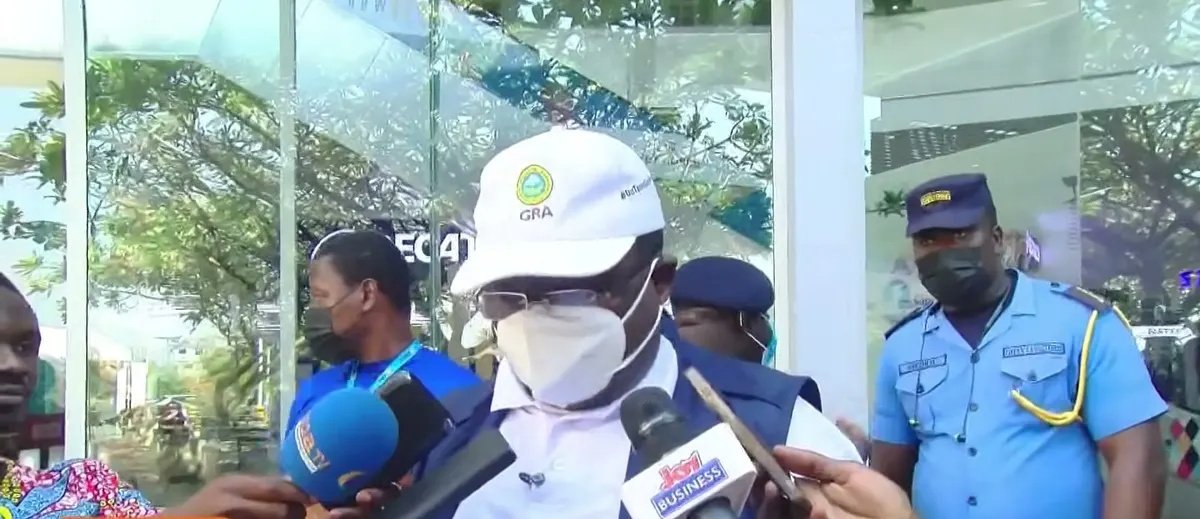
The Ghana Revenue Authority is examining whether taxpayers’ declared incomes are consistent with the vehicles they purchase and goods they import as it uses lifestyle audits to address gaps in tax collection.
Commissioner-General Anthony Kwasi Sarpong said GRA officers were inviting taxpayers to review transaction information held by the Authority, including data linked to their spending.
“When we invite the taxpayers and show them their own data,” he said in a television interview on Thursday, weeks after officers visited shops at the Achimota Retail Centre.
Mr Sarpong rejected suggestions that the audits were excessive or being conducted mainly because of pressure to meet revenue targets.
“Not at all,” he said, arguing that Ghana’s tax-to-GDP ratio remained below the African average and showed that tax collection was not keeping pace with economic activity.
He estimated the African average tax-to-GDP ratio at about 16 per cent, with Ghana below that level.
“That means that there are leakages in the system,” he said.
The Commissioner-General said stronger compliance measures were expected to help raise Ghana’s tax-to-GDP ratio to a projected 17.9 per cent in 2027. Others have also urged the government to pursue that target by closing revenue leaks.
The GRA is seeking GH¢237 billion in non-oil tax revenue in 2026. It had collected GH¢185.5 billion by the end of October, and Mr Sarpong said the Authority remained on course to reach its year-end target.
He said the final two months of the year were traditionally strong for tax collection.
At the Ghana Economic Forum, Mr Sarpong had said revenue collections increased from GH¢153 billion in 2024 to GH¢182 billion in 2025. The 2026 target of GH¢237 billion includes ESLA collections.
Port controls
Mr Sarpong also said GRA officers found to have failed in their duties at the country’s ports would be held responsible.
The Authority had called in some officers following incidents at the ports, he said.
“If it is proven that you didn’t do your work well, that as an individual I have to be accountable for that,” he said.
He acknowledged that prohibited goods sometimes passed through the ports, damaging Ghana’s reputation.
The GRA is working with other agencies to establish a one-window system for joint container inspections. A separate team is assessing the investment required at ports and border points, including Aflao and the airport.
The measures form part of a wider enforcement campaign by the Authority.
At West Hills Mall, officers found that 19 of 22 shops were not tax compliant. Staff from branches of China Mall were also arrested over E-VAT invoices at Ashaiman, Weija and Nsawam.
Mr Sarpong said inadequate systems and limited investment had previously restricted revenue collection. He added that the government was now supporting the GRA in addressing those weaknesses.