The Bank of Ghana has reduced its policy rate from 14% to 11%, but the average bank loan still cost 15.79% in October, according to the central bank’s latest data.
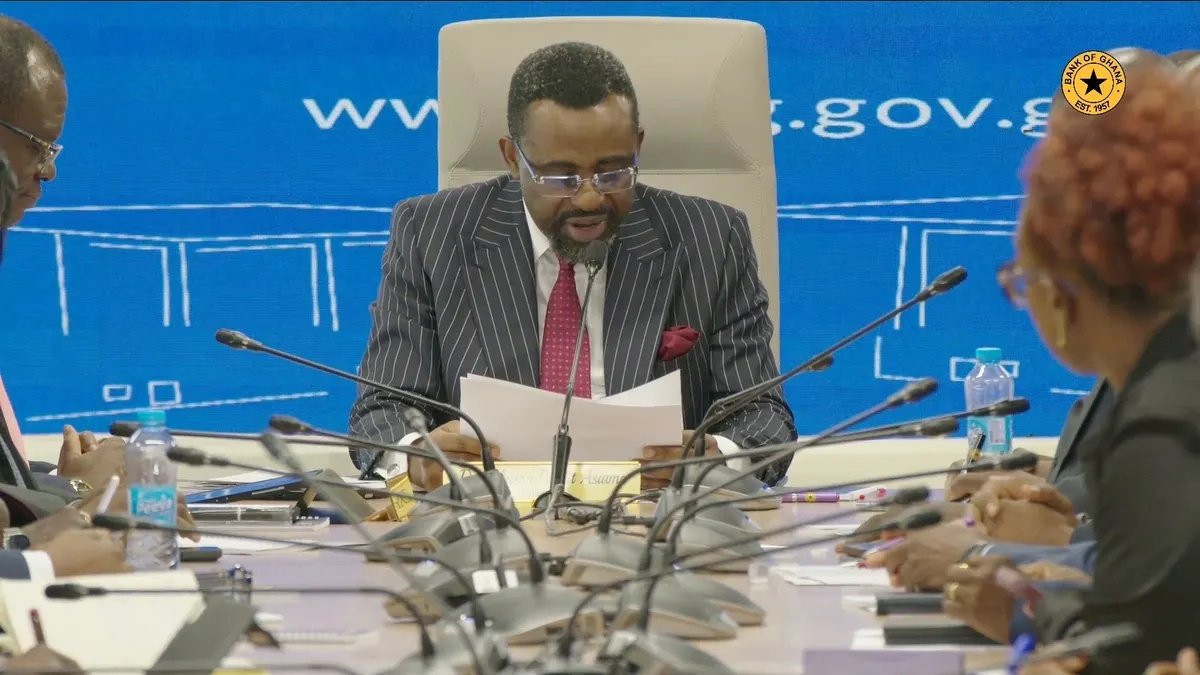
Governor Johnson Asiama announced the reduction at the Bank of Ghana’s 133rd monetary policy press conference in Accra. The Monetary Policy Committee met from Monday to Wednesday before agreeing to align the rate downwards.
However, the lending figures cover October, before the latest cut took effect. The Bank’s November data pack, released on Tuesday, showed that the average lending rate had barely moved from 15.78% in September.
The longer-term trend is more pronounced. Average lending costs fell from 22.22% in October last year to 20.58% in January and then to 15.79% in October.
Why borrowers have yet to see a major change
The benchmark used by banks when pricing loans has also declined only marginally.
The Ghana Reference Rate dropped from 10.18% in September to 10.04% in October. The Ghana Association of Banks has set the November rate at 10.01%, effective from 4 November.
That figure was established a fortnight before the policy announcement and will remain unchanged for at least 30 working days, according to the association. As a result, borrowers are unlikely to feel much immediate effect from the policy decision until the benchmark is reset.
The reference rate combines the 91-day Treasury bill rate, the policy rate and the overnight interbank rate. During October, the 91-day Treasury bill stood at 4.62% while the average interbank rate was 10.20%.
The Monetary Policy Committee said the reduction also reflected conditions already visible in financial markets. Its press release noted that market rates had fallen below the announced policy rate, meaning the effective stance was already looser than 14% before Wednesday’s decision.
The committee also replaced its 14-day lending instrument with a seven-day instrument and narrowed the policy-rate corridor from 400 to 100 basis points. Both changes are intended to give banks a clearer signal from the central bank.
Banks have yet to announce changes
Major banks set their own base rates above the benchmark, but no November revisions from the largest lenders could be confirmed through their published pages at press time. The Association’s notice does not specify when commercial loan rates might fall.
The next scheduled policy meetings will take place from 18 to 20 January 2027, with the decision due on 20 January.
Despite the continued cost of borrowing, credit is expanding. The committee said private-sector lending increased by 37.2% in the year to October, or 30% after inflation, compared with 13.9% a year earlier.
Governor Asiama said at the final policy meeting of the year that the banking sector remained solvent. The Bank’s figures show the bad-loan ratio fell to 13.1% from 19.5% a year earlier.
Inflation rose from 5.2% in September to 5.5% in October, driven by utility tariffs and fuel prices. The Bank said higher pump prices and transport fares had weakened consumer confidence.