Ghana’s first Marine Protected Area (MPA) has received formal approval, but officials say almost $1.5m is still needed to put its management plan into practice.
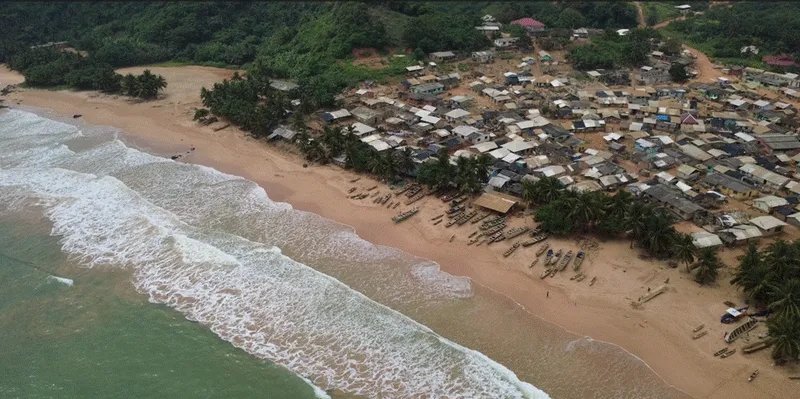
The 703.86 sq km protected zone covers the Greater Cape Three Points Area in the Western Region. Cabinet approved the MPA on 7 October 2025, following years of scientific studies, consultations with coastal communities and political negotiations.
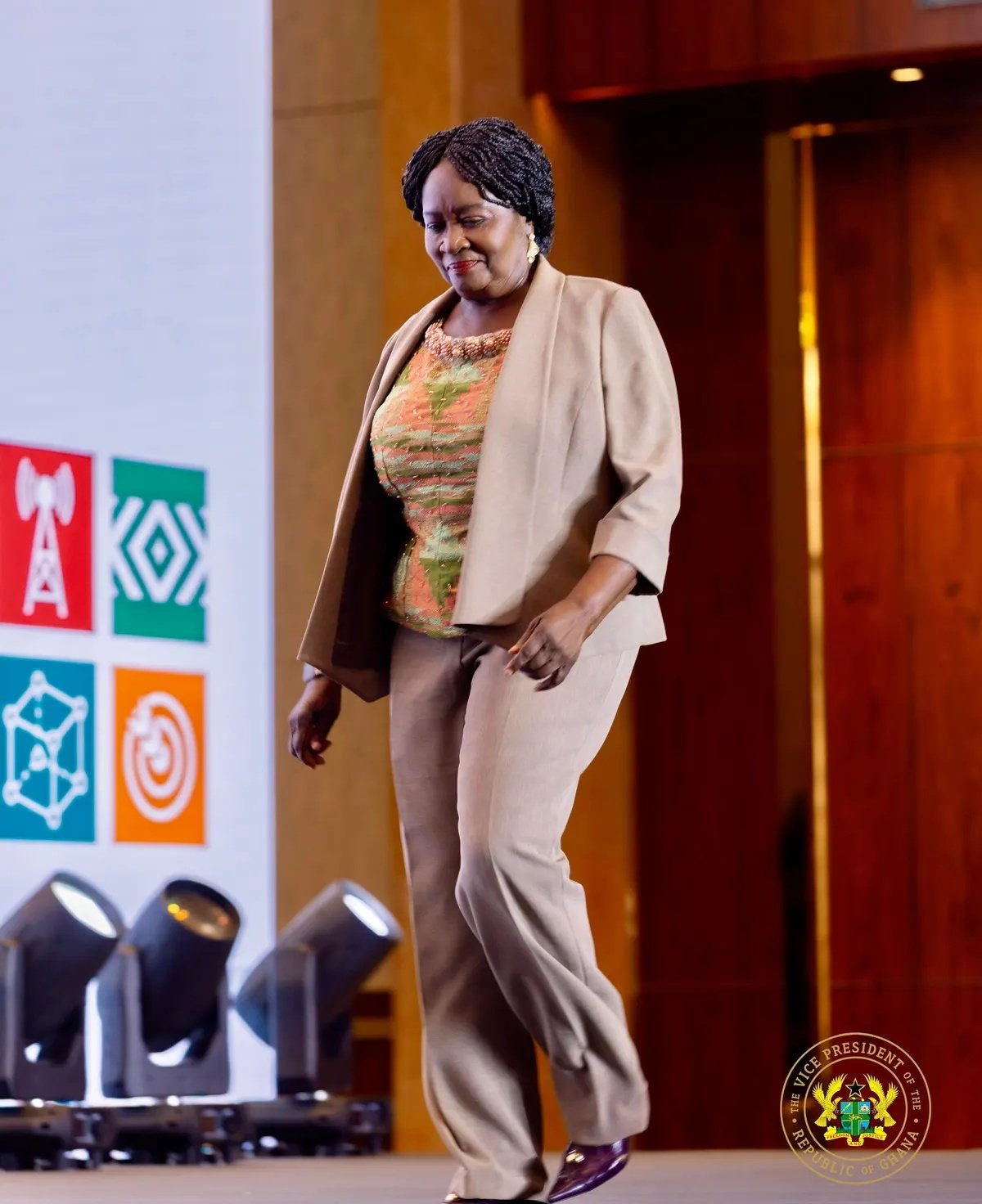
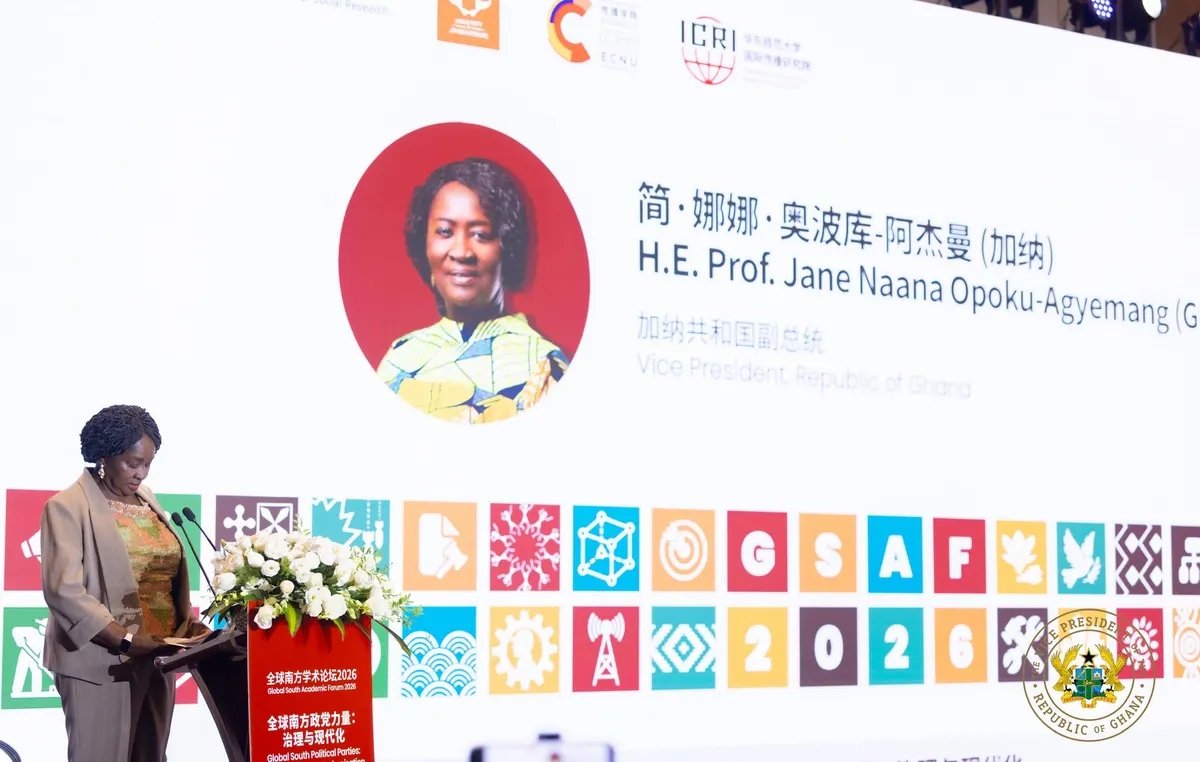
Its formal declaration in the Gazette took place on 14 April 2026, at a ceremony presided over by Vice-President Naana Jane Opoku-Agyemang.
However, approval does not guarantee implementation. Dr Evans Arizi, chairman of the MPA’s Technical Advisory Committee, said funding had so far been irregular and depended largely on non-governmental organisations and development partners rather than a predictable government allocation.
The committee is costing the full management plan, including monitoring equipment and community workshops. It estimates that nearly $1.5m will be required to manage the area effectively.
“It’s going to be a difficult one for them to receive monthly stipends. It’s not feasible. I think the community members should be looking at something beyond that,” Dr Arizi said.
The Minister for Fisheries and Aquaculture has asked organisations involved in the project to disclose the development funding they have already secured, so the government can identify the remaining shortfall.
A legal framework without a funding formula
Ghana’s legal authority to establish the MPA comes from Section 39 of the Fisheries and Aquaculture Act, 2025 (Act 1146), which replaced the Fisheries Act, 2002 (Act 625).
The legislation allows the Fisheries Minister, acting on advice from the Fisheries Commission and after consulting local authorities and landowners, to declare marine reserves through a Gazette notice following scientific assessment.
Act 1146 also created the Fisheries and Aquaculture Development Fund, financed by licence and permit fees, court fines, government appropriations and donor contributions. At least 30% of the fund must support the Fisheries Commission’s running costs, while 70% of court-imposed fines must be paid into it.
But no percentage is reserved specifically for marine protected areas.
That contrasts with Belize, where the Protected Areas Conservation Trust receives fixed shares of visitor, cruise, concession and recreation fees. Since its creation in 1996, PACT has directed more than BZ$31m towards protected areas and marine reserves.
At the Philippines’ Tubbataha Reefs Natural Park, conservation fees have covered 74-80% of operating costs in peak years, although more recent funding has been divided broadly between government, fees and private support. The law guarantees 10% of conservation fees to the community of Cagayancillo.
Seychelles used debt restructuring and a sovereign Blue Bond to finance conservation and protect more than 30% of its national waters. In the United States, 16 national marine sanctuaries receive about $55m annually through congressional appropriations, while California has allocated $2.5m a year since 2015 for MPA monitoring.
Kenya and Tanzania, like Ghana, have legal frameworks for marine parks but no fixed funding ratios.
Communities seek practical support
The Cape Three Points MPA will not be a single no-fishing zone. Stephen Kankam, deputy director of Hen Mpoano, said it would include a strictly protected no-take core, gear-restricted buffer zones and an outer transition area where some fishing remains permitted.
He said the no-take zone should cover at least 10% of the protected area, with a separation of at least 100 metres from the buffer zone, although the final boundaries would depend on local social and political conditions.
“It also going to take on a political process,” Kankam said.
Residents say years of consultation have produced little visible improvement. Fishing families also blame offshore oil exploration for incidents involving fishing gear becoming caught in seaweed.
Between 2023 and 2024, the Ministry said it held 12 major stakeholder engagements and seven consultative workshops involving more than 7,000 participants, including 3,639 formal delegates from 21 coastal communities. It also produced communication materials, radio scripts and question-and-answer documents in local dialects.
Some residents want compensation or support for alternative work.
“If nothing at all, we at Cape Three Points could be awarded some stipend to compensate for any losses we might incur,” said fisher James Neneh.
Another fisher, Matthew Cobbinah, said fishing was the community’s only livelihood and called for help with education and food.
Fish processor Cecilia Essoun said: “It will be problematic if this MPA fails. This is our only source of livelihood and hope.”
Dr Arizi said monthly payments were unlikely to be affordable. Instead, he proposed eco-tourism and visitor fees that could generate income for neighbouring communities, alongside improvements to local roads.
The Ministry’s proposed measures include low-PAH Ahotor ovens for women fish processors, vocational training through TVET, micro-credit, and links with the State Insurance Company and the Social Security and National Insurance Trust. Its written response did not mention cash compensation, eco-tourism or road improvements.
Funding and implementation timetable
USAID provided about $750,000 in technical assistance through the Feed the Future Ghana Fisheries Recovery Activity, while the UK’s Blue Planet Fund supported the management-plan framework through the Ocean Country Partnership Programme.
Other listed backers include Bloomberg Philanthropies, Oceans 5, the Government of Norway, the Hans Wilsdorf Foundation and the Ocean Grants Programme, working with Hen Mpoano, Global Fisheries Resilience Action and the Fishery Committee for the West Central Gulf of Guinea.
A 2025 freeze on USAID funding delayed management-plan validation, public awareness work and staff training. The Ministry said Ghana’s 2026 appropriated fisheries budget was GH¢428,006,496, including GH¢333,420,635 in government allocations and GH¢94,585,861 in internally generated funds, but none was identified specifically for the MPA.
The project’s management plan is due by December 2026, with implementation scheduled to begin in January 2027. The Ministry’s medium-term plans include surveillance, enforcement, research, livelihood support and infrastructure.
Potential future financing includes sovereign Blue Bonds and Debt-for-Nature Swaps. The Ministry expects these instruments to be scaled between 2028 and 2031 as part of the National Blue Economy Strategy.
Kankam said the plan must deliver tangible livelihood improvements.
“Without livelihood improvements that are tangible, I don’t think we can have a successful MPA implementation,” he said.
For Ghana, the central challenge is no longer whether it can legally protect its waters, but whether it can secure a reliable income to keep that protection in place.