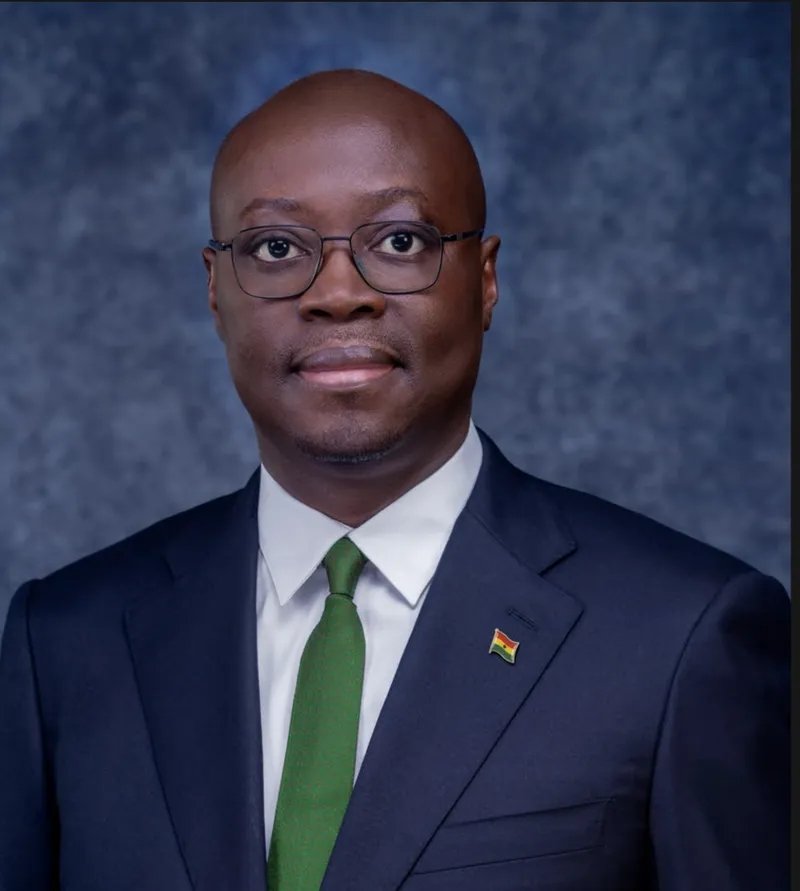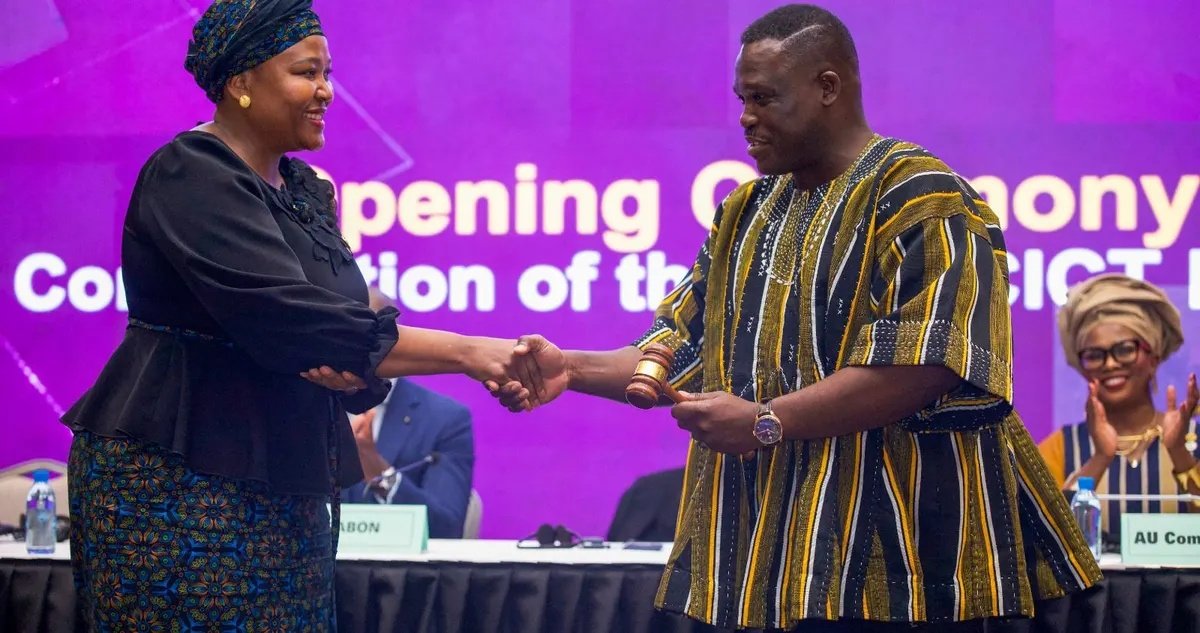
Ghana’s Minister for Communication, Digital Technology and Innovations, Samuel Nartey George, has been unanimously confirmed as chairperson of the African Union’s Specialised Technical Committee on Communication and Information and Communications Technology (AU STC-CICT).
He will serve a two-year term beginning in October 2026, after receiving unanimous support at the committee’s ministerial session in Libreville, Gabon.
The appointment gives Ghana a leading role in continental efforts to accelerate digital transformation, improve co-operation on cybersecurity and advance Africa’s interests in the global digital economy.
Accepting the position, Samuel Nartey George said the chairmanship was a responsibility to the entire African Union and not simply a privilege for Ghana.
He thanked the Government and people of Gabon for hosting the meeting and praised the outgoing chairperson, Lesotho’s Minister for Information, Communication, Science, Technology and Innovation, Nthati Morosi, along with the outgoing bureau, for their stewardship.
George said he would build on the committee’s existing work but stressed that African countries must move from policy commitments to delivering their digital development plans.
He identified reliable connectivity, data governance, cybersecurity and artificial intelligence as areas requiring urgent and co-ordinated action from member states.
Africa, he said, must widen access to dependable internet and communications infrastructure, ensure its data resources generate value for its people, improve its joint response to cyber threats and develop artificial intelligence systems suited to the continent’s circumstances and priorities.
George also called for a common African position in international discussions involving artificial intelligence, data and digital trade.
He argued that the continent’s collective weight, representing nearly 1.5 billion people, should be used to influence global technology standards and policies. Individual countries, he said, would be in a weaker position if they negotiated separately.
“Africa must be at the table, not on the menu,” he said, urging stronger continental co-ordination in determining the future direction of the digital economy.
The minister pointed to Ghana’s One Million Coders Programme as an example of an initiative aimed at giving young people the digital skills required to take part in the international technology industry.
He said Ghana’s leadership of the committee would be based on listening to member states, building consensus and ensuring that decisions were put into practice.
George added that the committee’s work during the next two years should be assessed through tangible outcomes rather than declarations.
His appointment comes as African nations attempt to close the digital divide, expand infrastructure, improve the management of data and ensure the continent benefits from emerging technologies.
Ghana’s unanimous confirmation is expected to allow it to support a more co-ordinated approach to digital development across Africa while strengthening the continent’s collective voice in global technology discussions.