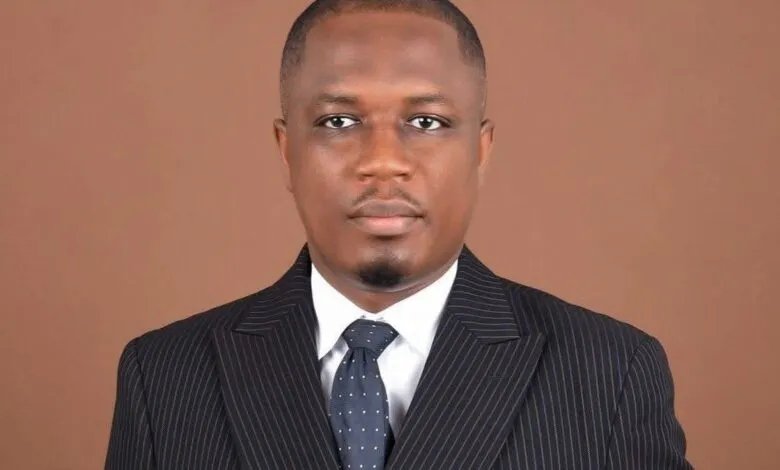
Parliament should make the government publish a project-by-project schedule for the Big Push programme as an annex to the 2027 Budget, development economist Dr Frank Bannor has said.
The schedule should show each contract’s value, payments made, physical progress and expected completion date, according to Dr Bannor, a lecturer at the Ghana Institute of Management and Public Administration (GIMPA).
In his assessment of the budget statement presented by the Finance Minister, Dr Bannor said the Big Push had successfully mobilised contractors and real funding. He also described the financing model for the expressway programme as innovative, with the government saving before construction and the Armed Forces securing the right of way.
However, he warned that the programme had committed contracts worth GH¢63 billion against annual funding of roughly GH¢30 billion. He also pointed to inconsistent reporting, including three different 2027 figures and a gap between the narrative and tables for 2026.
Dr Bannor said there was also a risk that transfers into a holding account could be classified as capital spending, while the budget provided no reporting on outcomes.
Concerns over fiscal plans
Dr Bannor said the government’s fiscal rule had been weakened only a year after it was introduced through legislation.
The 2026 Budget described a primary surplus of 1.5% of GDP as “proof of fiscal discipline under the amended PFM Act” and projected the same level for 2026–2029. The 2027 Budget, however, reduces the target to 0.5% and includes a PFM (Amendment) Bill.
He said changing the rule as soon as fiscal space became available offered limited protection during an election cycle, with elections due in 2028.
Although the budget declares “No new taxes”, Dr Bannor noted that it still includes revenue equivalent to 0.5% of GDP from tax measures.
“The New Economy is financed by (a) cutting the surplus target by 1 percentage point of GDP and (b) 0.5% of GDP from ‘tax reforms already approved by Parliament and compliance measures’. The budget does not show which measures yield this amount,” he said.
Capital expenditure is set to rise from GH¢52.5bn to about GH¢100bn, but Dr Bannor said this increase was being proposed despite a weak record of implementation. Capital spending in 2026 was below target, while foreign-financed capital expenditure reached less than half of its target. He said the budget did not address the country’s absorptive capacity.
He also questioned the assumption that the energy sector shortfall would disappear. “The medium-term table assumes payments fall to zero by 2029. Given Ghana’s history of recurring shortfalls, this risks understating future expenditure,” he said.
Spending and financial risks
Dr Bannor said the surplus had been partly achieved at the expense of poorer households, with social protection transfers released at only 59% of the January–October target in 2026.
He also criticised renewed earmarking, including the removal of the cap on youth employment funds and the Ghana EXIM levy, 40% of which must go to poultry. All petroleum revenue and royalties are also being assigned to one railway for two years.
He said those decisions reversed the purpose of the Earmarked Funds Capping and Realignment Act and reduced the budget’s ability to respond to shocks such as the 2026 floods.
Dr Bannor said contingent liabilities had not been quantified, including risks linked to state-owned power plants, a state-owned nuclear plant, pharmaceutical SPVs, the new Sovereign Wealth Fund acting as an “equity partner”, SSNIT-financed hotels and 24H+ financing kept “largely off the government’s balance sheet”.
He added that the Contingency Fund had been garnished during the June 2026 floods. While he described the proposed amendment to the State Proceedings Act as sensible, he said the episode demonstrated the fragility of the emergency-financing system.