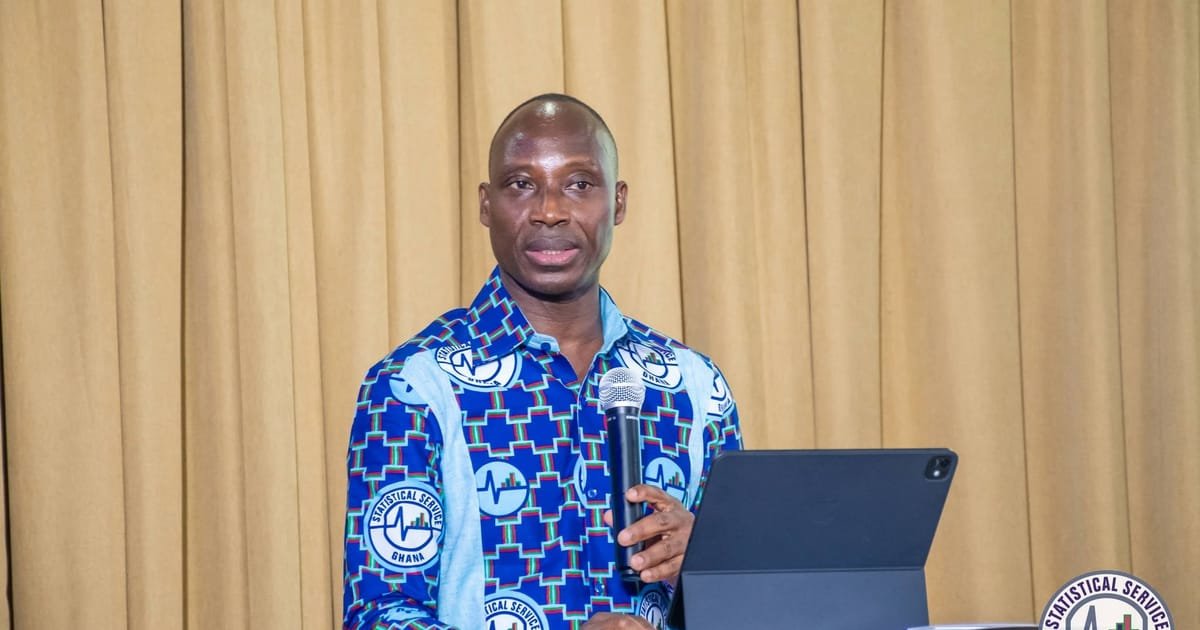
Dr Alhassan Iddrisu, the Government Statistician, has challenged Ghana’s statisticians, data scientists, researchers and policymakers to focus less on producing figures and more on whether those figures are improving public policy and the lives of ordinary citizens.
Speaking at the 4th Annual Statistics and Data Science Conference 2026 in Tamale, Dr Iddrisu said the growing volume of information available to governments and institutions would have little value unless it could be trusted, correctly interpreted and converted into decisions with measurable results.
The conference, held under the theme “Innovations in Statistics and Data Science: Research, Practice and Policy Impact”, brings together statisticians, data analysts, researchers, academics, policymakers, development partners and industry professionals. Dr Iddrisu delivered the opening address as Special Guest of Honour on Wednesday, 26 August.
He said Ghana’s statistical community needed to move beyond asking what could be measured and instead consider what difference that measurement could make.
The discussion follows last year’s conference in Koforidua, which examined statistical perspectives on the Sustainable Development Goals.
“Measurement alone is not enough. Data must not sit in reports; it must live in decisions.”
Dr Iddrisu said innovation should ultimately be assessed by its effect in practical settings, including classrooms, clinics, farms and district assemblies.
“Innovation in statistics and data science must ultimately be judged by how well it improves decisions, strengthens policy and changes lives,” he said.
More information does not guarantee better decisions
Ghana and other countries are generating data at an unprecedented rate through administrative systems, mobile networks, satellites, sensors and digital platforms.
However, Dr Iddrisu warned that this abundance had created a fresh challenge: deciding which information was reliable, how different sources should be combined and how results could be communicated quickly enough for policymakers to act.
He said the future of official statistics should not be judged by the number of figures released, but by the public value those figures create.
At the Ghana Statistical Service, he said, the focus was increasingly shifting from asking which statistics could be produced to identifying the decisions they should improve, the people who needed them and the speed at which they had to be delivered.
“That is the difference between being a producer of statistics and being a provider of solutions,” he said.
Inflation, poverty and corruption data highlighted
Dr Iddrisu cited inflation, poverty and governance as three areas in which the Ghana Statistical Service was using innovation to make official statistics more relevant to the public and decision-makers.
He said monthly inflation figures affected far more than the headline rate, influencing interest rates, wages, household budgets, investment decisions and the national budget.
The Ghana Statistical Service has sought to improve both the speed of its monthly releases and the way the information is explained. It published its first Annual Consumer Price Index and Inflation Report in April 2026 and introduced the Five-Minute Statistics series to present important findings in language that is easier for the public to understand.
On poverty, Dr Iddrisu said the Service was no longer relying only on income to assess deprivation. Its first Multidimensional Poverty Report examines disadvantages in education, health, housing, sanitation and employment.
Figures presented at the conference showed that Ghana’s multidimensional poverty rate fell from 32.3 percent in the third quarter of 2022 to 21.9 percent in the third quarter of 2025, a reduction of about 10 percentage points.
The national figures, however, conceal substantial differences between districts.
Data from all 261 districts showed that 250 recorded falls in multidimensional poverty between 2021 and 2025. In 2025, Yunyoo Nasuan District in the North East Region recorded a poverty rate of 51.6 percent, while Ayawaso North Municipal in Greater Accra recorded 5.5 percent.
Dr Iddrisu said the contrast underlined the importance of detailed, local-level statistics when policies were being targeted.
“That is not a gap in a table; it is a gap between two Ghanaian childhoods,” he told the conference.
The Government Statistician also referred to governance statistics as an example of how data could move public debate away from perception and anecdote towards measurable experiences.
Citing the latest Governance Series Report, Wave 3, he said the figures presented a mixed picture on bribery.
The proportion of people who paid bribes to public officials rose from 14.3 percent in the first half of 2025 to 18 percent in the second half. The proportion reporting requests for additional payments increased from 51 percent between January and June 2025 to 69 percent between July and December.
However, the comparison between the full years of 2024 and 2025 showed an improvement. The proportion of Ghanaians who dealt with public officials increased from 56 percent in 2024 to 72 percent in 2025, but the overall incidence of bribery fell from 18.4 percent to 16.8 percent.
The share of bribe payments exceeding GH¢1,000 also declined, from 14.7 percent to 7.6 percent.
Dr Iddrisu said the value of such information was that it helped authorities establish where corruption was taking place, who was most affected and where action should be focused.
‘Ghana in Numbers’ report planned
The Ghana Statistical Service announced a new publication aimed at making official information easier to access.
Dr Iddrisu said “Ghana in Numbers”, a flagship report, would be released before the end of the third quarter of 2026.
It will bring together key national statistics on population, prices, poverty, employment, businesses, governance and other areas in one accessible document.
The report will not produce new statistics. Instead, it will consolidate existing data for ministers, district planners, journalists, researchers, entrepreneurs, students and the wider public.
The Ghana Statistical Service will also hold the 2026 Annual Data Producers, Users and Enhancers Forum in the final quarter of the year.
That event is expected to include organisations that produce and use data, as well as researchers, data scientists, technologists, development partners and communicators involved in turning information into more useful products.
Researchers asked to focus on practical impact
Dr Iddrisu urged academics and researchers to look beyond publications and statistical significance.
He asked them to consider three questions: what new knowledge their work created, which practical problem it addressed and how the findings could be turned into policy, institutional practice or a development intervention.
He said those questions should be considered when research was being designed, not only after it had been published.
Where research identifies regional differences in education, healthcare or employment, he said the key issue should be what a policymaker ought to do differently as a result.
“The question is what a policymaker should do differently on Monday morning because of it,” he said.
Policymakers were also encouraged to engage with researchers beyond conference presentations, explain clearly what evidence they needed and ask difficult practical questions capable of making research more useful.
AI should support, not replace, judgement
Artificial intelligence was another major part of Dr Iddrisu’s address.
He acknowledged that AI could transform official statistics through automated processing, quality checks, anomaly detection, forecasting, geospatial analysis and faster dissemination.
But he warned against allowing technology to replace professional statistical judgement.
“AI must augment statistical expertise; it must never replace statistical judgement,” he said.
Professional independence, methodological integrity, transparency, confidentiality and quality assurance, he added, remained essential to the credibility of official statistics.
The issue was no longer simply whether AI could perform a particular task, he said, but whether it should be used, under what conditions and whether its results would remain statistically sound and ethically defensible.
To strengthen safeguards across Ghana’s National Statistical System, two instruments have been developed: a Data Quality Assurance Framework and a Code of Ethics and Practice.
Both documents are expected to receive Cabinet approval, after which institutions across the statistical system will be encouraged to adopt them.
Skills needed by the next generation
Addressing students and early-career professionals, Dr Iddrisu said future statisticians would need abilities beyond traditional statistical methods.
Those skills would include programming, data science, artificial intelligence, visualisation, ethics and an understanding of public policy.
Technical training alone would not be sufficient, he added. Young professionals would also need curiosity, integrity and the ability to explain complex analysis in language that decision-makers and ordinary citizens could understand.
“If people cannot understand our statistics, our statistics cannot serve them,” he said.
Dr Iddrisu called for closer co-operation between universities, government, industry and development partners. Universities provide methods and knowledge, government offers the policy and implementation environment, industry contributes technology and investment, while development partners support institutional capacity.
He concluded by warning that Ghana’s increasingly complex development challenges could not be addressed with outdated data, methods and thinking.
Participants were urged to ensure the conference produced more than academic presentations by building partnerships, challenging assumptions and developing practical solutions.
“Let us move from data to insight, from insight to evidence, from evidence to policy, and from policy to measurable public value in the lives of our citizens,” Dr Iddrisu said before formally declaring the conference open.
The 4th Annual Statistics and Data Science Conference is organised by the Ghana Statistical Association in collaboration with institutions including Tamale Technical University and the University for Development Studies. It brings together Ghana’s statistics, research, data science and policy communities in Tamale to discuss how innovation can move beyond research outputs and deliver real-world development impact.