The Ghana Water Company Limited (GWCL) says the government owed it GH¢459 million as of September 2026, warning that the unpaid money is placing growing strain on its finances and day-to-day operations.
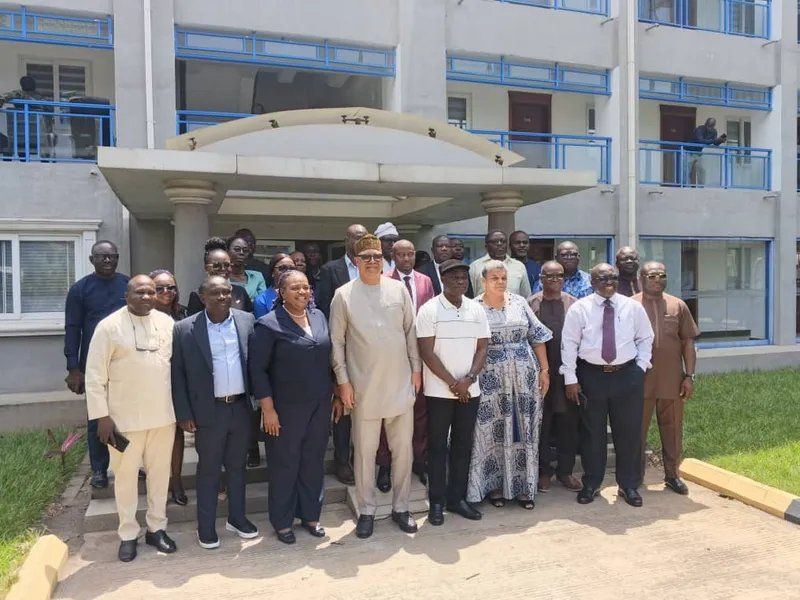
The disclosure was made during a working visit to the company by Works and Housing Minister Ahmed Ibrahim. GWCL management used the meeting to outline the challenges affecting water production and distribution across the country.
Michael Klutse, the company’s Chief Manager for Corporate Planning, Monitoring and Evaluation, told the minister that only 85 of Ghana’s 110 water systems were currently operational. Those systems serve more than 1.033 million customers.
The company is working to expand its operational capacity and improve its service, including replacing ageing pipelines in several parts of the country. Management said the work was intended to make the distribution network more efficient and help meet the increasing demand for potable water.
However, GWCL said its ability to operate effectively remained affected by the government debt, water theft and the consequences of illegal mining.
Mr Klutse identified water theft as a major problem because it reduces the company’s revenue. GWCL relies on payments for water supplied to customers to fund its operations, maintain infrastructure and carry out expansion projects.
Unpaid bills and the theft of water therefore add further pressure to the company’s financial position, at a time when it is also managing a substantial government debt.
Illegal mining, widely known as galamsey, is another significant concern because of its effect on water bodies used in the production of treated water. Mr Klutse said the activity continued to threaten water production and had reportedly spread to the Upper East Region.
The development has increased concern about protecting water sources and maintaining reliable supplies to communities in the area.
In response, Mr Ibrahim asked the company to find ways of recovering lost revenue and improving its financial position. He also urged GWCL to strengthen the deployment of smart metering technology to tackle water theft and improve revenue collection.
The visit enabled the minister to review the company’s operational difficulties and the measures being taken to improve service delivery.
TDC land leases
Mr Ibrahim later visited the Tema Development Corporation (TDC), where talks centred on land ownership, land administration and affordable housing.
TDC’s Managing Director told the minister that leases held by a number of agencies in the Tema metropolis had expired and remained unrenewed. The organisations named included the Tema Oil Refinery (TOR) and the Volta Aluminium Company (VALCO).
The disclosure highlighted questions about the current status of the leases and the need for the affected agencies to settle their land tenure arrangements.
The engagements formed part of the minister’s visits to institutions under his portfolio to assess their operations and discuss issues affecting their performance.
By Joseph Armstrong Gold-Alorgbey