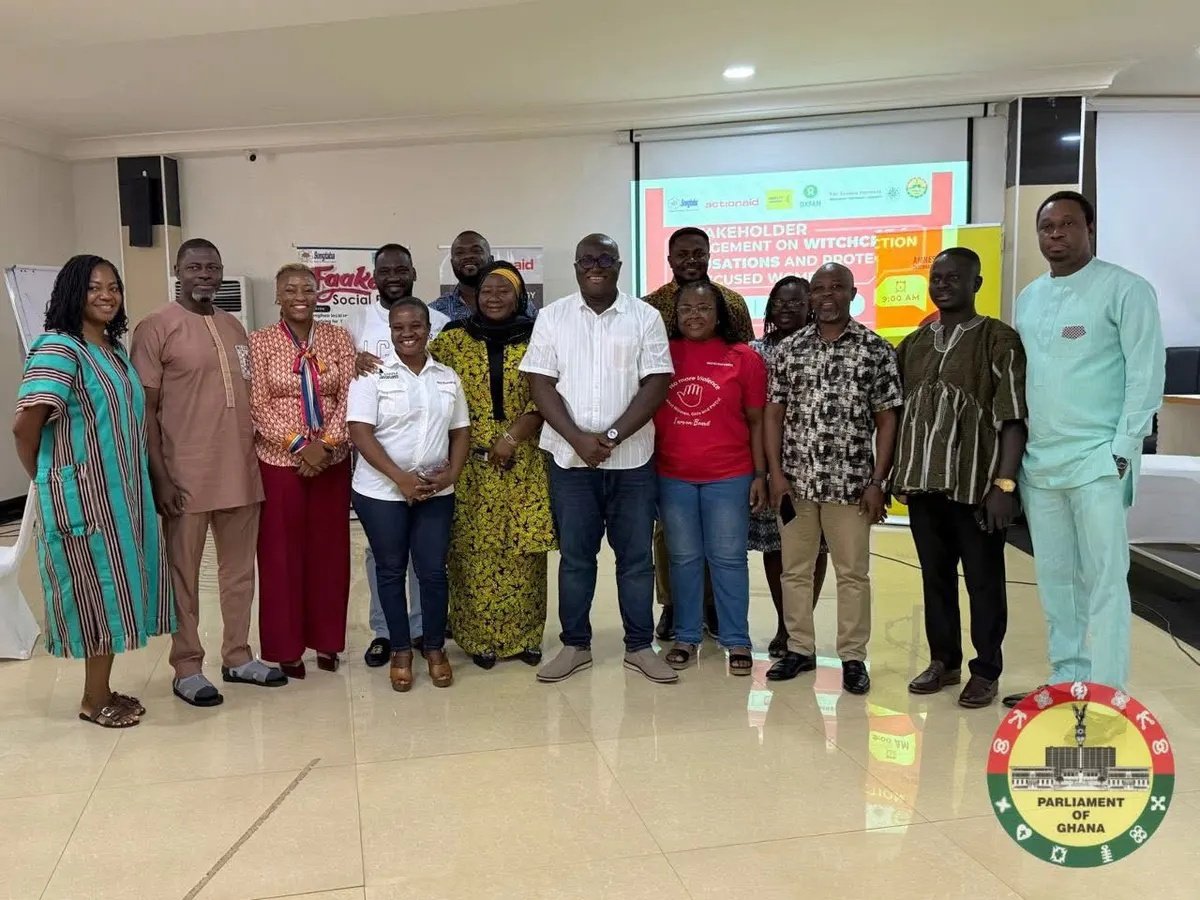
Parliament’s Human Rights Committee has taken its campaign for the Anti-Witchcraft Accusations Bill to the Northern Regional House of Chiefs, asking traditional leaders to support legislation aimed at protecting people accused of witchcraft.
The committee, chaired by Kumawu MP Ernest Yaw Anim, met chiefs in Tamale to build support for the bill, which was reintroduced in July by five MPs from both sides of the House.
The discussions focused on the rights and dignity of those accused, particularly women and older people, who are most frequently targeted. The committee also asked the chiefs to help raise public awareness of the proposed law and challenge the harmful practices that can follow accusations.
It said the protection of cultural heritage should go hand in hand with respect for human dignity. Mr Anim thanked the chiefs for receiving the delegation, as well as Songtaba, the women’s rights organisation that helped organise the meeting.
In October, the committee took the same message to the Office of the National Chief Imam and the Christian Council of Ghana. Both were reported to have pledged to discourage the persecution of people accused of witchcraft.
The Criminal Offences (Amendment) Bill would make it an offence to declare, accuse, name or label another person a witch. It would also criminalise working as a witch doctor or witch finder.
An earlier version of the bill was passed in July 2023, but lapsed without receiving presidential assent. Following its first reading, the current bill was referred to Parliament’s Constitutional, Legal and Parliamentary Affairs Committee, where it is awaiting consideration and a report. In October, the committee told stakeholders it would work to secure its passage.
At the meeting in Tamale, the Paramount Chief of Kumbungu, Alhaji Naa Abu Iddrisu II, said the proposed legislation needed to address three issues clearly: the meaning of juju, the distinction between witchcraft and alleged witches’ camps, and the role chiefs should play in dealing with accusations.
He described the camps as “a shelter for the people” because they accommodate individuals who have fled their families. The camps, he said, should not be treated as synonymous with witchcraft.
On the question of juju, he urged the committee to state clearly whether it exists, arguing that Parliament must take that reality into account when making laws. Chiefs, he added, remain villagers’ first point of contact, Ghana Ntentan reported.
Women accused of witchcraft live in camps across northern Ghana, including the Gambaga Alleged Witches Camp, whose inmates have received support from the Police Women’s Association.
Amnesty International renewed its demand for the bill in July, six years after the killing of Akua Denteh.