The Ghana National Gas Company Limited (Ghana Gas) is extending vegetation restoration around its facilities and operational boundaries as part of wider measures to improve environmental protection and community safety.
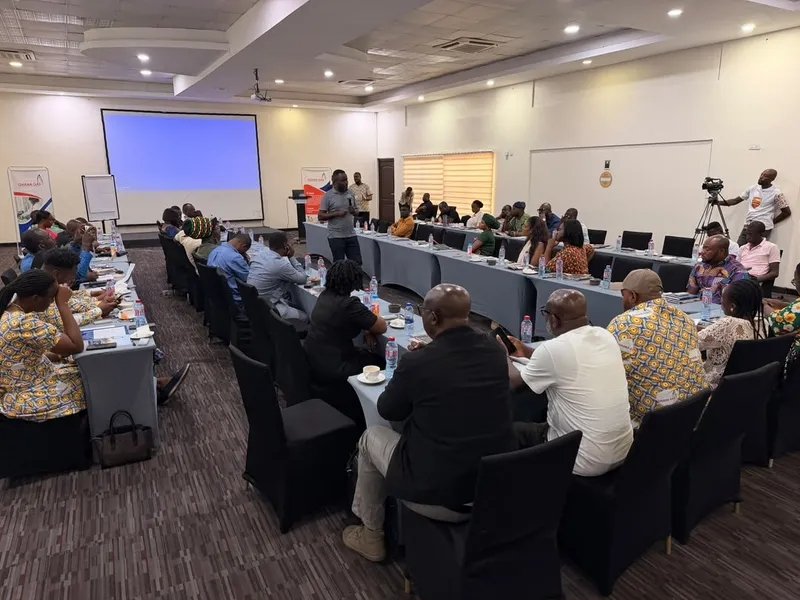
The company outlined the initiatives during an engagement with media practitioners from the Western and Greater Accra project-affected regions. The event, organised by Ghana Gas’s Corporate Affairs and Community Relations Office, took place at Alisa Hotel in Accra on Saturday, October 17, 2026.
The session focused on the company’s operations, with particular emphasis on health, safety, environmental protection and sustainable development. Journalists were briefed on safeguards for surrounding communities, emissions monitoring, vegetation restoration and efforts to reduce the environmental effects of Ghana Gas’s activities.
Jaasu Yahaya, Principal Manager for Health, Safety and Environment, said the company had introduced emergency preparedness arrangements for communities within its operational zones. These include evacuation plans and designated routes to support the safe movement of residents during an emergency.
He said Ghana Gas worked with its Community Relations and Security teams to monitor activity along pipeline corridors and maintain contact with communities located within its project areas.
The company also carries out health-related engagements in communities near its facilities, Mr Yahaya said, to identify potential concerns and assess circumstances that could affect residents’ wellbeing.
Tree planting and restoration
Mr Yahaya said tree planting and vegetation restoration programmes were being used to improve environmental conditions and support long-term ecological sustainability.
Ghana Gas planted approximately 914,000 trees during previous phases of its restoration programme, achieving a survival rate of about 75 per cent. Trees planted during the current reporting period have recorded a survival rate of approximately 95 per cent.
The company is now assessing areas around its facilities and operational boundaries that may require further restoration, he added.
Ghana Gas is also strengthening its emissions-monitoring systems to improve the detection and management of gas releases. Mr Yahaya said enhanced material-balance monitoring would provide a clearer picture of the volume and nature of gas moving through the company’s systems.
The company is exploring the installation of additional sensors at strategic points within its plant to identify potential leaks and improve its response to emissions-related incidents. The measures are expected to support faster detection of gas releases and strengthen overall environmental performance.
Reducing gas flaring
Mr Yahaya said operational and management teams were continuing to examine ways to commercialise components of gas currently being flared.
The initiative is intended to reduce gas flaring and its associated environmental impact, while allowing the company to use available resources more efficiently. He said the interventions reflected Ghana Gas’s commitment to improving operational efficiency and reducing the environmental footprint of its activities.
Richard Ernest Kirk-Mensah, Head of Corporate Communications at Ghana Gas, said the engagement was an important opportunity to strengthen the company’s relationship with the media.
He said continued briefings would improve journalists’ understanding of Ghana Gas’s operations and initiatives, leading to more accurate and comprehensive reporting.
Mr Kirk-Mensah added that providing media practitioners with relevant information was important for informed public discussion of the company’s role in Ghana’s energy sector.
The engagement forms part of Ghana Gas’s stakeholder relations programme, which aims to promote transparency, improve public understanding and strengthen communication with key stakeholders. Through continued media collaboration, the company also intends to explain its operational activities, environmental responsibilities and community-focused interventions, as well as its contribution to Ghana’s energy security and sustainable development.