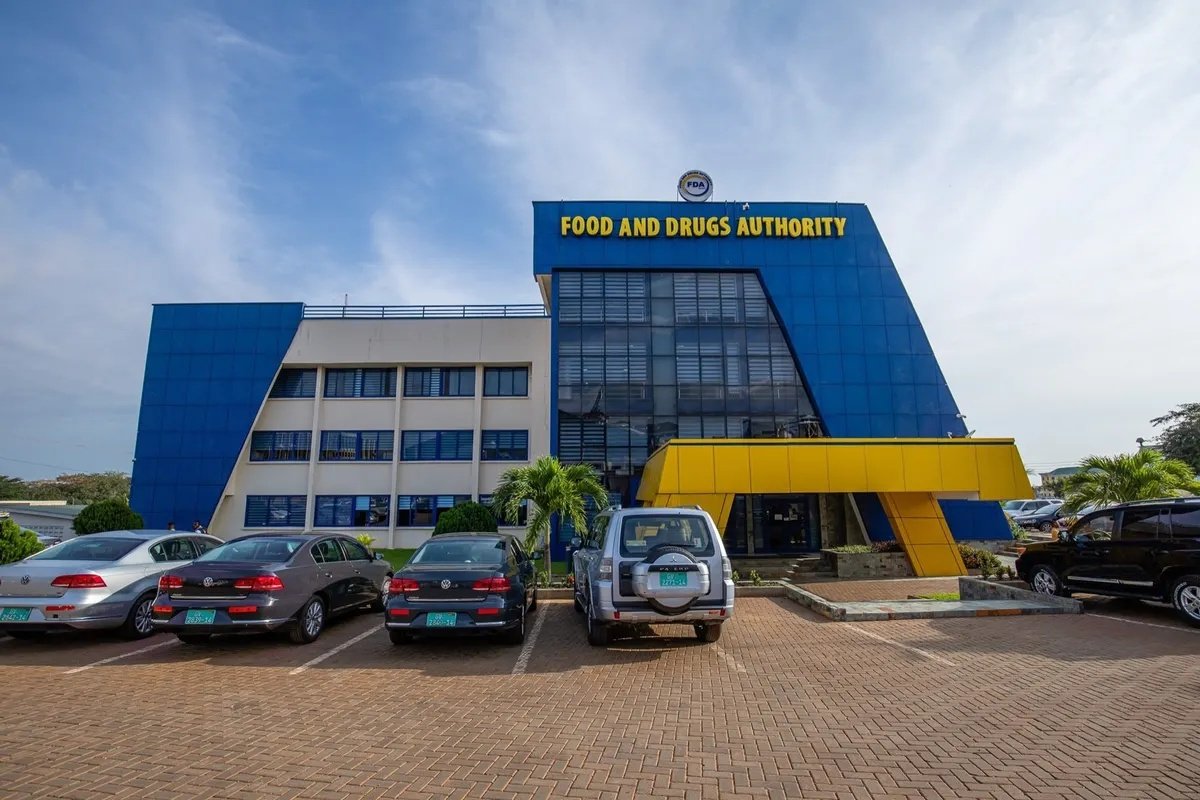
The Food and Drugs Authority (FDA) is expanding oversight of medicines from manufacturing through to retail sales as Ghana aims to produce 70 per cent of the drugs used in the country domestically.
FDA Chief Executive Officer Prof Kwabena Frimpong-Manso Opuni announced the measures in Accra on Tuesday as the regulator launched celebrations marking its 30th anniversary.
The proposed expansion includes digital systems to track medicines throughout supply chains and the use of artificial intelligence in regulatory operations. Under its 2026–2030 plan, the FDA will monitor production, registration, distribution and sales.
Ghana currently imports nearly 70 per cent of the medicines supplied to hospitals and clinics. In August, President John Dramani Mahama introduced a five-year strategy to reduce that dependence, with a target of making at least 70 per cent of medicines consumed nationally in Ghana.
A planned pharmaceutical hub at Kwenyako in the Eastern Region forms part of the drive. The project is included in a US$1 billion national compact.
Cabinet approved a National Pharmaceutical Manufacturing Policy in July, according to reports. Plans for two pharmaceutical and biomanufacturing hubs were announced in November, also with the aim of reducing the country’s reliance on imported medicines.
Reports of Prof Opuni’s remarks said a reassessment carried out in January 2025 confirmed the FDA’s World Health Organisation Maturity Level Three status, which it first attained in 2020.
The regulator’s clinical trials and pharmacovigilance functions had reached Maturity Level Four, he was also reported as saying. In addition, 63 laboratory tests had received accreditation.
Speaking on behalf of Health Minister Kwabena Mintah Akandoh, Ministry of Health Chief Director Desmond Boateng called for the FDA to extend its surveillance operations to social media and e-commerce platforms.
The move would target unregistered products, including medicines being promoted to young consumers. Prof Opuni was reported to have warned about the marketing of unregistered and expired products, while Mr Boateng urged closer scrutiny of misleading health claims and alleged miracle cures.
The FDA is also increasing its presence at Ghana’s borders to prevent smuggled medicines entering the country. Gayheart Mensah, Deputy Chief Executive Officer in charge of Corporate Services, said container offices would be established at 13 unapproved border crossings.
Four of the posts are expected to be completed in the first week of December, while work on the remaining nine is scheduled to finish by mid-2027.
Prof Opuni said 10 district offices were already fully operational, with about 50 additional offices being activated alongside the border posts. The expansion is intended to strengthen regulatory standards across Ghana.
Established in 1997, the FDA now operates under the Public Health Act, 2012 (Act 851). Its 30th anniversary is being held under the theme: “30 Years of FDA: Protecting the Consumer, Inspiring Trust.”