Ghana has called for a new mining relationship with Russia based on local processing, technology transfer and reciprocity, rather than the simple export of raw materials.
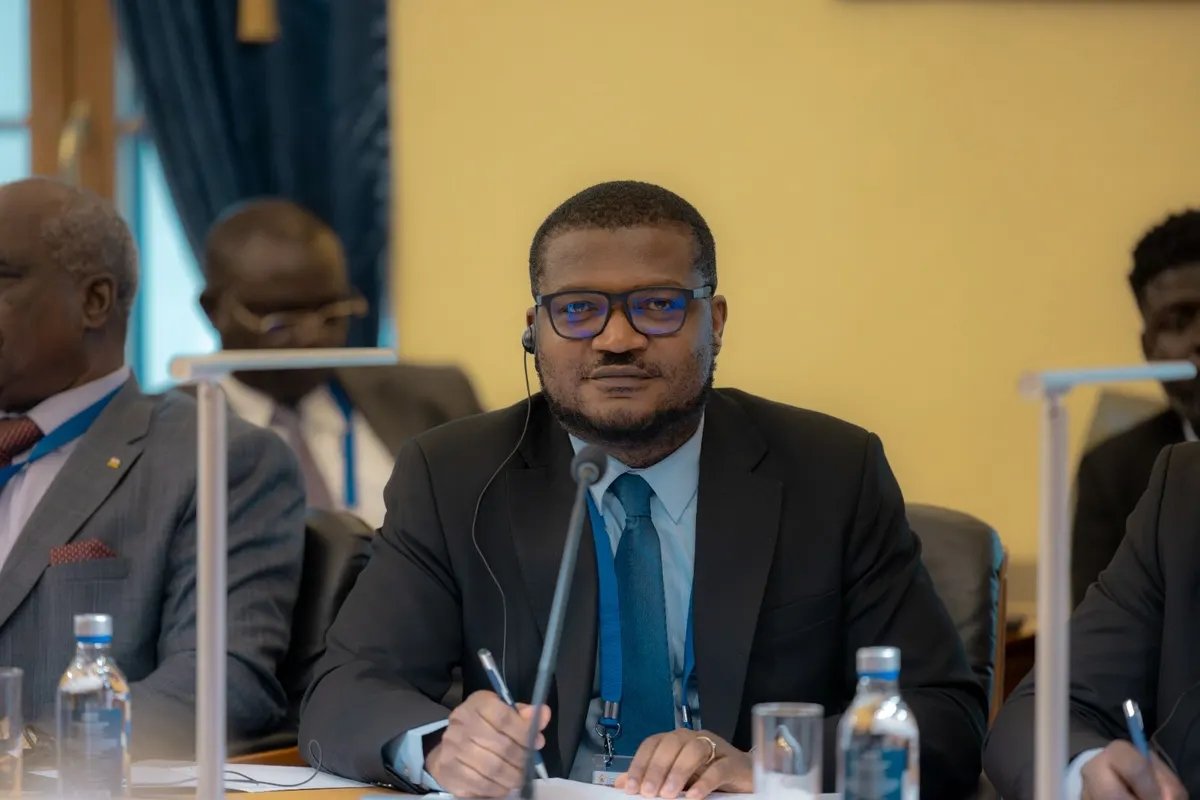
The message was delivered by Minerals Commission chief executive Isaac Tandoh on behalf of the Ghanaian government at the Second Russian-African Raw Materials Dialogue in Saint Petersburg.
Eight of the world’s 20 leading gold-producing countries are in Africa, but only about 2% of the continent’s natural resources are processed locally.
As Africa’s leading gold producer, Ghana says future agreements must help it add value to its raw materials within the country.
“All future co-operations must move beyond simple raw material extraction toward a partnership of sovereign equals,” Tandoh said.
The dialogue, taking place from October 12-16, 2026, has attracted representatives from more than 40 African countries, including more than a hundred heads of agencies and organisations. More than 500 participants are attending the meeting in Saint Petersburg to discuss cooperation on the sustainable development and management of raw materials.
It has been organised by the Ministry of Foreign Affairs of the Russian Federation, the UNESCO International Competence Centre for Mining Engineering Education and Empress Catherine II Saint Petersburg Mining University.
The event brings together government representatives, academic leaders and industry specialists to consider natural resource management, technological innovation and engineering education.
Speaking during the ministerial session, Tandoh said Ghana was a sovereign and democratic nation with a clear pathway and framework for developing its mineral resources.
He said Ghana welcomed knowledge sharing and advanced technology transfer from Russia and other well-advanced nations, but insisted any such cooperation must be genuine, structured and embedded locally.
The aim, he said, should be to leave Ghanaian engineers and institutions with measurable new capabilities, rather than create a one-way flow of resources and expertise.
Ghana is also extending its focus beyond traditional minerals to critical resources including lithium, iron ore and bauxite. Tandoh said those efforts were being supported by state-backed development frameworks including GIISDEC and GIADEC.
He highlighted Ghana’s modernised regulatory system, alongside the use of digital tools such as the Minerals Commission’s digital Mining Cadastre Administration System (MCAS) and geofencing technology.
Those systems, he said, were helping ensure mineral rights acquisitions and mining operations complied strictly with established guidelines, for the benefit of all stakeholders, including the people of Ghana.
Tandoh concluded by proposing a formal and institutionalised Ghana-Russia Mining Cooperation Framework founded on reciprocity rather than dependency.
He said Russia’s demand for imported critical minerals aligned with the resources Ghana could offer, and called for partnerships that were transformational and mutually beneficial. He added that technical training and industrial cooperation should be delivered directly through Ghanaian institutions.