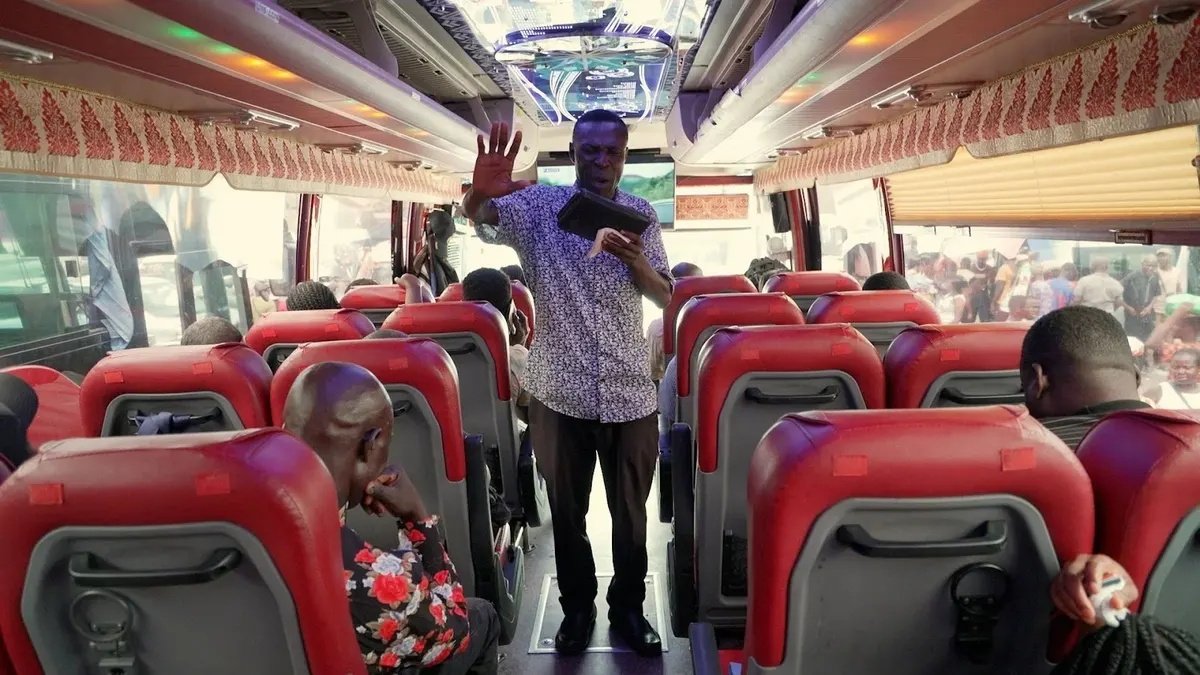
The prohibition on preaching and hawking in moving commercial vehicles in Ghana must remain in force, the President of the Institute of Governance, Ethics and Religion (IGER-AFRICA), Paul Abrokwa, has said.
His comments follow President John Dramani Mahama’s clarification of Road Traffic Regulations, 2026 (L.I. 2519), which bans both activities in moving public and commercial vehicles but does not prohibit preaching when a bus is stationary.
Speaking at Amanfrom during an inspection tour of the Tepa–Agoaso Road in the Ahafo Region, President Mahama said the regulation had been misunderstood.
“I have heard that some people are saying those who preach in buses, we are stopping those who preach in buses. We have not said so, if the bus is at the station, you can enter and preach the Word of God, but all we are saying is once the bus starts moving, such activities must then stop,” he said.
President Mahama said the measure was not new, explaining that it was an amendment passed by Parliament to an existing Legislative Instrument. He added that the earlier regulation had already prohibited hawking and preaching in trotro or buses travelling on the road.
The purpose, he said, was to ensure drivers remained fully focused and to improve safety for passengers.
In a statement, Mr Abrokwa said L.I. 2519 had prompted a major national debate in recent weeks. The regulation, he noted, covers preaching and commercial hawking on moving public transport and was intended to protect passenger comfort, road safety and civic order.
He criticised opposition from prominent religious figures, saying the debate had moved beyond religious freedom and into the question of whether civic regulations should be obeyed.
The statement referred to Rev. Dr. Kwadwo Boateng Bempah publicly declaring that state regulations “will not succeed”, while Prophet Nigel Gaisie had threatened to board buses in deliberate defiance of the law.
“This resistance raises a fundamental question for modern African society: Is the refusal to abide by transit noise regulations a matter of sacred duty, or is it an outdated practice fueled by institutional pride and financial interest,” the statement said.
IGER-Africa said commercial buses had increasingly become confined spaces in which commuters, many already dealing with economic hardship and daily stress, were exposed to unsolicited preaching, emotional pressure and immediate requests for monetary offerings.
“In the 21st century, when digital media, broadcast networks, community centers, and local assemblies offer endless avenues for evangelism, insisting on preaching inside a crowded, moving bus is neither necessary nor defensible,” it added.
The organisation said it had issued an official position paper opposing arguments against the ban. It said the paper drew on biblical scholarship, legal precedent and civic ethics, while also highlighting what it described as the exploitation of vulnerable commuters.
IGER-Africa further accused some clergy of accepting transit quiet zones abroad while rejecting similar restrictions in Ghana, and called for strict enforcement of the regulations.