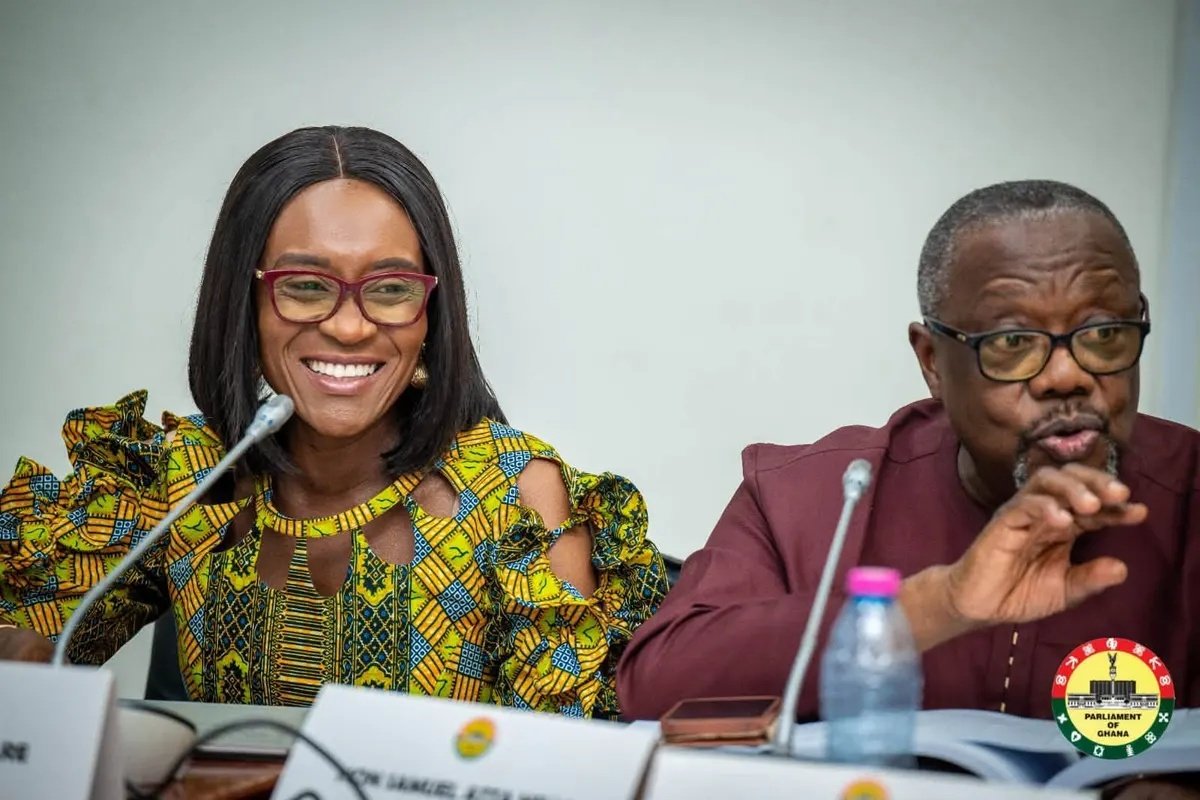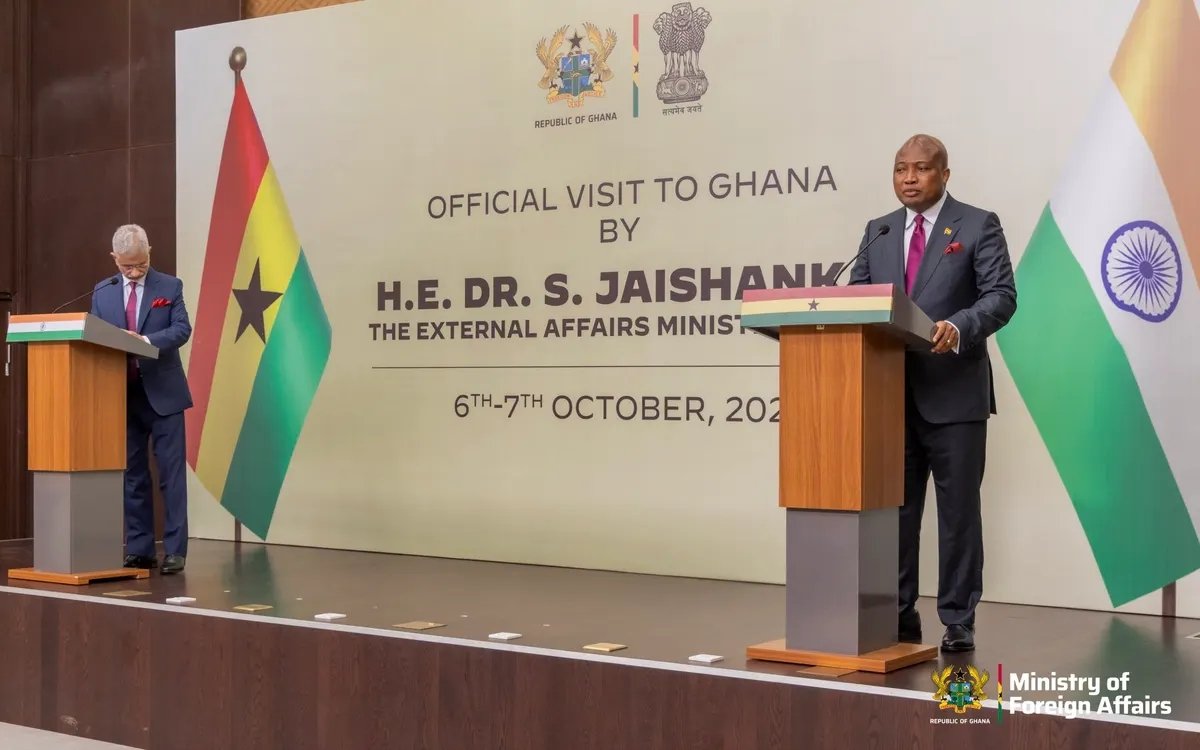
Ghana has formally decided to apply for membership of BRICS, with Foreign Affairs Minister Samuel Okudzeto Ablakwa saying the country wants to broaden its geopolitical and economic partnerships while remaining guided by its national interest.
Mr Ablakwa announced the cabinet’s “strategic” decision during a working visit to Ghana by India’s External Affairs Minister, His Excellency Dr. S. Jaishankar, on Wednesday October 7.
“The Government of Ghana is determined to position Ghana as a reliable friend of all as we expand our geopolitical and economic frontiers anchored fundamentally on our national interest and the freedom of choice in this fast evolving multipolar world,” he wrote on X.
BRICS currently comprises Brazil, China, Egypt, Ethiopia, India, Indonesia, Iran, Russia, South Africa and the United Arab Emirates.
The group held its inaugural summit in 2009, when Brazil, Russia, India and China formed an informal diplomatic grouping under the name BRIC. South Africa joined in September 2010, leading to the organisation being renamed BRICS, and attended the third summit in 2011 as a full member.
Iran, Egypt, Ethiopia and the United Arab Emirates attended their first summit as members in Russia in 2024. Indonesia officially joined in early 2025, becoming the first Southeast Asian member. Saudi Arabia was invited at the Johannesburg summit and is considered part of the organisation, although it has not publicly confirmed its membership. The term BRICS+ has been used informally to describe the expanded grouping since 2024.
Together, BRICS countries account for more than a quarter of the global economy and nearly half of the world’s population. The organisation has created institutions and financial arrangements including the New Development Bank, the BRICS Contingent Reserve Arrangement and the BRICS PAY payment platform.
It has also supported efforts to reduce reliance on the dollar by encouraging trade settlements in national currencies. Some commentators view BRICS as an alternative to the G7 and an important force in the international order, while others regard it as an incoherent grouping of different countries united by increasingly anti-European and anti-American objectives.
All five of the original members, along with Indonesia, are also members of the G20. BRICS has attracted both praise and criticism from commentators and world leaders.
Mr Ablakwa also outlined plans to strengthen Ghana’s relationship with India. He said the two countries had committed to further railway projects following the successful Indian-financed construction of the Tema-Mpakadan railway.
India is also expected to increase investment in Ghana’s pharmaceutical sector as the Mahama Administration expands local medicine production through President’s Accra Reset health sovereignty initiative.
“We are also deepening cooperation in digital technology and AI. I am equally glad that we have initiated negotiations on a Defence Cooperation Agreement to be completed early next year,” he said.
The two countries signed agreements on scientific research collaboration and agricultural cooperation during the visit. Ghana will also work with India next year, when it chairs the African Union, to develop an Africa-India strategy for the next Africa-India summit.