Ghana’s agricultural sector must move from predominantly primary production to a commercially organised, value-driven and industrially connected economy, Food and Agriculture Minister Eric Opoku has said.
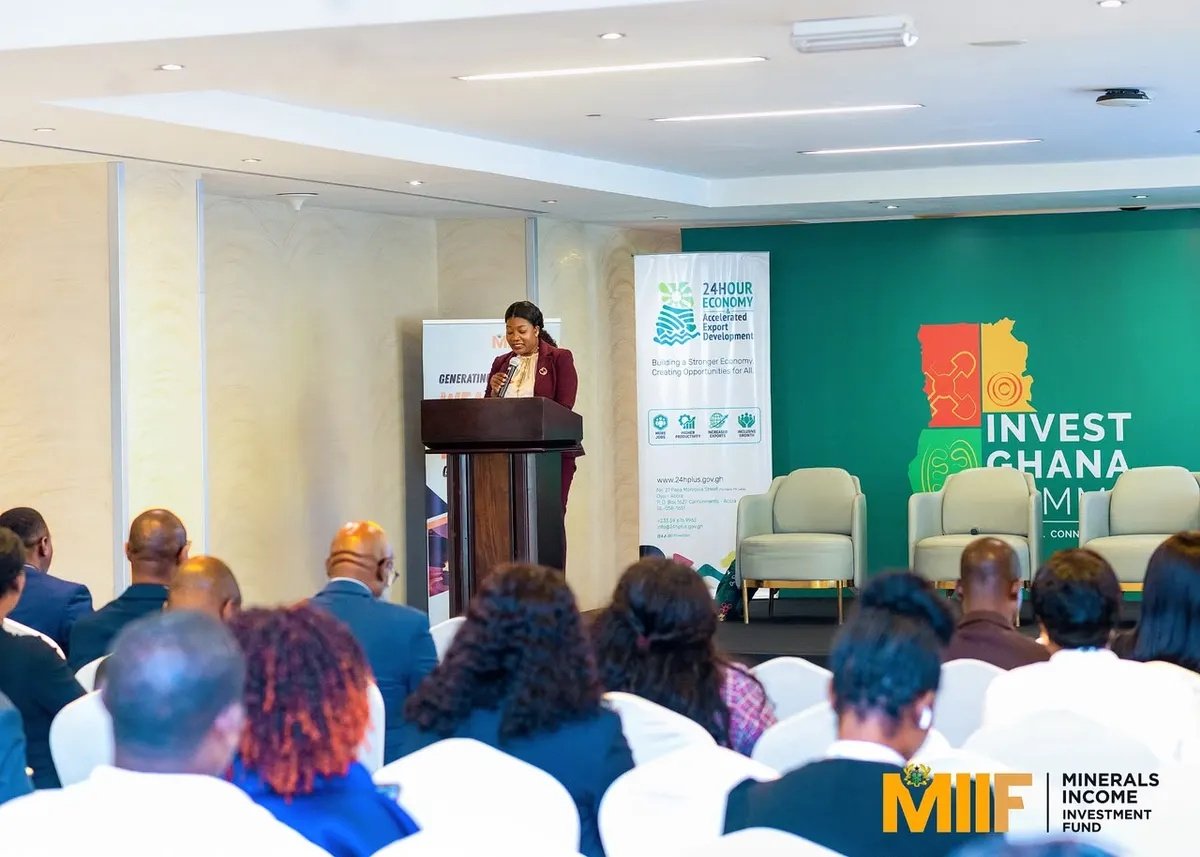
Speaking at the Invest Ghana Summit 2026 on Monday, November 16, Mr Opoku said the transformation was necessary if Ghanaian agriculture was to compete effectively in regional and international markets.
He highlighted the sector’s contribution of 22.8 per cent to national Gross Domestic Product (GDP) in 2025, alongside its growth rate of 6.8 per cent, as evidence of the opportunities available to investors.
“These indicators provide a strong foundation for investors to establish competitive agribusinesses, particularly in processing, storage, mechanisation and other areas of the agricultural value chain,” he said.
The Minister said the government’s Feed Ghana Programme was intended to address the longstanding disconnect between agricultural production and industrial processing.
“The government’s Feed Ghana Programme is designed to bridge the longstanding gap between agricultural production and industrial processing through strategic investments in critical infrastructure, including irrigation systems, storage facilities and mechanised farming services,” he explained.
Market-led production
Mr Opoku said agricultural production should increasingly be shaped by market demand rather than operating separately from the needs of processors and other buyers.
He called for closer collaboration between farmers, producers and investors so that production volumes, crop varieties and quality standards matched market requirements.
Grains, poultry, horticulture and tree crops were identified by the Minister as priority value chains, each offering considerable scope for investment, job creation and wider economic growth.
He said the development of integrated value chains would allow Ghana to retain more economic value within the country while creating skilled employment and improving farmers’ livelihoods.
The approach, he added, would also support sustainable development at local level by connecting production more effectively to processing and other commercial activities.
Investment barriers
Mr Opoku assured investors that the government was committed to tackling practical obstacles that have often limited investment in agriculture.
Those challenges include access to land, regulatory bottlenecks and the need for financing arrangements that properly reflect the seasonal nature of agricultural production.
He urged both local and international investors to work with Ghanaian businesses and agricultural producers to build resilient agribusinesses.
Such partnerships, he said, would help strengthen domestic supply chains and speed up the transformation of Ghana’s agricultural sector.
The Minister also stressed that the government wanted to see progress go beyond investment pledges.
Its focus, he said, was on developing tangible, project-based partnerships capable of delivering measurable results across agriculture.