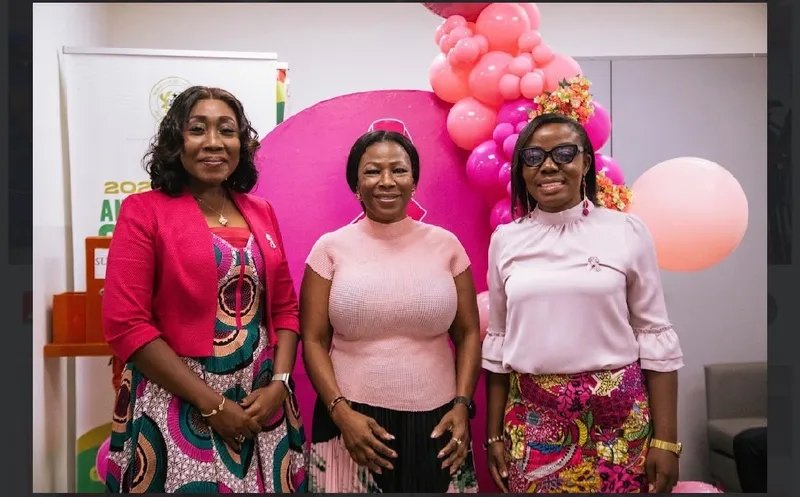
The Breast Society of Ghana has urged women to attend breast screenings during Breast Cancer Awareness Month in October 2026, saying more than 90% of patients survive when the disease is detected early and treated in Ghana.
The Society’s Pinktober 2026 campaign, themed “Early Action, Better Outcomes”, describes breast cancer as Ghana’s leading cause of cancer and cancer deaths among women.
The message, signed by Breast Society of Ghana president Prof. Josephine Nsaful and general secretary Ms Enam Setsoafia, warned that many women still seek treatment only after the disease has reached an advanced stage, when it is no longer curable.
However, the Society said early breast cancer can be cured and that Ghana has the expertise and treatment facilities required. It added that patients did not automatically need to travel abroad, with Ghana now serving as a specialist-care hub for the sub-region and treating people from across West Africa.
It said the survival rate for early breast cancer treated in Ghana was over 90 per cent, comparable with outcomes in developed countries. Survivors living in communities across the country, it added, demonstrated that treatment could be successful when the disease was found early.
Delayed diagnosis
The Society identified late presentation as a continuing obstacle. Advanced breast cancer can restrict treatment options, lengthen care, increase costs and reduce the likelihood of survival.
It linked delays to limited awareness, fear, stigma, misinformation, financial difficulties, geographical barriers and hold-ups within the healthcare system.
“We must change this,” it said.
Breast cancer can affect anyone, although most cases occur in women and a small number affect men. The Society said symptoms such as a lump, nipple discharge, changes in breast size or shape, skin changes or any persistent abnormality should be assessed promptly.
It stressed, however, that screening before symptoms appear remains the most effective way to identify the disease early. Women were encouraged to use free primary healthcare services and attend screening at health facilities across Ghana.
The Society also called for myths about breast cancer to be challenged. No woman, it said, should postpone care because she fears losing her breast, is worried about chemotherapy, believes the disease is a spiritual curse or depends only on unproven remedies.
“Breast cancer is a disease that requires timely and appropriate medical care,” it said, urging people to seek reliable information and consult qualified healthcare professionals.
Families and communities were asked to support, rather than stigmatise, those affected. The Society also called on the media, religious and traditional leaders, civil society organisations and community leaders to promote accurate information and encourage early care-seeking.
Healthcare professionals and institutions were urged to assess, investigate and refer patients with breast symptoms without avoidable delay. Every person diagnosed with breast cancer, the Society said, should receive evidence-based, patient-centred and comprehensive treatment.
It highlighted the World Health Organisation’s Global Breast Cancer Initiative targets, established in 2021: diagnosing at least 60% of breast cancers at an early stage, completing diagnosis within 60 days and ensuring 80% of diagnosed patients complete treatment.
“Because early action can lead to earlier diagnosis. Earlier diagnosis can expand treatment options. Timely treatment can achieve a cure and improve survival outcomes,” it said. “Early Action. Better Outcomes. The time to act is now.”