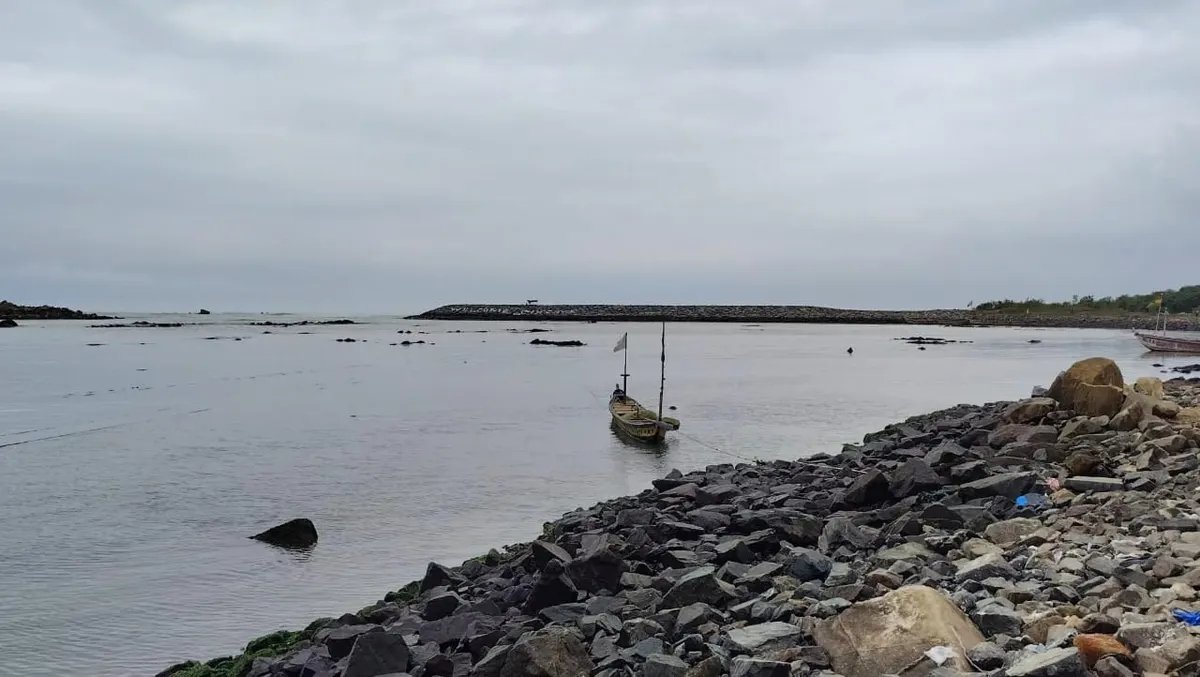
Artisanal fishers in Dixcove have called for the immediate reconstruction of the community’s breakwater, blaming dangerous sea currents for about ten deaths, destroyed canoes and fishing equipment losses averaging GH₵300,000 per incident.
The fishers say the danger is greatest during August and September, when currents are strongest and vessels struggle to reach the landing basin. They claim the existing structure, which was designed to absorb, deflect and reduce incoming wave energy, has instead increased the risks faced by boats and fishing gear.
Francis Antwi, who survived a recent wreck, said the conditions had created widespread fear among fishers.
“We are scared, especially in August when the sea currents are high,” he said.
Thomas Sagoe, another local fisher, said the location of the breakwater was at the centre of the problem.
“You will die if you don’t know how to swim. It would have been better if the breakwater was constructed at the other end,” he said.
For families reliant on daily catches, the financial consequences have been severe.
“We at Dixcove are suffering. Imagine losing about GH₵300,000 in a day to this current. How do we cater for our children?” one fisher said.
Nana Kwaku Dade II, Chief Fisherman for Lower Dixcove, is urging the government to rebuild the structure and redirect its opening towards a calmer landing area.
He cited reconstruction work in the neighbouring community of Axim as evidence that a solution was possible. According to Nana Dade, Axim had faced even more dangerous currents before its breakwater was rebuilt.
“We’ve long publicized this matter. They should reconstruct the breakwater. Axim suffered a similar incident, and now theirs has been reconstructed. The currents at Axim were even more dangerous than ours, but that is no more,” he said.
“Today, we land at their shores when there’s turbulence at sea,” he added.
Demonstration threat
Anger in Dixcove has now led community leaders to threaten a demonstration and a boycott of future elections unless the government responds.
“We have decided to embark on a demonstration. We will boycott future elections if the government fails to reconstruct the breakwater and get us a harbour,” Nana Kwaku Dade II said.
Until action is taken, fishers are continuing to use risk-mitigation measures on every trip while waiting for a response from the authorities.
The situation forms part of wider coastal problems in the Western Region, where storm surges, tidal waves and erosion regularly damage fishing canoes, nets and engines.
Studies in the Ahanta West District, which includes Dixcove, found that more than 91% of fishermen reported occupational accidents within a three-month period. The research attributed the incidents to inadequate safety infrastructure and environmental challenges.
Experts have also warned that coastal defence structures built in unsuitable locations can make landing beaches dangerous and restrict access to fish-processing sites. That can reduce catches while adding to the financial losses suffered by fishing communities.