New Patriotic Party (NPP) flagbearer Dr Mahamudu Bawumia has called for legislation to protect Ghanaian workers from losing their jobs to artificial intelligence, warning that the technology could be a “frightening prospect” for the workforce.
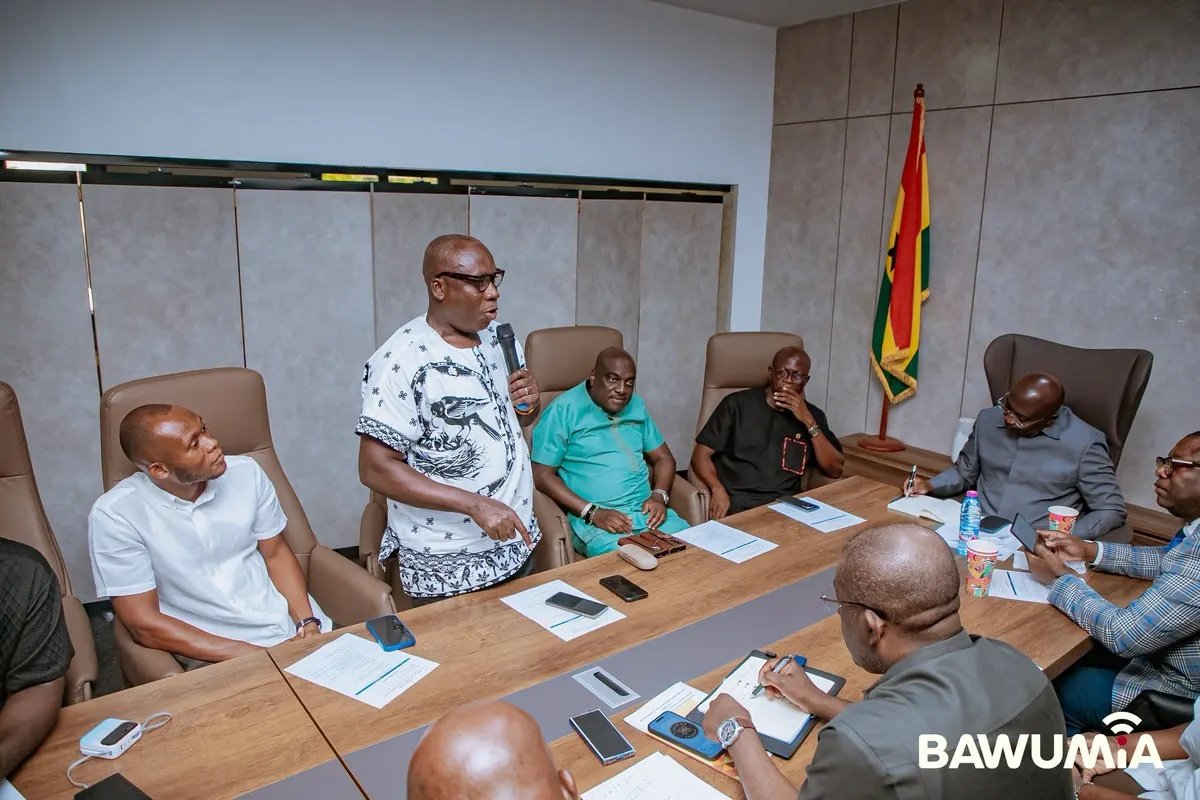
He made the proposal during an engagement with the Trades Union Congress (TUC) on Monday, November 2, saying employers, unions, technology specialists and the government should jointly develop the necessary rules.
“Artificial Intelligence should be a tool to complement human labour and not a substitute for it,” the former Vice-President said.
Bawumia’s proposals include laws and regulations to guard against AI-driven job losses while continuing to support innovation. He also called for a national strategy ensuring that the adoption of AI supports economic growth without threatening livelihoods.
The plan would include retraining and reskilling programmes, with continuous education incorporated into the framework so workers can adapt to a digital economy. He further said unions should have a formal role in national discussions about AI, allowing workers to influence decisions affecting their employment.
Companies around the world are automating processes to reduce costs and improve productivity, Bawumia said, leaving a number of occupations vulnerable. Ghana, he argued, should prepare early rather than wait for the technology to transform its industries.
He also warned that Africa’s growing young population could face higher unemployment if technological change outpaced investment in skills and education.
Bawumia adopted a more positive tone at the LSE Africa Summit in March, where he said estimates suggested about two in five jobs were within the reach of AI. However, he stressed that this did not necessarily mean widespread job losses.
“The point is not that ‘40% of jobs will vanish,’ but that AI will reshape tasks and productivity across a large share of work,” he said at the time.
His message to the TUC retained that emphasis. He said appropriate policies and legal protections could enable Ghana to benefit from AI while preserving employment and the dignity of work.
Ghana has no dedicated AI law
Ghana does not yet have comprehensive legislation specifically covering artificial intelligence. Minister for Communication, Digital Technology and Innovation Samuel Nartey George said in September that developing regulatory and technical frameworks was a priority.
The government’s focus so far has been on building capacity. Cabinet has approved US$250 million for a National AI and Computing Centre, while George said in April that Cabinet had also approved the National Artificial Intelligence Strategy.
Speaking at the Africa Internet Governance Forum in Accra on Tuesday, November 3, George said African countries needed to develop their own digital systems, including language models for African languages.
“Language has a dual character. It is both a means of communication and a carrier of culture,” he said, while also calling for African unity on digital governance.
GNA did not specify when the TUC engagement took place. On October 29, Bawumia said he had met the TUC leadership to discuss the cost of living, a living wage, youth employment, pensions and disability inclusion.
“We also explored a vital social contract between government and labor to build economic resilience against external shocks. We agreed to follow up on specifics in subsequent meetings,” he said after that meeting.
GNA’s report did not include a response from the TUC to the AI proposal.