Africa could fall further behind in the global artificial intelligence (AI) revolution unless urgent, coordinated action is taken to address weaknesses in regulation, cybersecurity, infrastructure and financing, Bank of Ghana Governor Dr Johnson Asiama has warned.
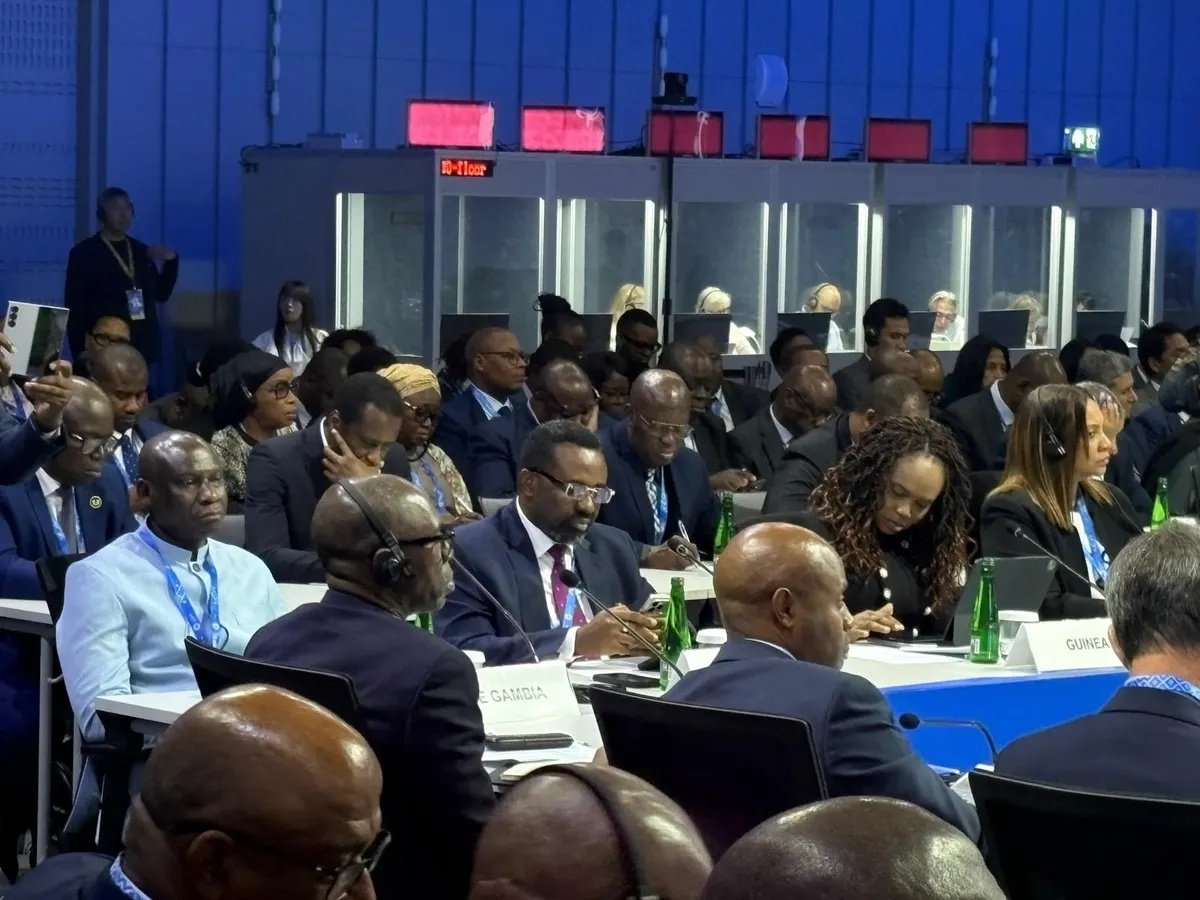
Speaking at the second round of Governors’ interventions during the 2026 African Caucus Meeting with the Managing Director of the International Monetary Fund (IMF) in Bangkok, Thailand, on Wednesday, October 14, Dr Asiama said Africa’s digital sovereignty and the responsible use of AI were central to structural transformation, economic resilience and long-term development.
“AI is already reshaping productivity, competitiveness, governance, and finance,” he said.
Dr Asiama noted that African countries had made significant progress in areas including digital payments, digital identification systems, AI-enabled financial services and financial technology. However, he said continuing shortcomings in regulatory capacity, cybersecurity, infrastructure and funding were limiting the safe and inclusive adoption of those technologies.
“Without urgent and coordinated action, the continent risks falling even further behind,” he said, while stressing the importance of a stronger partnership between African countries and the IMF.
He called on the Fund to expand tailored capacity-building support to help countries improve AI governance, supervisory technology, cybersecurity and digital risk-management systems.
The Bank of Ghana governor also urged the IMF to help strengthen Africa’s influence in the development of global digital norms and standards. He said the continent needed the capacity not simply to adopt AI, but also to adapt, govern and innovate with it in ways that supported its own development priorities.
Such assistance would be important in strengthening economic resilience, raising productivity and supporting inclusive growth across Africa, he said.
IMF urged to deepen AI and financial stability work
Dr Asiama further called for the IMF to expand its analysis of the relationship between AI, digital transformation and macro-financial stability.
He said AI-related issues should be incorporated, where relevant, into the Fund’s economic surveillance work and Financial Sector Assessment Programs (FSAPs). He also urged the IMF to examine more closely the technology’s effect on productivity, employment, financial resilience and inclusive growth.
In addition, he called for greater policy coherence in data governance, digital trade and the regulation of AI across borders.
On financing, Dr Asiama said affordable resources were needed to develop secure digital public infrastructure and initiatives to reduce the digital divide.
He described those investments as essential if African countries were to participate meaningfully in the global digital economy and use AI to support sustainable development.
His intervention was delivered under the theme “Africa’s Digital Sovereignty and AI for Structural Transformation: Advancing Capabilities and Deepening the Fund’s Support”.
It highlighted the need for stronger international cooperation, effective regulation and sustainable investment to ensure that AI and digital transformation produce broad-based economic benefits across Africa.