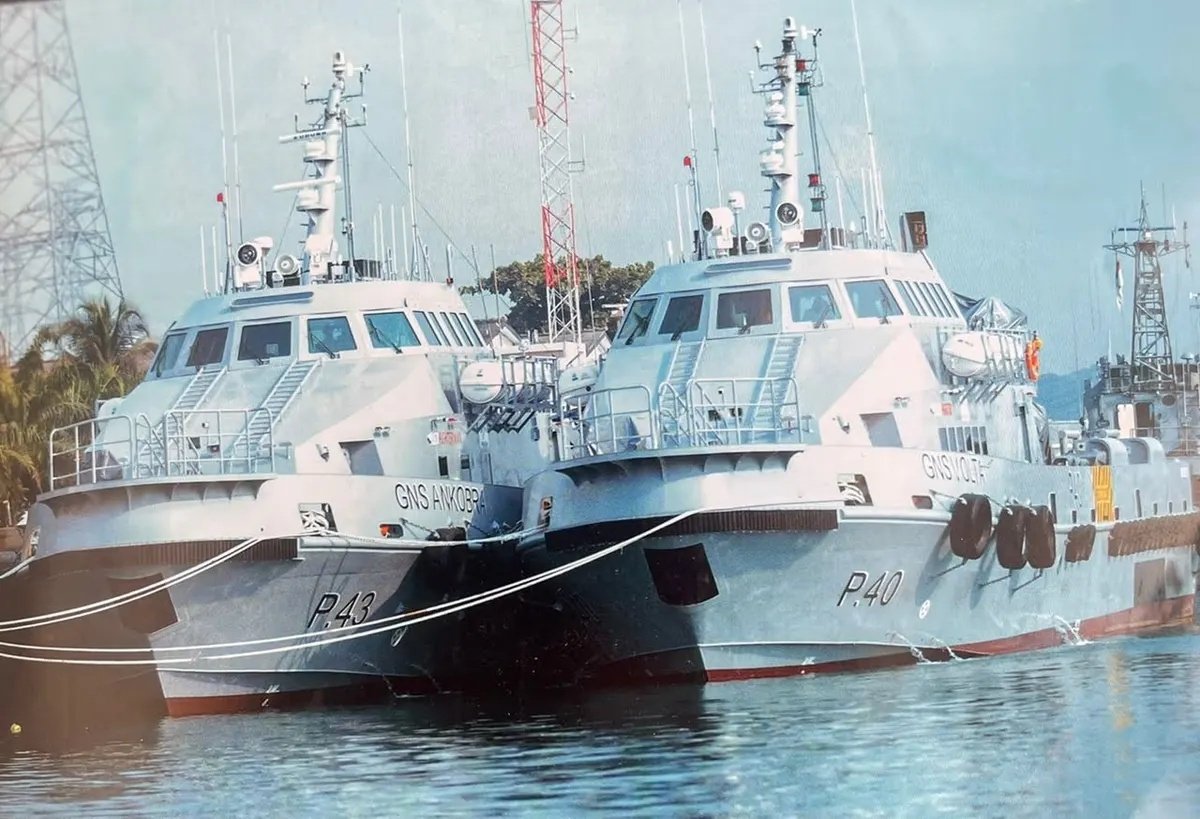
The Ghana Navy has urged the government to integrate satellite technology into maritime security operations, warning that its ships, coastal radar systems and aircraft cannot monitor the country’s waters continuously without additional support.
Commodore Ben Baba Abdul, Chief Staff Officer at Naval Headquarters, made the appeal on Monday at the Ghana Space Conference 2026 in Accra. He was speaking on behalf of Rear Admiral Godwin Livinus Bessing, the Chief of the Naval Staff.
The Navy published the position in a statement on its website on Tuesday.
Ghana’s maritime domain handles about 85 per cent of the country’s trade, while also supporting fisheries and offshore oil and gas operations, Commodore Abdul said. He argued that those activities depended on dependable and sustained surveillance.
The country’s Exclusive Economic Zone covers roughly 225,000 square kilometres, a vast area for naval vessels, coastal radar installations and aircraft to monitor simultaneously.
Commodore Abdul said the resulting surveillance gaps could be exploited by those involved in illegal fishing, trafficking and other forms of maritime crime.
He identified Synthetic Aperture Radar and satellite-based vessel detection systems as important technologies that could strengthen the Navy’s existing capabilities.
Such systems would help identify unusual movements at sea, monitor territorial waters and inland waterways, and provide intelligence on vessels operating without identification signals, he said. That information would allow the Navy to deploy its resources more effectively.
The scale of the challenge was highlighted this month, when the Navy seized boats carrying suspected marijuana worth more than US$1 million.
Commander Philip Odoi-Narh, speaking during a presentation on the maritime dimension of Ghana’s space industry, said the country should develop the ability to interpret and analyse satellite information domestically instead of relying solely on external data.
He called for state agencies, universities and private companies to cooperate in developing services for locating vessels, monitoring ports and shipping activity, and observing environmental conditions.
The Navy has previously made the case for greater investment in maritime surveillance on financial grounds.
In October, the Western Naval Commander called for additional investment in surveillance capabilities after a rescue at sea.
Parliament passed the Maritime Offences Bill in July as part of efforts to strengthen Ghana’s response to piracy.