Unsafe food affects 866 million people and causes an estimated $110bn (£?) a year in lost productivity and medical costs in low- and middle-income countries, the Food and Agriculture Organization of the United Nations (FAO) has said.
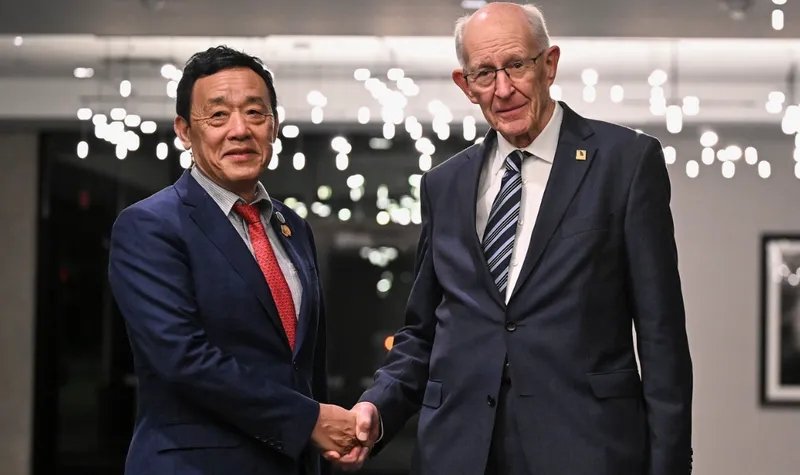
FAO Director-General QU Dongyu said eradicating hunger depended not only on producing and distributing enough food, but also on ensuring it did not make people ill.
“Food that makes people sick does not feed them,” he told the opening ceremony of the Borlaug International Dialogue of the World Food Prize 2026.
QU was speaking at an event in Des Moines where the 2026 World Food Prize was presented to Dutch scientist Huub Lelieveld.
Lelieveld has spent more than six decades researching, promoting and building institutions in the field of food safety. His work has made a major contribution to the development of harmonised standards worldwide.
The annual award is named after Norman Borlaug, one of the figures regarded as a father of the Green Revolution. Borlaug’s work on higher-yielding wheat varieties helped lift hundreds of millions of people out of hunger.
More than 1,000 people from over 60 countries and 600 organisations attended the high-level gathering, including four agriculture ministers and previous World Food Prize winners.
QU praised Lelieveld’s lifelong belief that “access to safe food is a universal right”. He also highlighted FAO’s technical support for developing countries seeking to build the capacity needed to implement food safety standards.
That support is particularly important in countries dependent on imports, where common standards can save lives and reduce the cost of trade.
Food safety at the centre of food system reform
In his speech, titled “What Will It Take to Feed the Future?”, QU outlined three global priorities underpinning the FAO Strategic Framework 2022-2031.
They are producing enough food for a growing population with fewer inputs while protecting the environment; making sure food is safe and nutritious; and ensuring it reaches the people who need it most.
QU said those priorities were directly linked to the organisation’s Four Betters: better production, better nutrition, a better environment and a better life, with no-one left behind.
Borlaug’s work focused on better production and is credited with saving an estimated one billion lives. QU said science and innovation were central to that achievement, while roads, irrigation systems and market institutions were also vital – and even more important today.
He connected better nutrition with Lelieveld’s work, saying strong international food safety rules and effective practices removed obstacles to safe food trade and aid, while reducing illness.
“Food safety problems do not respect borders or income levels,” QU said, citing the impact of aflatoxin on maize across the American Midwest following a drought in 2012.
The same contamination remains a serious problem across much of Africa and South Asia, threatening health and incomes while preventing farmers from accessing better-paying markets.
QU identified the Codex Alimentarius Commission and the International Plant Protection Convention, both hosted by FAO, as key food safety institutions. He also described FAO’s new Global Partnership Programme for Transboundary Animal Diseases (GPP-TAD) as an important safeguard, using shared surveillance, biosecurity and rapid-response protocols.
At a dinner on Tuesday celebrating World Food Prize winners, QU said safe food depended on the work of scientists, standards bodies and those monitoring every stage of the food chain.
“Safe food is the foundation of food security,” he said. “Without it, we cannot call it food. Safe food nourishes us, supports livelihoods and builds trust in agrifood systems.”