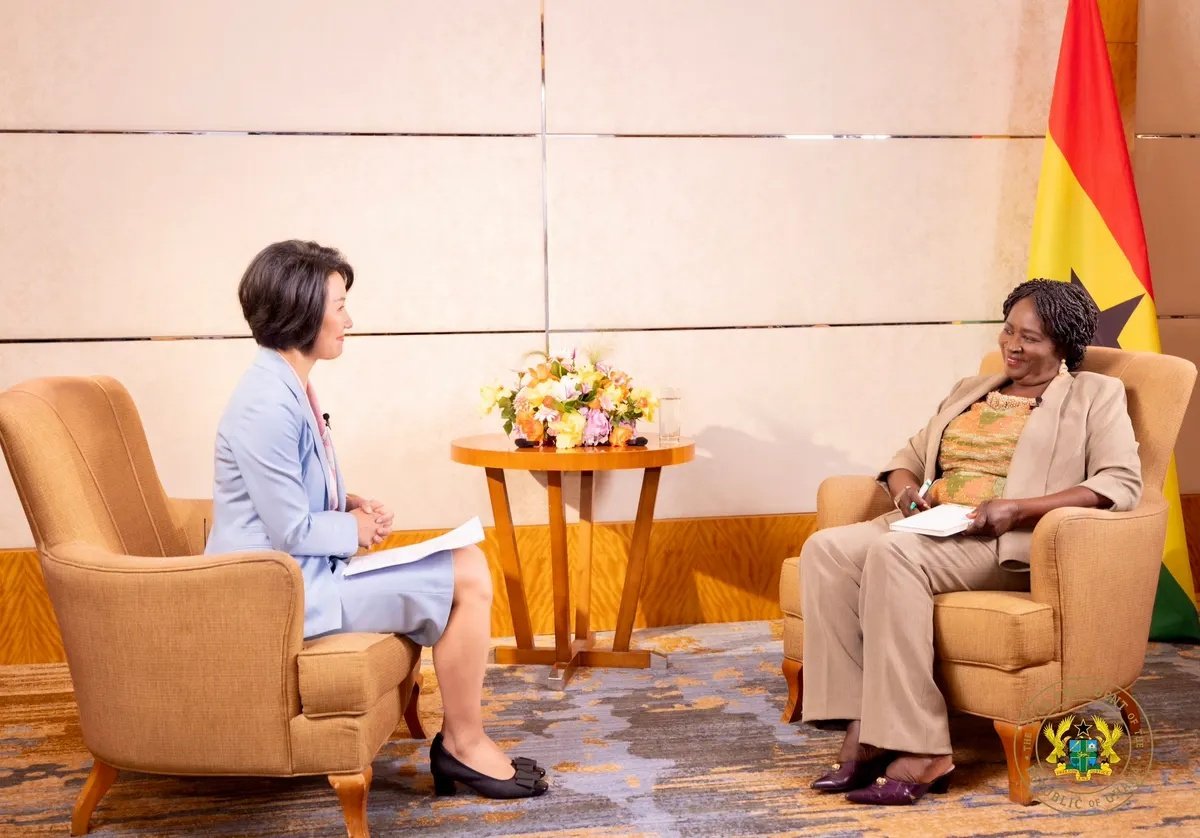
Vice-President Professor Naana Jane Opoku-Agyemang has urged Chinese investors to back Ghana’s industrialisation plans by investing in local processing and manufacturing.
Speaking to Chinese business executives in Shanghai, she said investment in cocoa, shea nuts, cashew nuts, coconut, timber and other raw materials could create jobs, strengthen domestic industries and ensure Ghana retains more value from its natural resources.
Professor Opoku-Agyemang said Ghana needed to move away from relying on exports of unprocessed commodities and instead develop a manufacturing sector capable of improving productivity, generating employment and supporting long-term economic growth.
She used the timber industry to illustrate the potential benefits, saying Ghana could earn more by producing furniture and other finished wood products rather than exporting logs. Investment in processing, she added, would support industrial expansion and create sustainable employment opportunities for the country’s growing population.
The Vice-President also called for technical and vocational education and training to be better matched with the needs of industry, so young people develop skills that correspond to real employment opportunities.
“Training people for jobs that do not exist is training them for unemployment,” she said.
She said greater investment in productive sectors was necessary to give technically trained young people opportunities to use their skills and contribute to national development. Without enough jobs, she warned, the increasing number of trained young people could become frustrated.
Professor Opoku-Agyemang said Ghana was prepared to form mutually beneficial partnerships with Chinese companies, particularly in manufacturing, logistics and other productive areas capable of supporting sustainable economic growth.
She also pointed to the African Continental Free Trade Area (AfCFTA), which provides a framework for increasing trade between African countries. Ghana’s position as a gateway to the wider African market, she said, gave Chinese investors the opportunity to establish businesses serving customers across the continent.
However, she stressed that investment arrangements must produce clear benefits for both Ghana and China. Those benefits should include job creation, increased productive capacity and stronger opportunities for Ghanaians to participate in business.
The Vice-President also questioned the extent to which Ghanaian traders involved in businesses connected to China were able to participate as owners. She specifically raised the issue of whether traders operating in the Chinese market could secure ownership stakes in the businesses they support.
Her comments underscored the need for economic cooperation to provide Ghanaian entrepreneurs with a more meaningful role in international trade and investment.
The meeting forms part of Ghana’s wider efforts to strengthen its economic relationship with China and attract investment into industries that can turn the country’s raw materials into higher-value products.
Ghana produces cocoa, cashew, shea and timber, alongside mineral resources including bauxite, lithium and diamonds. Expanding domestic processing and manufacturing could create jobs, reinforce local industries, reduce dependence on raw material exports and increase the proportion of economic value retained in Ghana.