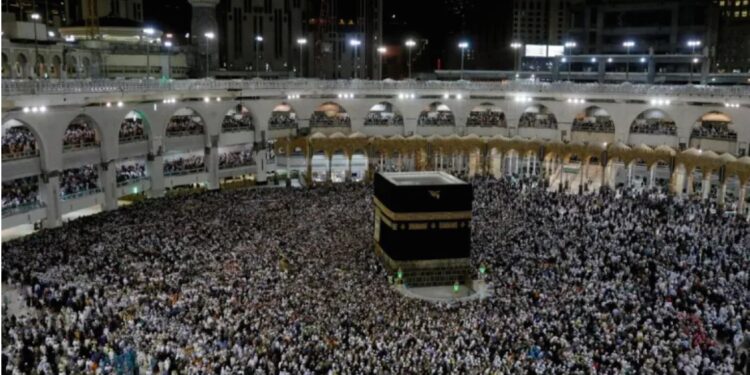
The Ghana Hajj Board has confirmed the deaths of seven Ghanaian pilgrims who took part in this year’s Hajj pilgrimage to Mecca, Saudi Arabia. The deceased, comprising five women and two men, were among the more than 6,000 Ghanaians who travelled for the annual Islamic ritual, which draws over two million Muslims worldwide.
The identities of the deceased have not been made public, but officials say their families in Ghana have been notified. The pilgrims were laid to rest in Saudi Arabia in line with Islamic burial customs for those who pass away during the pilgrimage.
Speaking to TV3 on Saturday, Chairman of the Hajj Board, Alhaji Collins Dauda, described the deaths as “deeply unfortunate.”
“Unfortunately, for the 2025 pilgrimage, we have lost seven of our compatriots. Deaths are painful, but death will come when it has to come,” he said. “We express our deepest condolences to the families back in Ghana who have been affected in this case.”
Alhaji Dauda added that the Board would visit the bereaved families in Ghana in the coming weeks to offer support.
The Hajj pilgrimage, one of the five pillars of Islam, involves a series of physically demanding rites, often undertaken in intense heat. This year, temperatures in Mecca soared above 48°C, posing serious health risks, particularly for the elderly and those with underlying conditions.
Despite the extreme conditions, this year’s fatalities mark a significant drop from 2024, when 17 Ghanaian pilgrims died. Hajj officials attribute the 59% reduction to strengthened health and safety protocols developed in collaboration with Saudi authorities.
These measures included comprehensive pre-departure medical screenings, the deployment of Ghanaian medical teams on the ground, improved emergency response systems, and increased access to hydration stations to prevent heatstroke.
“We’ve seen the impact of early interventions,” Alhaji Dauda said. “But we know there’s more to be done. The safety and well-being of our pilgrims remain our top priority.”
The Ghana Hajj Board says it will continue to assess and upgrade its protocols to ensure the pilgrimage is as safe as possible for future travellers.
The deaths, serve as a somber reminder of the pilgrimage’s challenges and the importance of ongoing investment in medical and logistical support for pilgrims.