The Regional Advisory Information and Network Systems (RAINS) has called on communities, development partners and the government to work together to preserve development gains as donor funding declines.
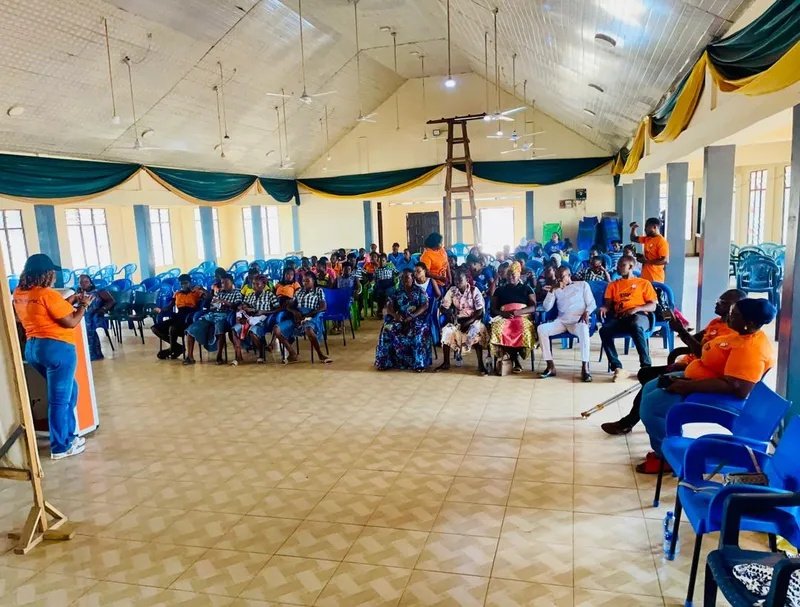
The appeal was made at RAINS’ second Results and Accountability Fair in Tamale, held under the theme, “Beyond Community-Led Interventions: Sustaining Impact through Learning and Accountability”. Traditional leaders, government agencies, development partners, civil society organisations and community members attended the event to review the organisation’s work over the past year.
RAINS Executive Director Mr Hardi Tijani said the fair was intended to report directly to communities and partners, present achievements, address difficulties and collect feedback to shape future programmes.
He said accountability in development had traditionally focused on donors and funding organisations, rather than the communities benefiting from interventions.
“For a very long time, the development architecture has placed the kind of work that we do to be focused more on accounting to donors and those who provide the resources,” Mr Tijani said.
He argued that communities should be treated as co-creators and implementing partners, rather than passive recipients of support.
“We want to show holistically what we have achieved with them, be honest with the challenges, and invite them to share honest feedback on what we can do better as we plan for the coming year,” he said.
Funding pressures
Mr Tijani said civil society organisations were operating in an increasingly difficult funding environment, with traditional bilateral sources becoming more limited.
He said the disruption of established funding arrangements had intensified competition among local organisations for scarce resources and weakened their ability to respond fully to community needs.
“Local organisations have become more competitive when it comes to their existing funding sources,” he said. “A reduction in the availability of funding resources also means that it has shrunk the capacity of organisations such as ours to respond to the challenges of their communities.”
He urged NGOs to broaden their funding base by working with philanthropies, social enterprises and other innovative financing models. He added that feedback from communities could help organisations make better use of limited resources and tailor interventions to local priorities.
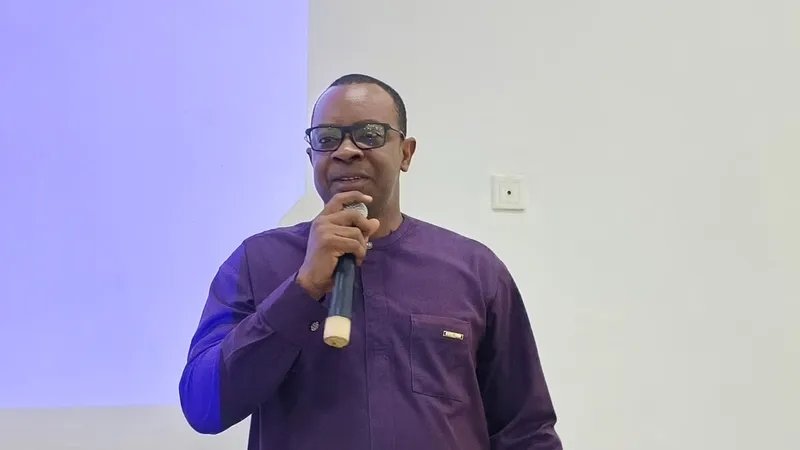
Delivering the keynote address, Prof. Alhassan Musah said development results had too often travelled only from communities to donors.
“For much of the development sector’s history, results have travelled in one direction: from communities to donors,” he said. “The people whose lives generated those results rarely see them.”
Prof. Musah said openly sharing results promoted respect, accuracy and sustainability. Communities, he added, should be able to confirm, correct or challenge reported outcomes.
“When a community sees what it achieved, in numbers, photographs and stories, it sees its own dignity and capability reflected,” he said.
“A number that has never been checked by the people it describes is only a claim,” Prof. Musah said. “Public sharing is the cheapest and most honest form of verification we have.”
He said communities were more likely to maintain projects when they understood what had been delivered, its cost and what would be required to sustain it.
Prof. Musah also called for accountability to flow not only to donors, regulators and boards, but to women, children and young people affected by development decisions.
“They should know what we promised, how funds were used and how to raise a complaint,” he said.
He said transparency, learning and community ownership were vital to the survival of NGOs, while urging development partners to provide predictable support, invest in community structures and offer transition assistance when funding was reduced or withdrawn.
“An accountable organisation reports what did not work and what it is changing as a result,” Prof. Musah said. “Learning and accountability are two sides of one coin.”
“Transparency, learning and community ownership are not costs. They are our survival strategy,” he said.