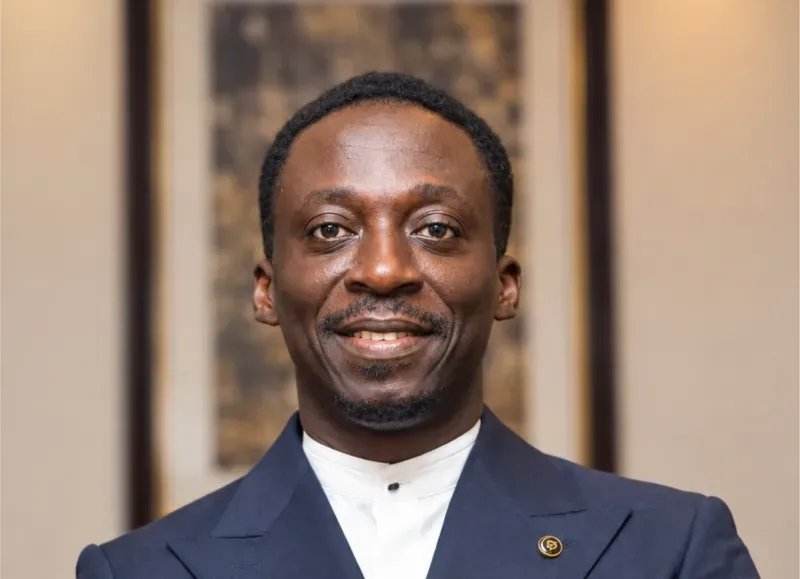
Legal practitioner and policy analyst Austin Kwabena Brako-Powers has accused Ghana’s governing National Democratic Congress (NDC) of failing to provide responsible leadership in its handling of the alleged Obuasi Senior High Technical School (SHTS) scandal.
The controversy centres on allegations of sexual misconduct involving the school’s headmaster, Zakaria Abdulai, who also served as Secretary of the NDC in the Juaben Constituency in the Ashanti Region. The allegations are still being investigated, while Mr Abdulai has denied any wrongdoing.
Mr Brako-Powers said the NDC did not act early enough and only adopted a firmer position after public criticism intensified.
“The party wasn’t proactive on the matter. The party had to cave in after pressure mounted on it,” he said.
He argued that the party had been given an opportunity to show accountability by responding promptly to the concerns raised by Ghanaians. In his view, that responsibility was particularly important because of Mr Abdulai’s position within the NDC.
According to Mr Brako-Powers, the party appeared uncertain about how to respond, despite what he considered to be a clear expectation from the public about the steps required to address the controversy.
“The party was in a state of confusion when every Ghanaian was clear about what needed to be done to resolve the problem,” he stated.
Presumption of innocence
Mr Brako-Powers acknowledged that the Constitution protects the presumption of innocence. He stressed that allegations cannot be treated as proof of guilt before they have been tested and established through the appropriate legal process.
However, he said that constitutional protection did not remove the NDC’s broader responsibility to respond to an issue that had generated significant public concern.
“We need to understand that the constitutional presumption of innocence does not absolve the NDC of its moral responsibility to Ghanaians,” he said.
He maintained that the party could have protected Mr Abdulai’s legal rights while also taking prompt action to demonstrate transparency, accountability and awareness of the concerns being expressed by the public.
In his assessment, the NDC had several possible approaches available but instead chose one that placed it at odds with sections of the public.
Mr Brako-Powers said the case should serve as a lesson to political parties in government. He argued that respect for due process and the presumption of innocence must be matched by responsible leadership, particularly when allegations involve a person holding a position within the party.
The allegations against Mr Abdulai remain subject to investigation and must be resolved through the appropriate processes.