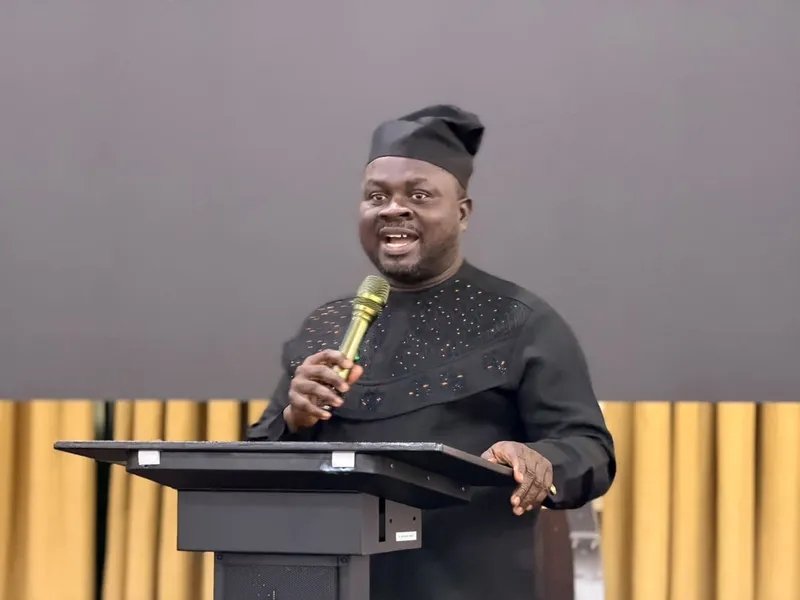
The President of the Ghana Journalists Association (GJA), Albert Kwabena Dwumfour, has urged journalists to treat journalism as a calling rather than simply a way to earn a living.
Speaking at the Ghana Media Soiree 2026, hosted by the Ghana National Gas Company Limited (Ghana Gas), Mr Dwumfour said journalists needed commitment, sacrifice and continuous professional development to make a lasting contribution to society.
He said practitioners should move beyond routine reporting, develop specialist knowledge and strive for excellence in their work.
Although he was indisposed, the GJA President attended the event because of his longstanding relationship with the association and Ghana Gas. He said his decision reflected the level of dedication demanded by journalism.
“This is why journalism is a calling, not merely a profession. It comes with sacrifices,” he said.
Mr Dwumfour added that journalists who produced innovative and impactful work deserved recognition. He said professional awards should honour practitioners who went beyond standard assignments and created work that contributed to national development.
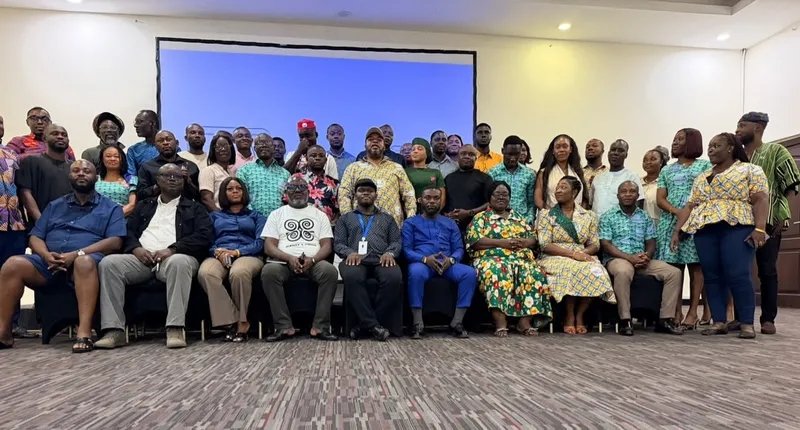
The event was organised to deepen media practitioners’ understanding of Ghana Gas’ operations, particularly in gas, energy, health, safety and environmental sustainability.
Call for specialist reporting
Mr Dwumfour praised Ghana Gas for investing in journalists’ professional development, saying training was increasingly important in a digital and information-driven environment.
He said continuous learning supported the objectives of the GJA and the wider constitutional framework governing the media in Ghana. Journalists, he added, needed to keep updating their knowledge and skills to respond to technological change and the growing threat of misinformation and disinformation.
He identified specialisation as a significant weakness in Ghanaian journalism, with many reporters expected to cover several subjects without having the depth of knowledge required for accurate and responsible reporting.
“Sometimes you find journalists in court, and you can tell this person lacks the ethics and doesn’t even understand the court because he got the reporting wrong. If you don’t take care, you may even end up with contempt,” he cautioned.
He described Ghana Gas’ efforts to build journalists’ understanding of gas and energy reporting as particularly valuable because the sector includes complex technical, environmental, health and safety matters.
Mr Dwumfour urged those who took part in the training to apply what they had learnt and share it with colleagues who could not attend. He proposed a “train-the-trainer” model, allowing participants to pass relevant skills and knowledge to others in their newsrooms.
“Let the training we’ve had be seen in our work. Let it show in our reportage. Let it show in the discharge of our duty in serving the good people of this country,” he said.
He also stressed that journalists must hold public institutions and policymakers to account, including organisations that support their development. Partnerships with corporate bodies, he said, must not weaken editorial independence or ethical standards.
The GJA president reaffirmed the association’s commitment to professional development, announcing plans for exchange programmes and partnerships with energy institutions to provide scholarships for journalists specialising in energy reporting.
He said scholarship opportunities were also available through universities including the University of Wisconsin. Eligible GJA members seeking undergraduate or master’s degrees in journalism and communication could obtain application details from the association’s General Secretary.
By Ebenezer Atiemo