Ghana’s Minister of Energy and Green Transition, Dr John Jinapor, has described energy self-sufficiency as a strategic necessity amid an increasingly uncertain geopolitical environment.
He said recent disruptions to global energy markets had highlighted the dangers of relying too heavily on imported fuels.
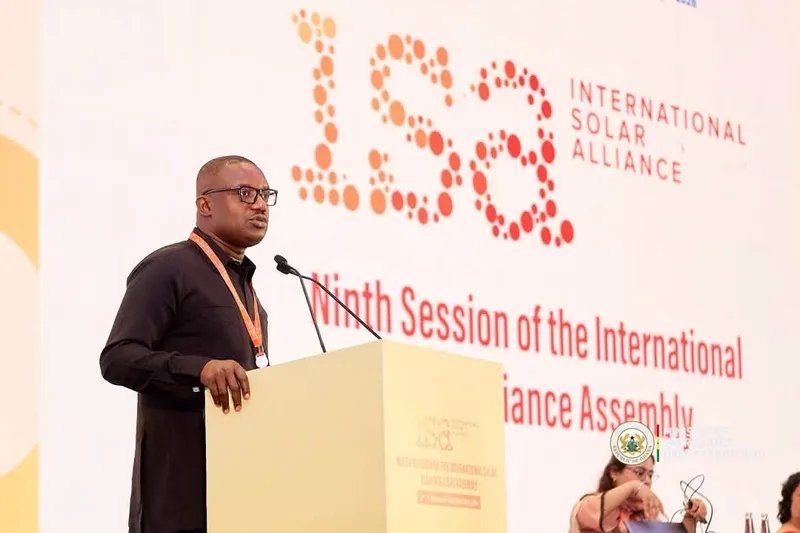
Speaking at a discussion titled “Global Solar: Then, Now and Next” during the Ninth Session of the International Solar Alliance (ISA) Assembly, Dr Jinapor said solar power could help Africa improve energy security, limit external dependence and create more resilient economies.
Ghana is pursuing that objective through the installation of solar streetlights, the promotion of rooftop solar systems and policies designed to move critical public installations towards solar energy, he said.
However, Dr Jinapor warned that expanding solar deployment alone would not be enough. He said Africa needed to develop the full solar value chain so the continent could become a producer and creator of value, rather than simply a consumer of solar technology.
“In Ghana, we are advancing this agenda through the installation of solar streetlights, promoting rooftop solar and implementing policies to transition critical public installations to solar energy.
“However, our ambition must go beyond deployment. We must develop the entire solar value chain, positioning Africa not merely as a consumer but as a producer and value creator. This will require technology transfer, local industrial capacity and, critically, affordable long-term financing,” he said in his opening remarks.
Dr Jinapor identified technology transfer, the development of local industrial capacity and access to affordable long-term financing as essential to achieving that wider ambition.
He added: “Our abundant sunshine must become a catalyst for industrialisation, job creation, economic resilience and energy sovereignty.”