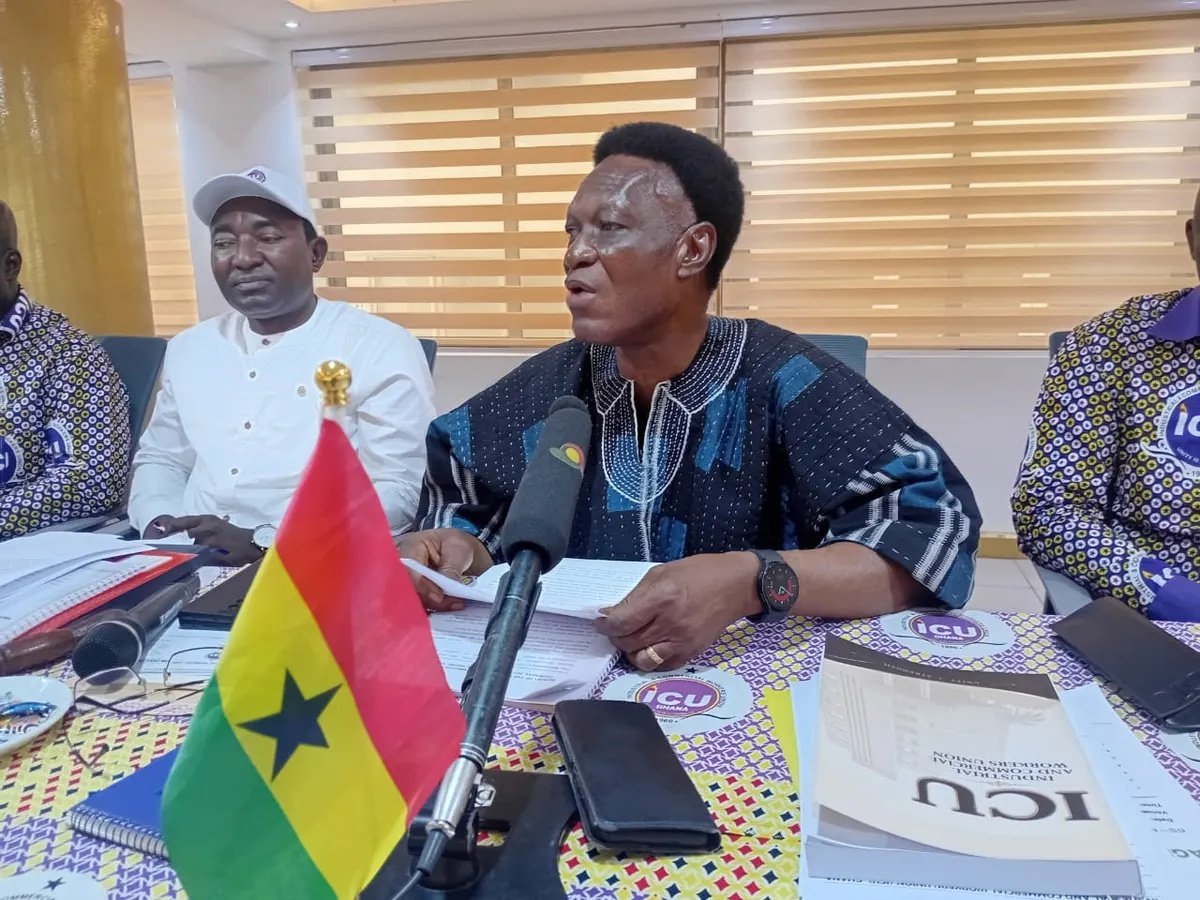
The Industrial and Commercial Workers’ Union (ICU) has formally asked President John Dramani Mahama to withdraw the proposed National Petroleum Authority (NPA) Bill, 2026, arguing that it could threaten the financial stability, independence and strategic role of BOST Energies Limited.
In a petition dated November 24, 2026, and signed by its General Secretary, Morgan Ayawine, the union called for the legislation to be subjected to broad consultation with trade unions and other relevant stakeholders before any further progress is made.
The ICU said it recognised the importance of updating the regulatory framework for Ghana’s petroleum downstream sector, but warned that reform should not weaken BOST, a national institution central to the country’s fuel security.
It raised particular concern over Clause 103, which it believes could permit private companies to establish and run competing inland petroleum depots.
The union said that allowing additional private facilities could divide available storage volumes, lower the use of infrastructure already owned by the state and undermine BOST’s commercial sustainability.
“The establishment, ownership and operation of inland petroleum depots should remain the exclusive right and responsibility of BOST Energies Limited,” the ICU stated.
The organisation also wants the BOST Margin to be clearly protected in the Bill. It described the margin as an essential source of funding for the maintenance, rehabilitation and expansion of the company’s petroleum infrastructure.
The ICU is seeking an express legal guarantee that money generated through the margin will be ring-fenced for BOST’s operational requirements and infrastructure development.
It also objected to Clauses 27, 28, 44 and 45, which cover the administration of the Distribution Fund and Infrastructure Fund. The union said the proposed arrangements could place resources required by BOST under regulatory control, limiting its ability to plan investments, carry out projects and fulfil its operational obligations.
“The legislation must guarantee that these resources remain dedicated to sustaining BOST’s infrastructure and operational responsibilities,” the petition emphasised.
The proposed treatment of Ghana’s national strategic fuel reserve is another area of concern. The ICU said Clauses 116 and 117 could make BOST’s responsibility for managing strategic petroleum storage facilities dependent on ministerial designation.
It wants the law to explicitly preserve BOST’s responsibility for managing and maintaining the country’s strategic petroleum storage infrastructure, rather than making that role discretionary.
The union said the NPA should remain focused on regulation and monitoring while BOST retains its established operational mandate. It also cautioned against creating competing inland storage facilities before the capacity of existing BOST infrastructure has been fully used, saying this could leave public assets underutilised and result in unnecessary duplication of investment.
Beyond the financial and operational implications, the ICU criticised the lack of sufficient consultation before the Bill was introduced. It said legislation affecting BOST’s institutional structure, workforce, financial sustainability and operational responsibilities should not be passed without extensive stakeholder engagement.
The union is therefore asking President Mahama to intervene, withdraw the NPA Bill, 2026, and allow a broader consultation process and comprehensive review of the disputed provisions.