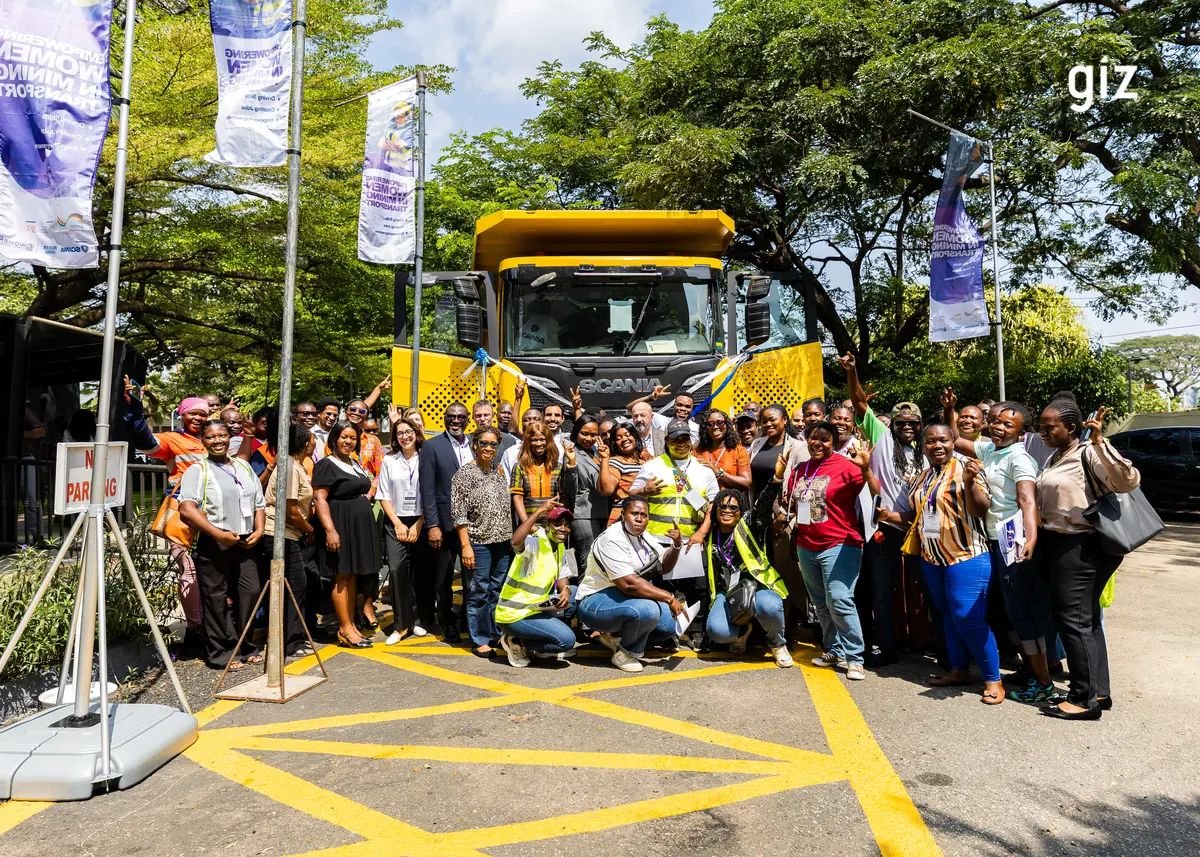
A new initiative in Ghana aims to train and certify 80 women as professional heavy-duty truck drivers, helping to address a shortage of skilled workers and increase female participation in the mining and transport industries.
The project is being implemented by the Deutsche Gesellschaft fur Internationale Zusammenarbeit (GIZ) GmbH on behalf of the German Federal Ministry for Economic Cooperation and Development (BMZ). It is jointly funded through the develoPPP programme, in partnership with Scania West Africa, Reach for Change and Women in Mining.
The programme will focus on improving women’s employability in Ghana’s heavy transport sector, particularly mining, where demand for qualified and certified drivers continues to grow.
Speaking at the launch, GIZ Country Director Sandra Retzer said the initiative showed how government, development partners and the private sector could work together to tackle labour market challenges and promote inclusive economic growth.
“Training must lead somewhere. Our ambition is not simply to equip women with certificates, but to connect their skills to decent jobs and sustainable careers. Success will be measured by the opportunities women can access, the incomes they can earn, and the future they can build,” she said.
Scania West Africa Managing Director Francois Lechat added: “As we move forward, our ambition is not only to train women but to help create long-term career opportunities and demonstrate that excellence in transport and mining knows no gender.”
Ghana’s mining and related transport operations rely on workers with the technical ability to support safe and efficient services. However, companies continue to struggle to find heavy-duty truck drivers with the necessary skills, certification and workplace readiness. Women remain heavily underrepresented in operational roles because of limited access to training, workplace barriers and long-standing perceptions surrounding technical occupations.
The 80 participants will receive professional truck-driver training, digital literacy support, practical driving experience and preparation for assessment and certification by the Driver and Vehicle Licensing Authority (DVLA). The project aims to help at least 70 of them move into decent jobs with mining companies and transport contractors after completing the programme.
A further 200 women will receive training in entrepreneurship, mining-related subjects, workplace safety and sexual harassment awareness, strengthening their ability to take part in the mining value chain.
The initiative supports Ghana’s priorities on skills development, industrial competitiveness, local content and women’s economic empowerment. Minerals Commission Deputy CEO for Support Services Emmanuel Kwamena Anyimah said the organisation would work with the DVLA, mining companies and transport contractors to ensure the 80 women were certified to the highest standard and the 200 women received relevant, practical and life-changing training.
Christopher Opoku Nyarko, Director of Analysis, Research and Finance, read a speech from the CEO of the Ghana Chamber of Mines. He said the project supported the chamber’s responsibility to promote an industry that created lasting value for Ghana, while strengthening links between mining, host communities and national development.
Vera Karikari-Bediako, Director of the Gender Equity Secretariat, represented the Minister for Gender, Children and Social Protection. She urged employers to provide equal opportunities in recruitment, training, promotion and leadership, saying compliance with the Gender Equity Act should be seen as an opportunity to improve institutional performance and widen the industry’s talent pool.
The DVLA reaffirmed its commitment to maintaining professional driver-certification standards.
Minerals Commission Chief Executive Officer Isaac Tandoh said the Government of His Excellency President John Dramani Mahama remained committed to a responsible, inclusive mining industry, action against illegal mining, local content policies and ensuring women were not left behind. Government, he said, would continue to provide policy direction, regulatory support and a partnership framework for the private sector and development partners.