The controversial Agyapa Royalties Deal, which proposed selling a majority of Ghana’s future gold royalties to an offshore company at what critics said was an undervalued price, remains one of the most contentious financial decisions of the Akufo-Addo-Bawumia administration.
On 15 October 2020, Ghana’s then Special Prosecutor, Martin Amidu, published a 64-page corruption risk assessment of the proposed transaction. The assessment identified a series of suspected corruption risks, but the government treated its findings with caution.
Relations between Mr Amidu and the Presidency deteriorated further after he described President Nana Akufo-Addo as the “Mother Serpent of Corruption”, questioning whether the president could fight corruption in the past, present or future.
The disagreement led to an exchange of correspondence between Mr Amidu’s office and the Presidency. The letters were authored by Executive Secretary Nana Bediatuo Asante and Director of Communications Eugene Arhin.
The dispute remained unresolved ahead of Ghana’s 2020 general election. Mr Arhin later said the government had an election to win and that the matter had therefore been put on hold. No further explanation followed at the time.
Although the New Patriotic Party won the election, it did so by a narrow margin, losing votes and parliamentary seats. The government later indicated in its 2022 budget presentation that it was considering a revised version of the Agyapa proposal. However, public consultation remained limited and it was unclear whether the concerns raised in the original assessment would be addressed before the transaction returned to Parliament.
What was the Agyapa proposal?
“Agyapa” means “good father” in the Akan language. The proposed deal was announced in August 2020 and involved transferring most of Ghana’s future gold royalties from mining leases to Agyapa Royalties Limited, an offshore company registered in Jersey, a British Crown Dependency known for its financial secrecy.
Under the plan, the government would retain 51% of the company while selling 49% of its shares through a public offering. The administration presented the deal as an “innovative financing solution” intended to help Ghana manage its debt crisis.
Opponents argued that the country’s gold rights were being valued at far less than their true worth. The proposed structure attracted criticism across Ghana, with questions raised over whether the nation was receiving a fair return for its mineral wealth.
Rather than being registered in Kumasi, Obuasi, Tarkwa or Kenyasi, the company was to be based in Jersey. Critics questioned why a transaction involving Ghana’s gold resources needed to be structured through an offshore jurisdiction more closely associated with financial secrecy than mining.
The debate also became linked to other government initiatives, including the Gold4Oil programme. Questions were raised about how affordable and available oil had become after Ghana exchanged gold through that arrangement. A comparison was also drawn with the later GoldBod model.
Special Prosecutor’s assessment
Mr Amidu’s 2020 assessment provided the most detailed official challenge to the arrangement. It argued that the transaction raised concerns surrounding conflict of interest, questionable financial flows, money laundering, state capture and a lack of transparency.
The assessment also concluded that the deal had been built on illegality. In Mr Amidu’s words: “All the parties to the Mandate Agreement are deemed to have known the law but ignored it with impunity in signing and implementing the Mandate Agreement which is null and void ab initio as violating the Public Financial Management Act, 2016 (Act 921) and the Public Procurement Authority Procurement Act, 2003 (Act 663) as amended…”
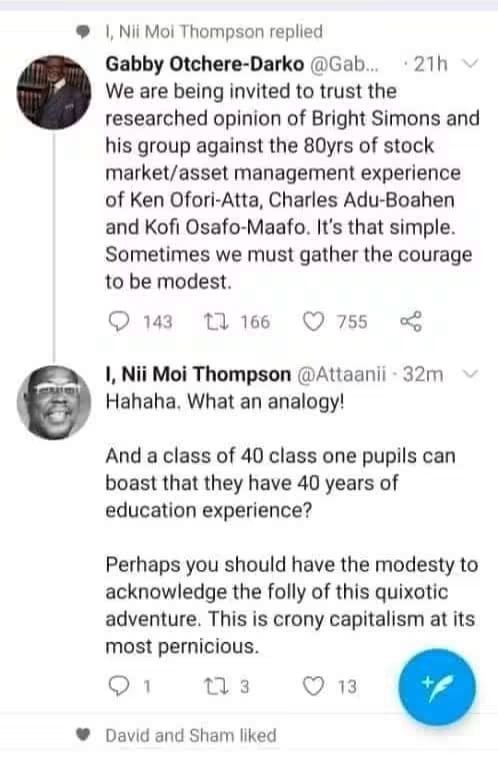
The criticism was particularly significant because the transaction involved officials, stock-market and asset-management professionals who had presented their collective experience as a reason for public confidence. Their warnings were dismissed by critics as unnecessary disputation, while members of the public complained that responses from those promoting the deal were difficult to understand.
The transaction also attracted criticism over payments made before all the necessary approvals had reportedly been secured. Millions of cedis were spent in pursuit of financing that ultimately did not materialise, raising further questions about the conduct of the government, advisers and lawyers involved.
President Akufo-Addo subsequently instructed officials to review the transaction documents and return the proposal to Parliament for the appropriate approvals. However, concerns over limited consultation and the absence of clear assurances that the original objections had been dealt with remained.
Lessons for GoldBod
The Agyapa controversy continued to shape political debate after the 2020 election. Nana Akufo-Addo and Dr Mahamudu Bawumia were given four more years in office, but with a hung Parliament. In the 2024 election, the governing party lost power in what was described as Ghana’s most humiliating electoral defeat.
The controversy has now been presented as a warning for the country’s current approach to gold through GoldBod. Its managers are expected to make the institution’s operations, decisions and accounts open to scrutiny.
Supporters of the new model argue that GoldBod could deliver greater national benefit if it operates transparently and continues beyond individual governments. At the same time, its policies must remain open to criticism and questioning. If the model succeeds, its benefits should belong to Ghana and its people rather than to any political party or politically exposed individual.
The central lesson of Agyapa, its critics say, is that Ghana’s gold resources must not be pledged or monetised through opaque arrangements that undervalue the country’s long-term interests.