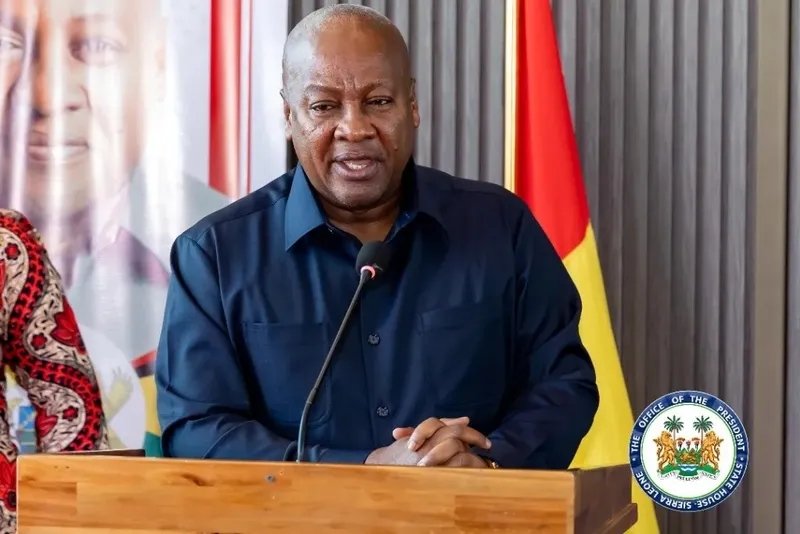
Ghana will commit US$10 billion of its own resources to eight strategic sectors from 2027, President John Dramani Mahama told Barbados’ Parliament on Friday.
“Starting next year, we will deploy $10 billion of our own resources towards eight strategic pillars,” he said during a joint sitting, in an address carried live by the Presidency. 3News published the text of the speech.
Mr Mahama said the investment would focus on “ensuring value addition for all our natural resources, and creating new jobs and opportunities for our young people”.
The eight areas are outlined in Ghana’s 2027 Budget Statement, presented to Parliament by Finance Minister Dr Cassiel Ato Forson on 12 November.
They are economic stability and cheaper finance, commercial agriculture, energy, minerals, tourism and the arts, textiles, medicines and technology. The programme was presented as the foundation of the New Economy when the budget was read.
Commercial agriculture is allocated US$3 billion, while minerals will receive US$1.5 billion. Tourism and the arts, textiles, and pharmaceuticals each have allocations of US$1 billion. Technology is assigned US$300 million in 2027 and 2028, while the energy chapter is headed as a US$2 billion plan.
For 2027, the budget sets aside GH¢30 billion, equivalent to 1.5 per cent of GDP, as the first instalment of the US$10 billion programme.
The budget attributes the funding to two measures: reducing the primary-surplus target by one percentage point of GDP, and raising 0.5 per cent of GDP through tax changes approved by Parliament and improved compliance.
Speaking at the Hogbetsotso durbar in Anloga on 7 November, Mr Mahama had said Ghana would invest more than US$9 billion in job-rich sectors between 2027 and 2030. His address in Barbados placed the figure at US$10 billion.
He said Ghana had “emerged from severe distress to macroeconomic stability” and was now moving “from recovery to economic resilience”. The four-year programme, which he said he had “dubbed the new economy”, was intended to create “a new Ghana with jobs for our people”.
Mr Mahama praised Barbados’ “consistent fiscal discipline” under the Barbados Economic Recovery and Transformation framework. He said it had delivered consecutive years of growth, “recorded low unemployment”, foreign reserves covering “six months of imports”, and “a steady decline in public debt”.
Ghana’s 2027 fiscal plan, he said, would turn that stability into “broad-based prosperity”. Addressing the House, he added: “At least we can copy from you.”
The president also expressed “unwavering support” for Prime Minister Mia Mottley’s Bridgetown Initiative. He called for an international system that considered “vulnerability alongside income” and responded more fairly to climate-related shocks.
Mr Mahama said the Accra Reset had been launched in September 2025 and that Ghana had progressed its ambitions for “health sovereignty” while seeking to move “beyond traditional aid dependency”. He launched the panel’s report at the UN in September 2026.
He described addressing the joint session as “a distinct honour” and said he was “the second Ghanaian President to do so”. The sitting formed part of a five-day state visit that began on Thursday.