Ghana’s government has announced a minimum 5% employment quota for persons with disabilities in public and private institutions as part of wider measures to improve access to work, education and economic opportunities.
Vice President Professor Naana Jane Opoku-Agyemang said the policy, announced by President John Dramani Mahama, would be supported by tax incentives for private employers that meet the required quota.
She was speaking through Senior Political Advisor Dr Samuel Ofosu Ampofo at the Day of Help for Persons with Disabilities in Koforidua, in the Eastern Region.
Professor Opoku-Agyemang said disability inclusion should be viewed as an issue of justice, equality and human rights, not charity.
“The inclusion of persons with disability is fundamentally a matter of justice, equality and human rights. It must never be reduced to an act of charity or occasional generosity,” she said.
Ghana’s 2021 Population and Housing Census recorded more than two million people living with varying degrees of disability, she added.
The Vice President said persons with disabilities should be recognised as professionals, entrepreneurs, parents, students, innovators and citizens with the ability to contribute to national development.
The Ministry of Gender, Children and Social Protection is working with the Ghana Education Service to help create employment opportunities for 272 graduates with disabilities.
However, Professor Opoku-Agyemang said the success of the measures would depend on implementation, with policies needing to result in actual jobs, meaningful careers and sustainable livelihoods.
Funding and education
The allocation from the District Assemblies Common Fund for persons with disabilities has risen from three per cent to five per cent this year.
Professor Opoku-Agyemang said the additional funding should provide practical support, including help for economic activities, assistive devices, skills development and other measures designed to promote independence and self-reliance.
Disability desks will also be created at every Metropolitan, Municipal and District Assembly. They are intended to provide a formal channel for working with disability organisations and ensuring resources reflect their needs.
Local authorities were urged to make the desks effective tools for accountability, inclusion and empowerment, rather than simply administrative offices.
The government also plans to expand educational opportunities through free tertiary education for persons with disabilities, including tuition and residential support. Amendments to the Ghana Education Trust Fund (GETFund) legislation are intended to establish a statutory basis for financing that education.
The Vice President referred to the Inclusive Education Policy introduced in 2015, when she was Minister for Education, as evidence of Ghana’s commitment to ensuring every child can access quality education regardless of disability.
Cabinet has approved amendments to the Persons with Disabilities Act, 2006 (Act 715), she said, bringing the country’s legal framework closer to the United Nations Convention on the Rights of Persons with Disabilities.
Ability Village proposal
Professor Opoku-Agyemang also appealed to government, the private sector, religious organisations, development partners and well-meaning Ghanaians to support the proposed Ability Village.
The project would provide technical and vocational training, specialised healthcare, rehabilitation, software development, hardware repair, counselling, advocacy, assisted living and affordable housing.
It would also support people with disabilities pursuing agriculture and business development, helping them generate income and become economically independent.
The Vice President said the initiative should be regarded as an investment in human capacity, innovation and inclusive economic growth rather than simply a charitable project.
She called for resources, expertise and networks to be combined to make the proposal a reality.
Professor Opoku-Agyemang identified discrimination, harmful stereotypes and negative social attitudes as major barriers. She urged parents to encourage their children’s ambitions, teachers to support inclusive learning and employers to recognise talent beyond physical limitations.
Religious institutions, she said, should promote acceptance, compassion and practical support, while persons with disabilities must be involved in decisions affecting them.
“Nothing about persons with disabilities should be decided without their meaningful participation,” she said.
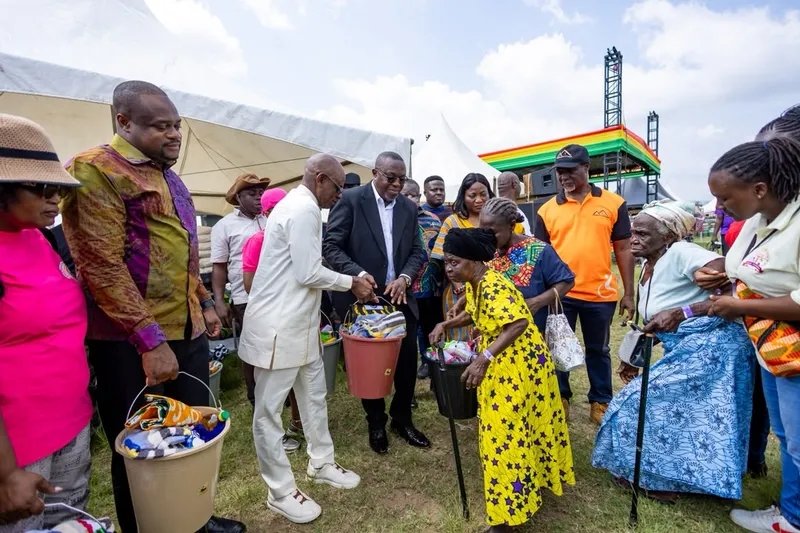
She praised Reverend Dr Steve Mensah, the Charismatic Evangelistic Ministry, volunteers and partner organisations for maintaining the Day of Help programme, which began at Independence Square in Accra and has since expanded to Tamale, Takoradi and Koforidua.
Thousands of people have benefited through free medical care, assistive devices, surgeries, food assistance and vocational training.
Professor Opoku-Agyemang urged Corporate Ghana to support disability inclusion through long-term partnerships rather than occasional donations, saying Ghana’s development goals could not be achieved while millions faced barriers to realising their potential.