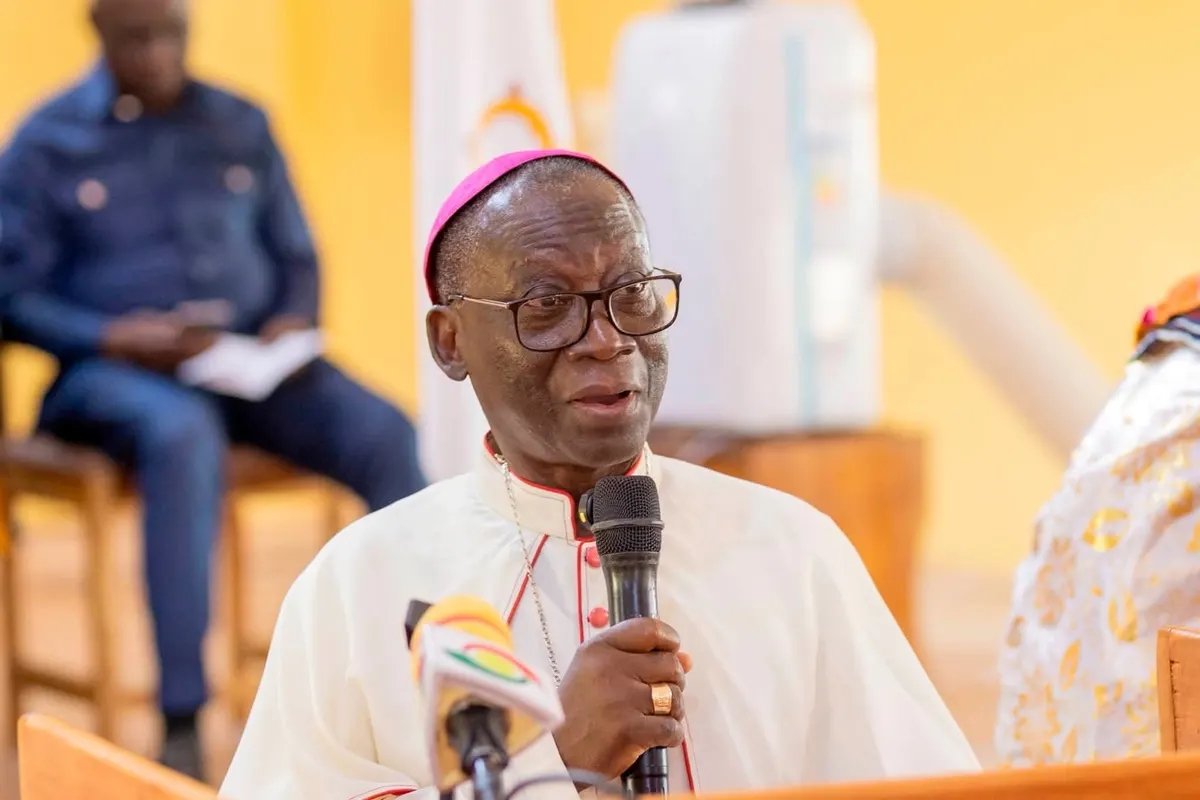
The President of the Ghana Catholic Bishops’ Conference, Most Reverend Matthew Kwasi Gyamfi, has called on the government to place character formation and moral education at the heart of Ghana’s formal education system.
He warned that academic qualifications without a firm set of values might not make a meaningful contribution to national development.
Most Rev. Gyamfi said schools appeared to prioritise academic performance while giving less attention to honesty, hard work, respect, patriotism and volunteerism.
He was speaking at the launch of the 50th anniversary celebrations of Sacred Heart Senior High Technical School (SAHESS) at Nsuatre in the Sunyani West municipality of the Bono region.
The Catholic Bishops’ Conference President said academic teaching needed to be matched by deliberate efforts to develop students’ character.
Using the example of a machine manual, he explained that academic knowledge gave people the skills and competence to operate, while character formation taught them how to use those abilities responsibly for the good of society.
Ghana’s development problems, he argued, could not be solved by academic achievement alone. Education, he said, must also equip young people to become responsible, ethical and productive citizens.
Call for national values framework
Although Ghana had made considerable progress in widening access to education, Most Rev. Gyamfi said the systematic teaching of values in schools had not received enough attention.
He called on the Ministry of Education and the Ghana Education Service to create and institutionalise a framework of core national values for every stage of education, from nursery through to university.
Honesty, cleanliness, hard work, respect for authority, respect for others and patriotism, he said, needed to be taught intentionally if they were to become part of the country’s national character.
Most Rev. Gyamfi also raised concern about the increasing use of insults and verbal abuse in public debate, particularly by some politicians.
The behaviour of educated people in public life, he said, raised questions about how effectively character formation was being addressed within the education system.
He maintained that respect and responsible communication should form part of every Ghanaian’s education, irrespective of academic achievement or social standing.
The government, he added, should use the country’s increased access to education as an opportunity to develop a generation of citizens whose conduct reflects the values held by society.
“Don’t expect to reap where you have not sown,” he cautioned, saying positive character traits would not develop consistently without deliberate, systematic and sustained teaching.
He described the proposed approach as “positive indoctrination”, saying it would involve intentionally instilling values that support the welfare of individuals and society.
Most Rev. Gyamfi acknowledged that investment in educational infrastructure and academic delivery remained important. However, he said the success of education should also be judged by its role in producing responsible citizens and building a morally conscious society.