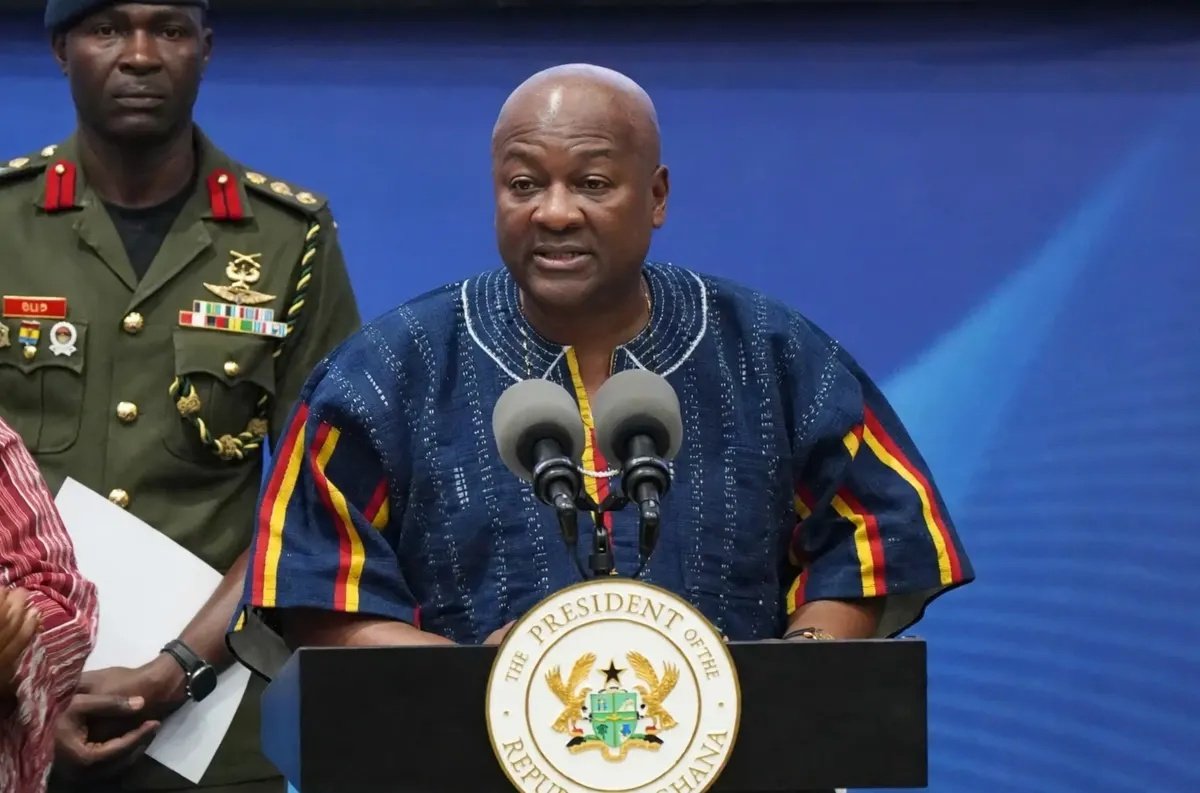
Ghana can now conduct DNA identification tests domestically after President John Mahama commissioned a national human identification laboratory at the University of Ghana’s Noguchi Memorial Institute for Medical Research (NMIMR) on Wednesday.
The facility is intended to end the need to send samples abroad, after tissue recovered from a military helicopter crash had to be taken to South Africa for analysis.
The crash, on 6 August 2025, left families waiting “several nerve-wracking days” for the identities of those who died, Mahama said.
“It actually was a day of shame for Ghana that we couldn’t carry out our DNA analysis in country,” the President said. “That will be a thing of the past.”
The laboratory will support police forensic investigations, including cases involving rape and murder, where DNA evidence has helped law enforcement agencies identify offenders.
It will also be used in paternity and inheritance disputes. Mahama said the facility could help determine rightful heirs and establish whether children travelling abroad with an adult are actually that person’s children.
“Behind every request for identification is a family that is waiting anxiously for news,” he said, calling on agencies using the laboratory to provide families with accurate information quickly.
New vaccine research facilities
Mahama also opened new mRNA and protein laboratories at Noguchi for vaccine research. The National Vaccine Institute and the research institute established the facilities as national resources for Ghanaian scientists, regardless of where they work.
He announced that Atlantic Life Sciences and DEK Laboratories had been selected as the two Ghanaian companies to develop vaccines, following a meeting of African leaders in Accra on vaccine self-sufficiency.
Ghana is now one of only five African countries working with mRNA technology to research and develop vaccines, Mahama said, while thanking Africa CDC for its support.
The National Vaccine Institute is also in discussions with a European partner about using the mRNA laboratory to research cancer vaccines.
Five Ghanaian scientists from Noguchi, WACCBIP, KCCR in Kumasi and the University of Health and Allied Sciences have completed training in Brussels and Accra. They are expected to train additional colleagues to operate the new facility.
Mahama urges support for clinical trials
The President urged Ghanaians not to be afraid of clinical trials. He referred to an Ebola vaccine trial planned in the Volta Region by researchers including the late Prof Fred Binka, which was moved out of Ghana after a public scare.
“Nobody would do the clinical trials for us to develop vaccines in our country,” he said.
The government has allocated $1 billion for pharmaceuticals under the seventh pillar of its new economy plan. The funding is intended to help establish pharmaceutical and bio-manufacturing hubs.
Mahama added that the government would spend $46 million this year purchasing vaccines for child immunisation, as Ghana prepares for the end of Gavi support by January 2030.