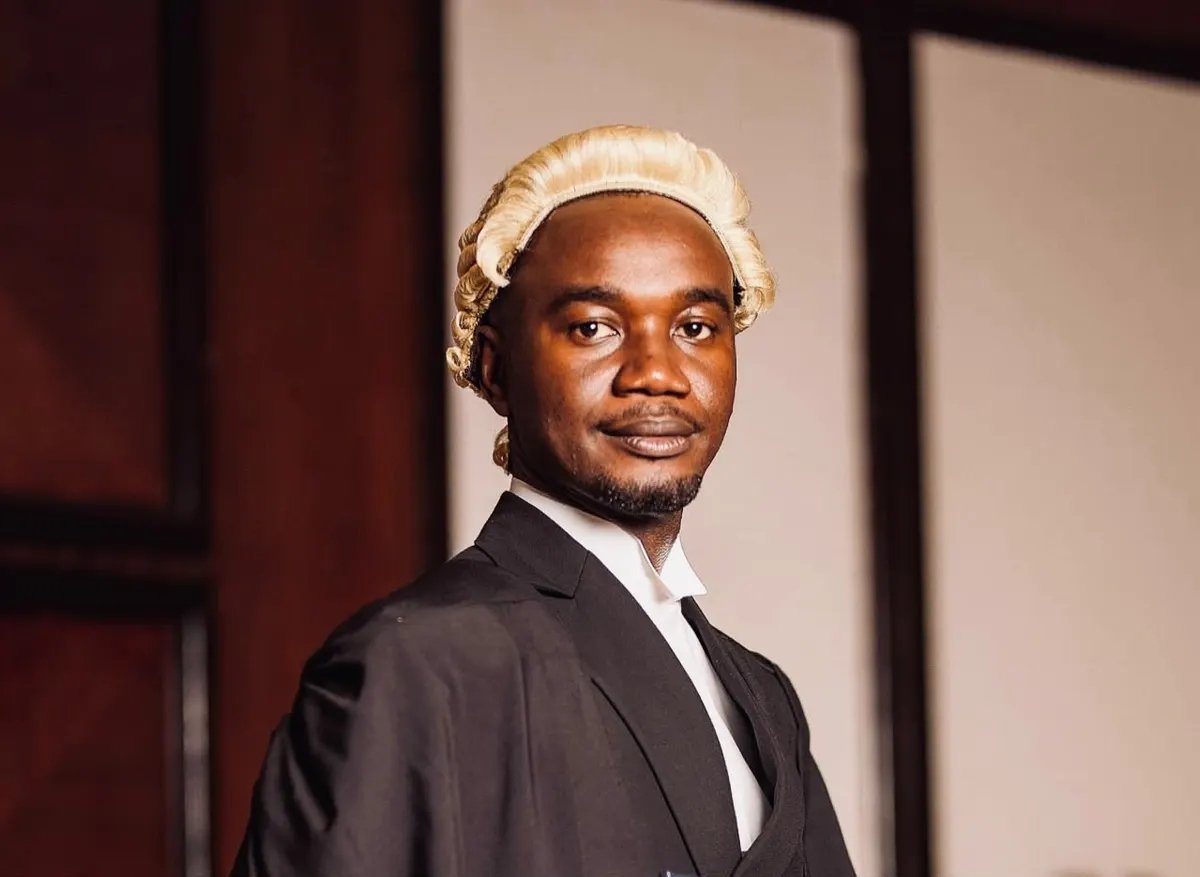
A year after being called to the Ghanaian Bar, Joseph Okan-Mensah Khartey says his first 12 months in the Court of Appeal, High Court and Circuit Court have taught him more than years of preparation.
His reflections come as 1,400 new lawyers prepare to be called to the Bar on Friday.
Court procedure may provide the framework, but Khartey says legal practice is shaped just as much by the habits of judges, the routines of registries and the practical difficulties of serving documents.
A motion can be perfectly prepared and still lose a day if the other party has not received notice. He now checks the cause list in advance and carries spare copies. His strongest example to young lawyers is not the most vocal advocate, but the one who works carefully and calmly.
Regularly moving between the High Court and Circuit Court has also shown him that each demands a different approach. The High Court places greater emphasis on legal authority and well-organised bundles, while the Circuit Court – particularly in family cases – is closer to the people affected by the result. For someone involved in a matrimonial case, knowing when the matter will end can matter as much as the legal argument.
Adjournments remain a major part of litigation. Clients can struggle to understand why a hearing may be moved three months into the future, but Khartey says lawyers must also accept responsibility when they request time they do not genuinely need. His aim is to be prepared on the appointed day and to explain delays honestly from the beginning.
His defining lesson came immediately after his call to the Bar. The ceremony involved gowns, photographs and relatives who had waited years to hear his name, but that evening his senior told him to attend a Circuit Court on the following Monday. A judgment was due, and he was expected to go alone.
Although a newly qualified lawyer was unlikely to be asked to argue the case, Khartey felt under intense pressure. He listened as the judge read the decision and took detailed notes so his senior could decide what to do next. The experience taught him that a junior’s first responsibility is to listen accurately and report faithfully.
When he later appeared alone to move an application for substituted service, preparation did not prevent him stumbling over his opening. The judge asked what he wanted the court to order and why ordinary service was impossible. Once he answered, the application became straightforward. His conclusion was clear: anyone unable to explain an application in two sentences does not yet understand it.
The Court of Appeal presented a further challenge, with questions coming from three judges and arguments focused on whether the law had been correctly applied. On one occasion, Khartey attended alone to hear judgment before a three-member panel, remembering how far he had travelled since that first Monday.
He says financial reality should not be ignored at the Bar, but pursuing the fastest fee can damage a young lawyer’s development and reputation. The early years are an apprenticeship, built through time spent behind senior lawyers and drafts returned with corrections.
Khartey has also continued writing, mainly about football. Combining hearings with articles due late in the evening is difficult, but he says each discipline has improved the other: writing has sharpened his submissions, while legal practice has made him cautious about publishing anything he could not defend.
He credits his seniors, his brother Andrew Khartey and Elikem Adisenu-Doe, for allowing him to observe before speaking, correcting him privately and praising him publicly.
Khartey congratulated his cousin David Andreas Hesse Jnr and friends Samuel Kyeremeh, Daisy Hanson-Nortey and Anne Adjasah, urging the new lawyers to enjoy Friday, thank those who supported them and spend Monday listening behind someone more experienced.
By Joseph Okan-Mensah Khartey, Associate, Afrimore Advisors PRUC