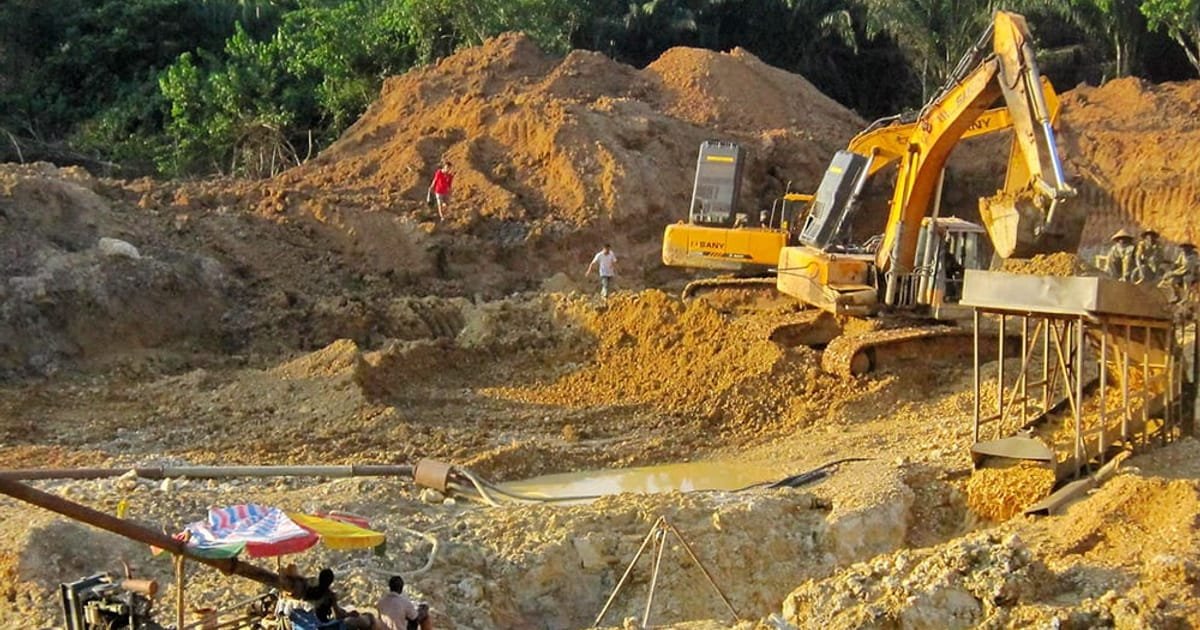
The Ghanaian government remains committed to lawful and responsible mining, while insisting that the livelihoods of miners can be protected alongside the country’s land and water resources.
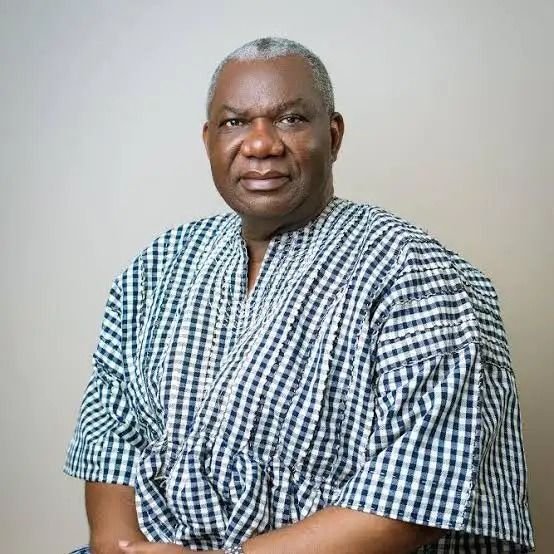
Chief of Staff Dr Julius Debrah said mining-related matters must be dealt with through law enforcement, evidence and the appropriate institutions. He was speaking in an address delivered on his behalf by Deputy Government Spokesperson Shamima Muslim at the National Mining Dialogue in Accra on Tuesday, August 18.
“Government remains committed to lawful, responsible mining and enforcement; each matter must be handled fairly on evidence and through the proper institution.
“We can protect our livelihoods while protecting our lands and water resources. Ghana should never be forced to choose between the two.”
Dr Debrah’s comments set out the government’s position on the balance between mining activity, economic livelihoods and environmental protection. He said the authorities did not believe Ghana should have to choose between supporting miners and safeguarding the country’s natural resources.
The Chief of Staff also expressed the government’s support for the work of the Ghana Gold Board (GOLDOB), particularly its efforts to improve traceability and establish a regulated and transparent system for buying and selling artisanal and small-scale gold.
He said Ghana’s position among the world’s leading gold producers brought with it an obligation to ensure that the country’s systems and practices matched that status.
“We have heard that Ghana is now the 6th largest gold-producing country in the entire world. We may applaud, but that also brings us huge responsibility to look like the 6th largest gold-producing nation of the world,” he said.
According to Dr Debrah, stronger oversight would help protect the integrity of Ghana’s gold supply chain and ensure that the country retained a greater share of the value generated by its gold industry.
He cautioned, however, that formalisation should not create further hardship for vulnerable miners or undermine their security. Reform, he said, should provide a route from an opaque market to a fair one, and from unsafe practices to livelihoods that are responsible, lawful and profitable.
“But formalisation must not become the war against vulnerability and security; from an opaque market to a fair market and from unsafe practices to responsible livelihoods, the artisanal miner should hear reforms and an invitation to operate safely, lawfully, and profitably.
“The public will judge our mining economy by two results – stronger national reserves and greater value retained in Ghana. Through the Domestic Gold Purchase Programme and the GOLDBOD reform agenda, our gold should support monetary stability, gains which are tangible, which are transparent, which we are all feeling every day.”
The address linked those objectives to the Domestic Gold Purchase Programme and the GOLDBOD reform agenda. Dr Debrah said the success of the government’s mining policy would ultimately be measured by stronger national reserves and the amount of value retained within Ghana.
He added that the gains from those measures should be tangible and transparent, while contributing to monetary stability.