Ghana’s current food surplus could become a future shortage if farmers who are unable to sell their produce reduce production or leave the sector, Minority Chief Whip Frank Annoh-Dompreh has told Parliament.
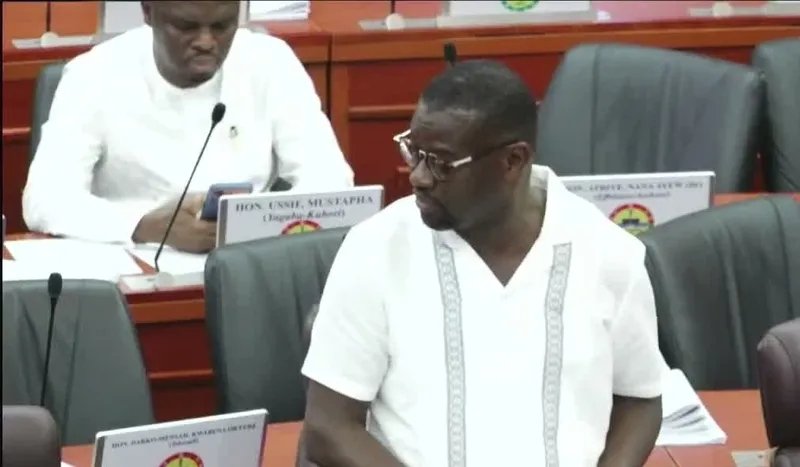
Speaking on Friday, November 27, in a matter of urgent public importance, Mr Annoh-Dompreh said farmers had invested land, labour and borrowed funds in crops including maize, rice, cassava, yam, soya and beans. His comments came days before Farmers’ Day.
He warned that farmers who could not find buyers were being left unable to repay loans, pay workers or fund the next planting season. Market women, he added, were also struggling because consumers did not have enough money to buy food.
“A farmer who cannot sell cannot repay loans, pay workers, or finance the next planting season,” he said during Friday’s sitting.
“The issue is not simply that there is too much food,” he added. “It is a failure to connect production with effective demand, storage, processing, transportation, and distribution.”
The Statistical Service has reported that nearly one in three Ghanaian homes have reduced their food consumption to cope with economic pressures.
Mr Annoh-Dompreh called on the National Food Buffer Stock Company (NAFCO) to purchase the surplus at transparent prices and make prompt payments to producers.
Referring to a Ghana News Agency report from May 2026, he said NAFCO had storage capacity of about 129,000 metric tonnes, but only around 40,000 tonnes was currently usable. He also cited 45 licensed buying companies and government support of GH¢100 million, alongside a further GH¢200 million in the 2026 budget.
He asked Food and Agriculture Minister Eric Opoku to give Parliament details of the quantity of produce that remained unsold, the number of affected farmers, the amount NAFCO had purchased and the payments still outstanding.
Majority Leader James Agalga was asked whether the government had the will to respond. “Mr Speaker, I say yes,” he replied.
Mr Agalga said NAFCO had bought more than 20,000 metric tonnes during the last farming season. He said GH¢100 million had been released, with another GH¢200 million provided in the budget.
“Was that enough?” he asked, referring to the combined GH¢300 million. He also said rice development hubs planned in the new budget would focus on areas including the Afram Plains, the Volta Basin, western Ghana and northern Ghana.
Minority Leader Alexander Afenyo-Markin said farmers had produced a harvest “only to watch it rot and be sold at a loss.”
The Peasant Farmers Association of Ghana said on Thursday that the Feed Ghana programme required about GH¢85.6 billion annually, compared with an allocation of about GH¢2.43 billion. It put the resulting shortfall at about GH¢83.18 billion.
The association also said the GH¢200 million allocated to NAFCO represented about 26 per cent of the GH¢770 million it had requested to purchase excess grain.
Cashew farmers have separately urged the government to suspend a three-month ban on raw exports, saying local factories do not have the capacity to process the crop.